
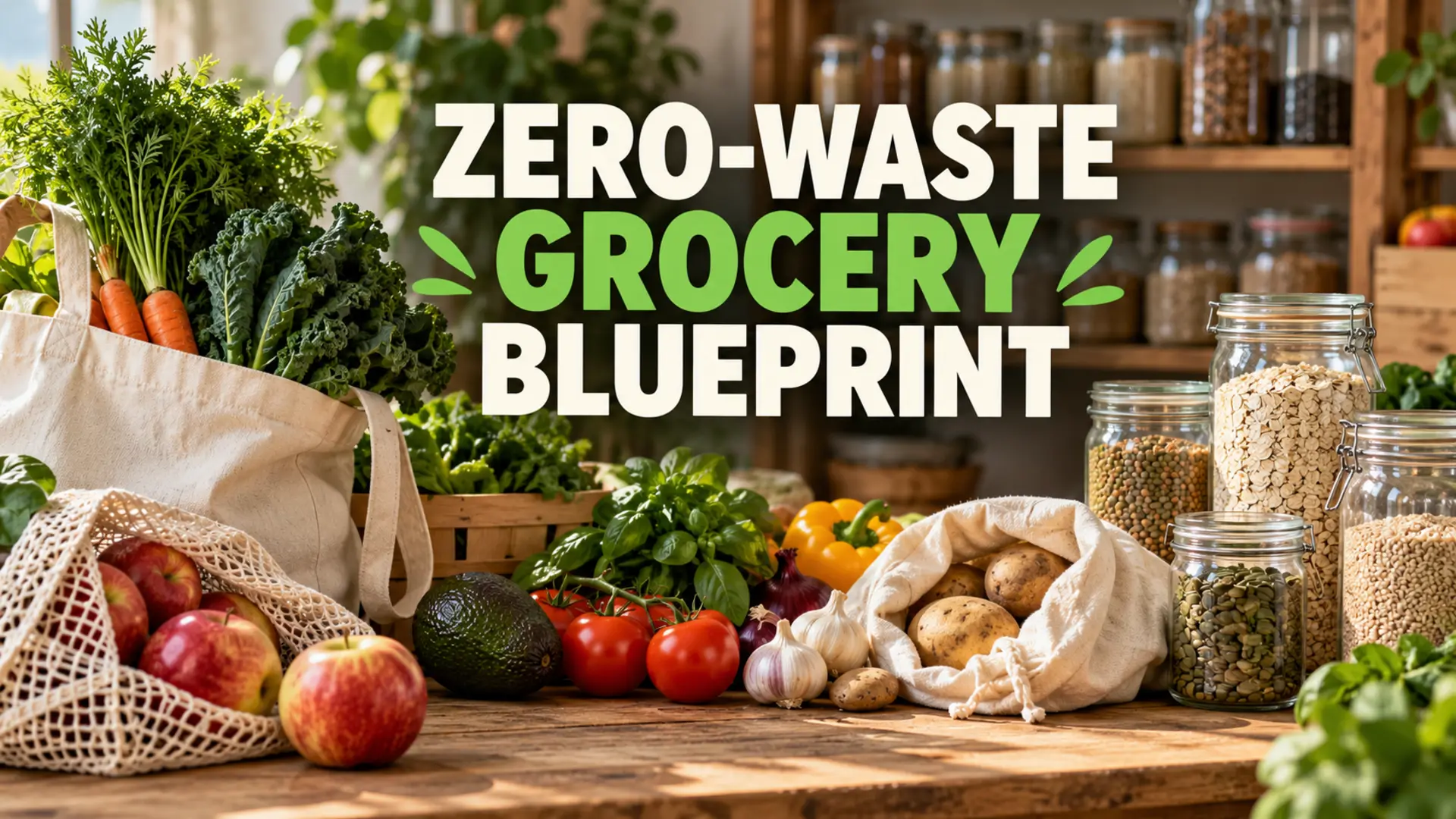
A practical zero-waste grocery blueprint starts with one principle: buy quantities your household can realistically use. It does not require eliminating every package, shopping only from bulk bins or achieving a perfect waste-free kitchen.
Zero-waste grocery blueprint: before you shop
- Check the refrigerator, freezer and pantry.
- Choose a few meals that use foods already on hand.
- Estimate realistic portions and schedules.
- Write a list for the remaining gaps.
- Leave room for substitutions when quality or price changes.
Loose produce and bulk goods can help when they let you buy a useful quantity, but prepackaged or frozen foods may reduce waste for some households. Consider accessibility, food safety, allergies and local store rules.
Use food safely and creatively
Repurpose suitable cooked ingredients into soups, grain bowls or frittatas, and freeze portions before quality declines. Not every scrap is edible or safe for stock. Our weekly refrigerator audit helps prioritize perishables, while the pantry-reset guide covers shelf-stable inventory.
Choose reusable options that work
Bring clean reusable bags or containers only where permitted. Record tare weights when required and follow store procedures for service counters and bulk bins.
Progress over perfection
Use this zero-waste grocery blueprint to make gradual, repeatable improvements. Buying what you will eat, storing it correctly and adjusting future quantities matter more than unsupported savings or waste-reduction percentages.