
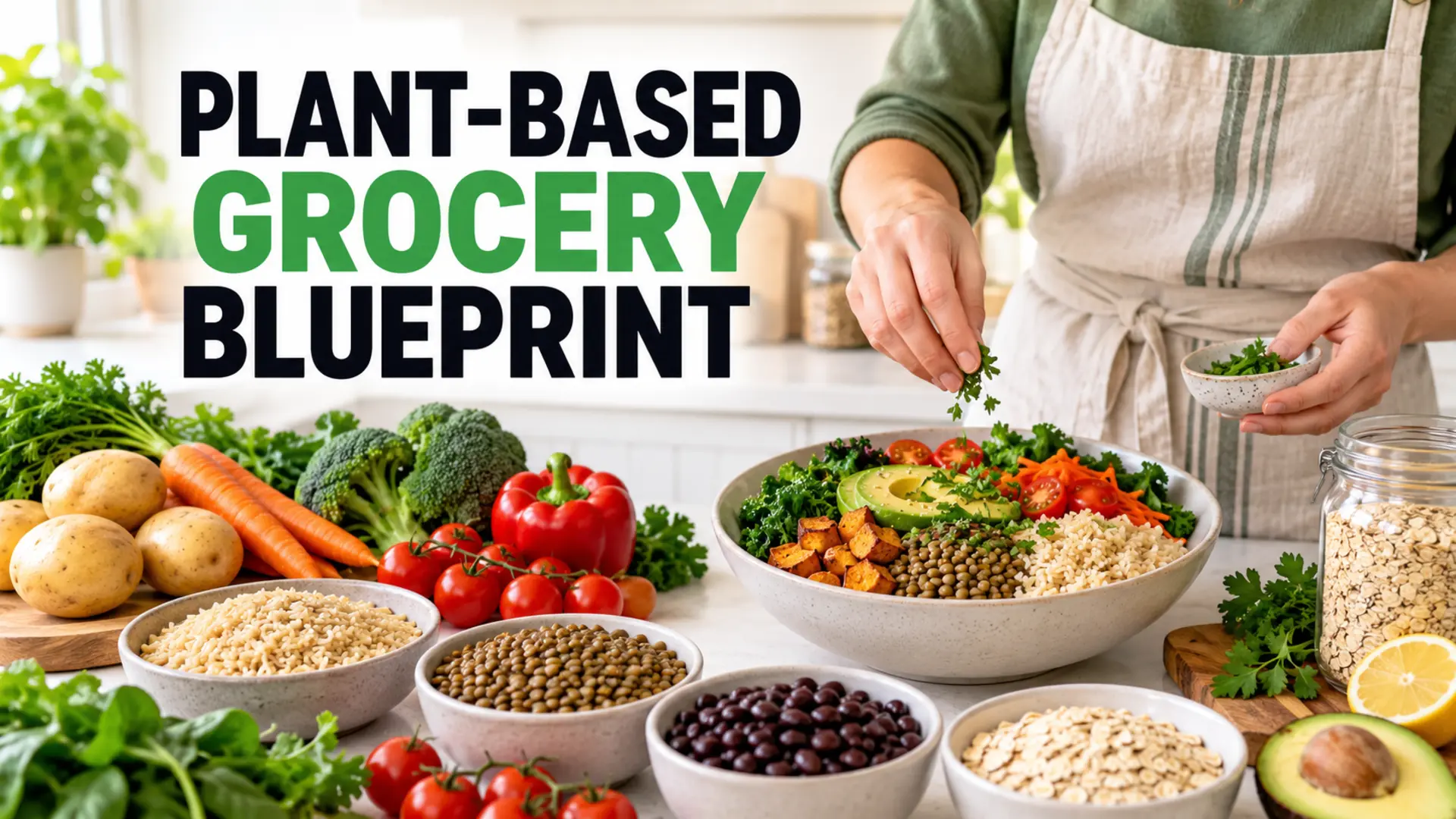
This plant-based grocery blueprint focuses on varied, practical foods rather than rigid low-fat or high-carbohydrate percentages. Plant-based eating can take many forms, and appropriate fat and carbohydrate intake depends on individual needs.
Plant-based grocery blueprint essentials
- Beans, lentils, chickpeas, tofu and tempeh
- Oats, rice, pasta, bread and other grains
- Potatoes, sweet potatoes and other starchy vegetables
- Fresh, frozen or canned vegetables and fruit
- Nuts, seeds, avocado and cooking oils
- Fortified plant drinks and foods providing vitamin B12
Oil-free cooking is optional, not a universal requirement. Oils can add flavour and energy, while whole nuts, seeds and avocado provide other useful nutrients. Choose amounts suited to your health needs and preferences.
Build satisfying meals
Combine grains or potatoes with legumes, vegetables and a fat or sauce you enjoy. See our vegan meal-prep shopping list and plant-based protein-and-iron checklist for complementary planning.
Cover important nutrients
Vitamin B12 requires reliable fortified foods or supplementation for vegan diets. Iron, iodine, calcium, vitamin D, omega-3 fats and protein may also need attention. A qualified dietitian can help with pregnancy, childhood, athletic training or medical conditions.
Keep the pattern flexible
Use this plant-based grocery blueprint to simplify meals without disease-reversal promises or restrictive ratios. Affordable cultural staples and convenient foods can fit alongside fresh produce.