
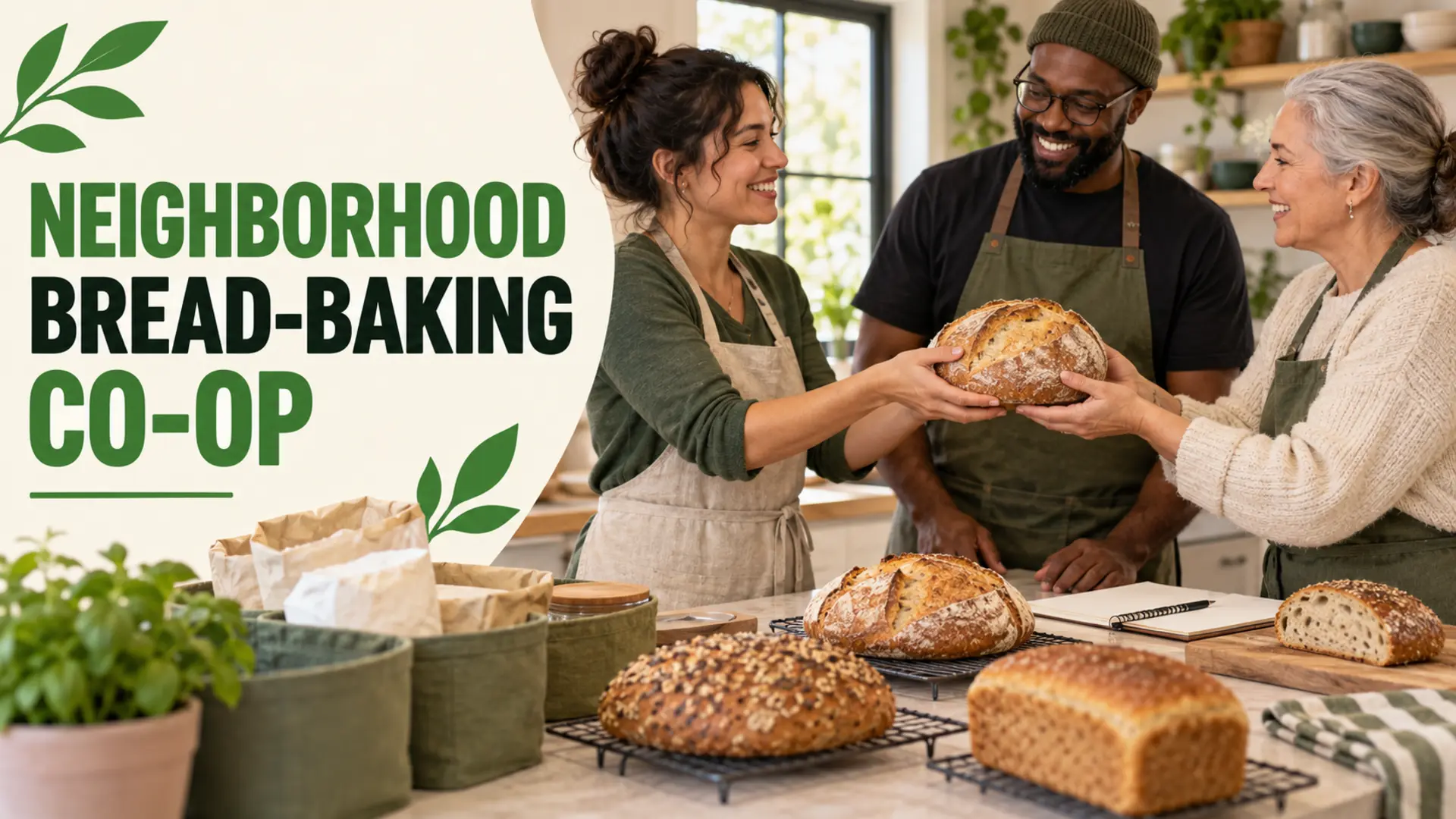
A neighborhood bread-baking co-op lets several households share planning, ingredients, equipment, or baking responsibilities. The arrangement works best when expectations are written down and food safety, allergens, costs, and reliability are discussed before anyone exchanges food.
Define the neighborhood bread-baking co-op
Decide what members will share. Options include bulk ingredient purchases, a rotating bake, equipment, recipes, or occasional baking days. A smaller pilot is safer than immediately committing every household to weekly loaves.
Confirm dietary needs and risk tolerance
Record allergies, intolerances, religious requirements, and household preferences. A home kitchen cannot automatically guarantee freedom from allergens or gluten. Anyone with a serious allergy should decide with their healthcare plan whether shared home-baked food is appropriate.
Create a realistic rotation
- Choose the number and type of loaves before each cycle.
- Confirm who is baking, buying, collecting, and delivering.
- Include an easy way to skip a week.
- Set a pickup window instead of promising warm delivery.
- Keep a backup plan for illness, travel, or failed batches.
Price ingredients transparently
Compare local retail, warehouse, mill, and distributor prices. Include taxes, transport, storage containers, and spoilage. Do not assume a commercial sack or a branded flour will produce a guaranteed cost per loaf.
Buy only what can be stored safely
Large flour bags require dry, food-safe, pest-resistant storage. Divide bulk ingredients with clean equipment into labeled containers showing the product, purchase date, and allergen information. The monthly pantry audit can help manage rotation.
Standardize essential information
Each baker should share the recipe name, ingredient list, known allergens, bake date, and storage guidance. Agree on hygiene expectations and whether members are comfortable with pets, smoke, or other home-kitchen conditions.
Plan distribution and storage
Cool bread completely before wrapping unless the tested recipe says otherwise. Use clean packaging, prevent contamination during transport, and tell recipients whether bread should be eaten, refrigerated, or frozen. For related planning, see the freezer meal-prep checklist.
Review the pilot together
After several exchanges, discuss workload, quality, costs, missed pickups, and whether the variety suits everyone. Change the frequency or model before frustration builds.
A co-op based on trust
A neighborhood bread-baking co-op does not need a fixed number of families, a 50-pound flour sack, or a rigid Sunday schedule. Clear agreements and honest food-safety limits matter more than promised wholesale savings.