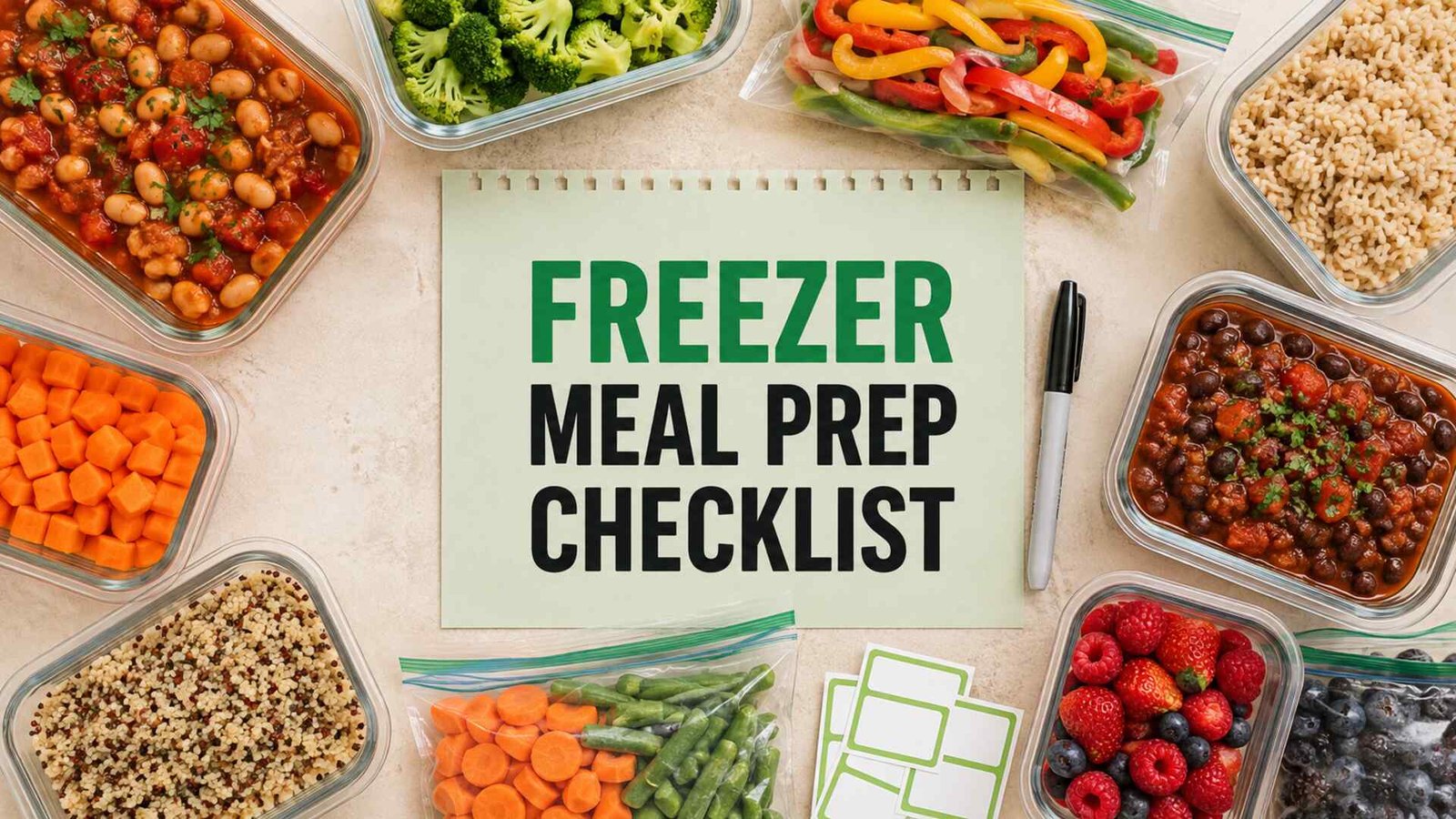
This freezer meal prep checklist helps you choose foods that usually freeze well, identify ingredients that need special preparation and package meals for easier storage and reheating. “Buy” and “skip” are not absolute categories. Texture depends on the recipe, how the food is prepared and how it will be served after thawing.
Start with meals your household already enjoys. Freeze one portion as a test before making a large batch, especially when the dish contains dairy, delicate vegetables, pasta or potatoes.
Freezer Meal Prep Checklist: What to Buy
Choose ingredients that hold their structure, reheat evenly or are used in dishes where a softer texture is welcome.
- Soups, stews and curries: broth- or tomato-based dishes are practical starting points.
- Cooked beans and lentils: portion them alone or in prepared meals.
- Cooked grains: rice, quinoa, barley and similar grains can be frozen in meal-sized portions.
- Sturdy vegetables: carrots, peas, corn, broccoli, cauliflower, squash, onions and peppers suit many cooked freezer meals.
- Proteins: cooked meats, poultry, tofu and legumes can work when prepared and stored safely.
- Breads and baked goods: many loaves, rolls, muffins and flatbreads freeze well when wrapped carefully.
- Sauces and bases: tomato sauces, stocks and many blended sauces can simplify later meals.
Buy only the quantity you have time and freezer space to prepare. A smaller batch packaged well is more useful than an oversized cooking project that sits unfinished.
Foods to Skip or Prepare Differently
Some foods are safe to freeze but may lose the texture you expect. Rather than banning them from every freezer meal, change the preparation or add them after reheating.
- Raw salad greens and cucumbers: high water content can leave them limp after thawing. Add fresh greens when serving.
- Raw potatoes: texture and colour may change. Use a tested recipe or cook them before freezing.
- Delicate pasta: it can soften during thawing and reheating. Cook it slightly firmer, freeze sauce separately or add fresh pasta later.
- Creamy sauces: some separate when thawed. Test a portion or add the dairy component after reheating.
- Mayonnaise-based mixtures: texture may change, so prepare the base first and add mayonnaise later.
- Crispy coatings: moisture can reduce crispness. Reheat with a method appropriate to the food and its safety requirements.
- Fresh garnishes: herbs, crunchy toppings and fresh citrus are usually better added at serving time.
If one ingredient is unsuitable, look for a replacement that performs the same job. These ingredient-swapping tips explain how moisture, fat, acidity, structure and flavour affect a substitution.
Freezer Meal Prep Equipment Checklist
- Freezer-safe containers or bags in useful portion sizes
- Leak-resistant lids
- Labels and a freezer-safe marker
- Sheet pan or tray for freezing bags flat when suitable
- Measuring tools for consistent portions
- Shallow containers for quicker cooling of cooked food
- A freezer thermometer
Choose containers designed for freezer use and leave appropriate space when liquids may expand. Avoid reusing damaged containers, and follow the manufacturer’s instructions for freezing, thawing and reheating.
Plan the Shopping List Around Complete Meals
Decide which dishes you will prepare before adding ingredients to the list. Look for useful overlap: onions may support a soup and a curry, while cooked grains can become side portions for several meals.
- Choose two or three tested freezer-friendly recipes.
- Write the number and size of portions needed.
- Check pantry, refrigerator and freezer stock.
- Combine duplicate ingredients carefully.
- Add containers, bags and labels if supplies are low.
- Remove ingredients that will be added fresh later.
For a repeatable process, use the guide to organizing a weekly meal prep shopping list. The broader guide on making a grocery list can help with pantry checks and grouping items.
Cook and Cool Food Safely
Cook foods to the safe doneness required for the specific ingredient. After cooking, divide large quantities into shallow containers so they cool more quickly. Do not leave perishable food at room temperature while waiting for it to become completely cold.
FoodSafety.gov advises refrigerating perishable foods within two hours, or within one hour when the surrounding temperature is above 90°F (32°C). Its official four steps to food safety also recommends shallow containers for prompt cooling.
If batch cooking is new to you, the batch cooking guide for beginners explains how to choose manageable components and avoid preparing too many dishes at once.
Portion and Package for the Way You Eat
Package meals in the amounts you are likely to thaw. Individual portions suit lunches and changing schedules, while larger containers may work for a shared dinner. Flatten appropriate freezer bags to save space and encourage more even freezing.
- Remove excess air without crushing the food.
- Protect exposed surfaces from drying.
- Keep raw ingredients separate from ready-to-eat foods.
- Use smaller portions when only one serving may be needed.
- Avoid repeatedly thawing a large container to remove a small amount.
Label Every Freezer Meal Clearly
A useful label includes the dish name, freezing date, portion count and any important reheating or finishing note. Add a clear allergen note when meals are shared with other people.
- Dish name
- Date frozen
- Number of portions
- Thawing or reheating method
- Fresh ingredient to add later
- Allergen information when relevant
Use Storage Guidance for the Specific Food
There is no single best-quality timeline for every freezer meal. Ingredients, packaging and freezer conditions differ. Keep the freezer at the recommended temperature and consult guidance for the actual food rather than applying one rule to everything.
The official FoodSafety.gov cold food storage chart lists refrigerator and freezer guidance by food type. It notes that freezer time ranges refer to quality when food remains continuously frozen at 0°F (-18°C) or below.
Thaw and Reheat With a Plan
Move a meal to the refrigerator early enough to thaw safely, or use another method recommended for that food. Do not thaw perishable meals on the counter. If using a microwave to thaw, continue cooking or reheating as directed rather than leaving the food partially warmed.
Reheat the portion you need and follow safe internal-temperature guidance for the dish. Stir foods such as soups and casseroles when appropriate so the centre heats evenly.
Keep a Simple Freezer Inventory
Write down what enters the freezer and cross it off when used. Place older meals where they are easy to see, and review the inventory before weekly shopping. This prevents duplicates and makes the freezer part of the meal plan instead of long-term storage for forgotten containers.
Start With a Small Freezer Meal Test
Use this freezer meal prep checklist for one familiar recipe first. Freeze two portions, label them clearly and note how the texture changes after thawing and reheating. Adjust the ingredients or packaging before preparing a larger batch.
A reliable freezer routine is built from tested meals, safe cooling, suitable containers and accurate labels. Choose foods that match the recipe, prepare delicate ingredients differently when needed and keep official storage guidance close at hand.