
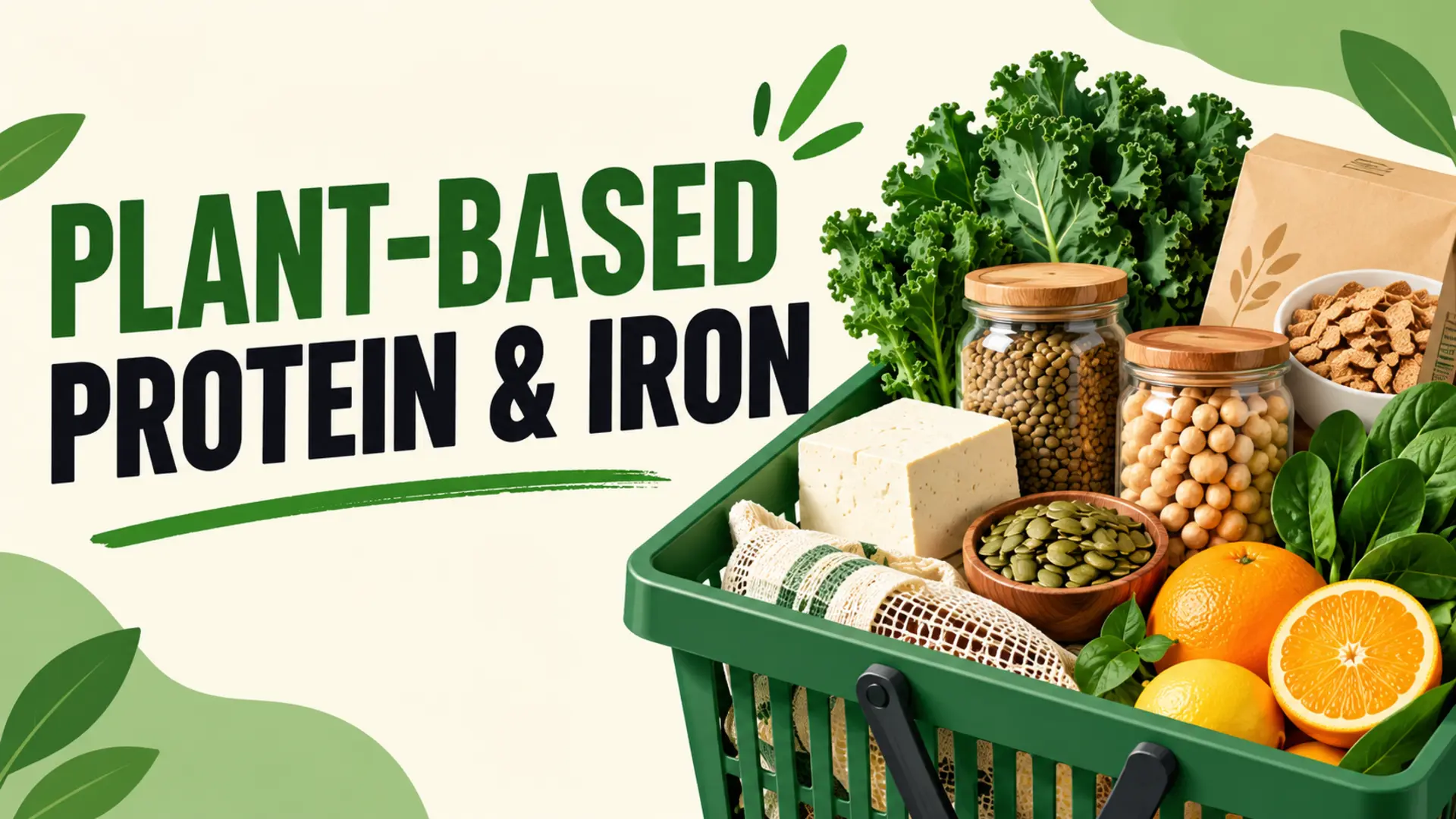
Planning for plant-based protein and iron works best with variety, regular meals, and a few reliable fortified foods. You do not need to combine specific proteins at every meal, but eating a range of legumes, soy foods, grains, nuts, seeds, and vegetables across the day helps cover nutritional needs.
Plant-based protein and iron grocery essentials
- Legumes: lentils, chickpeas, black beans, kidney beans, peas, and bean-based products.
- Soy foods: tofu, tempeh, edamame, and fortified soy milk.
- Nuts and seeds: pumpkin seeds, sesame or tahini, hemp, chia, peanuts, and tree nuts where safe.
- Grains and fortified foods: oats, quinoa, wholegrain bread or pasta, and cereals with useful label-listed nutrients.
- Produce: leafy greens, broccoli, peppers, tomatoes, berries, citrus, and other fruit and vegetables.
Pair iron foods with vitamin C
Iron from plant foods is absorbed differently from iron in animal foods. Including a vitamin C source in the same meal can improve absorption: add peppers or tomatoes to lentils, berries to fortified cereal, or citrus to a bean-and-grain bowl. Tea and coffee with meals can reduce iron absorption for some people, so discuss timing with a clinician if iron status is a concern.
Use flexible meal formats
- Lentil curry with rice and vegetables.
- Tofu stir-fry with noodles and broccoli.
- Bean tacos with cabbage, salsa, and avocado.
- Chickpea salad with whole grains and citrus dressing.
- Oats with fortified plant milk, seeds, and fruit.
Check labels on meat alternatives: some are useful and fortified, while others may be high in sodium or less filling for your needs. There is no need to classify foods as universally “clean” or “junk”; look at the full pattern, convenience, cost, and enjoyment.
Remember nutrients beyond protein and iron
People eating fully vegan diets need a reliable source of vitamin B12 from fortified foods or supplements. Vitamin D, iodine, calcium, and omega-3 needs also deserve attention, but amounts and product choices depend on age, location, health, and diet. A registered dietitian or qualified clinician can provide individual advice, especially during pregnancy, childhood, or treatment for low iron.
Prepare and store foods safely
Cook dried beans thoroughly according to package directions; some types require boiling and should not be prepared only in a slow cooker. Cool cooked grains and legumes promptly, refrigerate them, and use or freeze them within appropriate local food-safety guidance.
For more planning ideas, see our flexible family-meal guide and beginner keto shopping guide for an example of why restrictive patterns require careful nutritional consideration.
Conclusion
A strong plant-based protein and iron list combines several protein foods, iron-rich staples, vitamin C produce, and reliable fortified choices. Keep the plan varied and seek individual guidance when nutrient requirements or test results need closer management.