
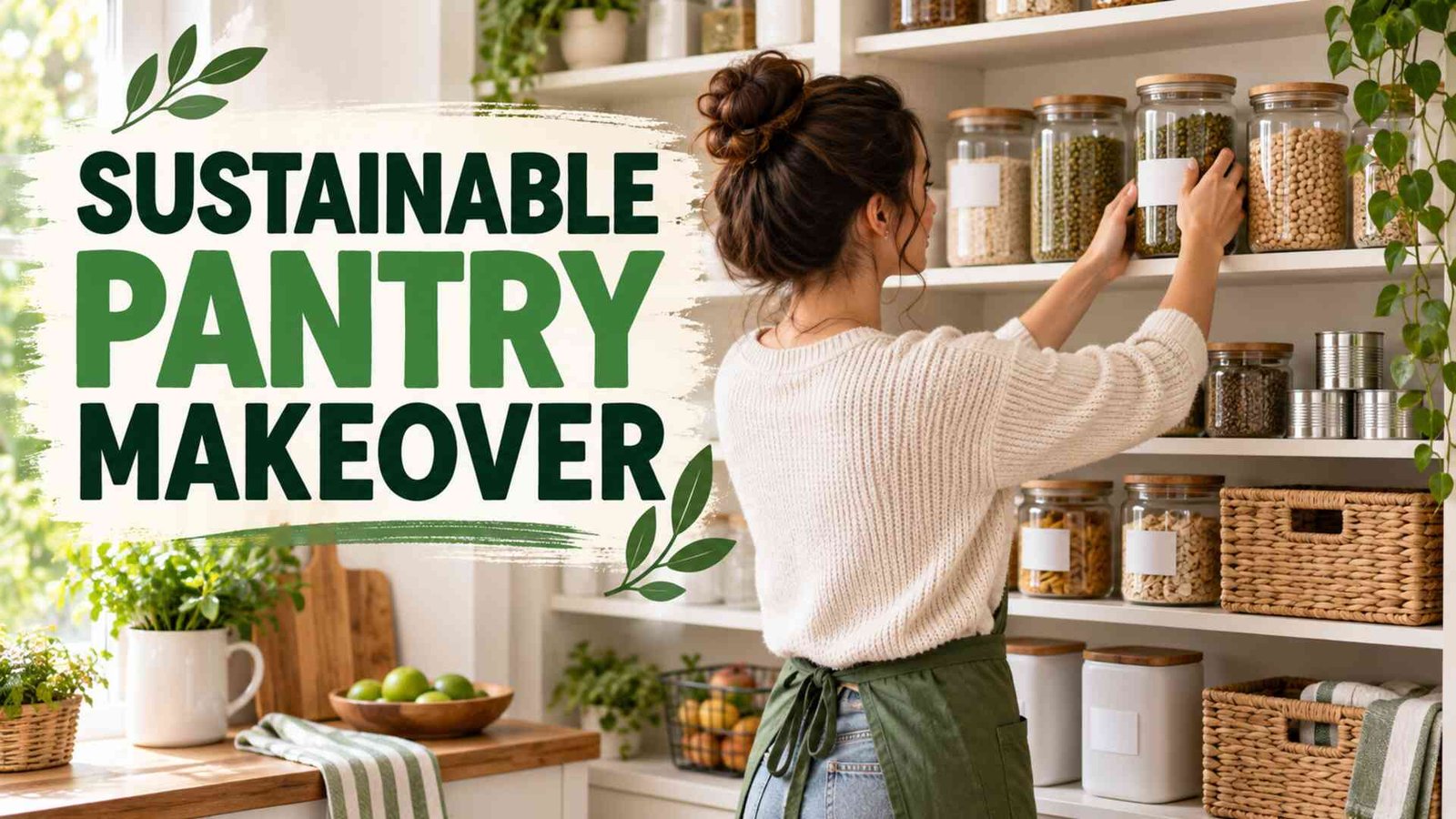
A sustainable pantry makeover should make food easier to see and use without requiring a shelf full of new matching containers. Begin with what you own, preserve important package information and add organizers only when they solve a specific problem.
Start your sustainable pantry makeover
- Remove expired, spoiled or pest-affected food according to local guidance.
- Group items by use, such as breakfast, baking, grains and quick meals.
- Place older suitable products ahead of newer purchases.
- Measure shelves before buying any bin, riser or jar.
Choose containers for function
Reuse food-safe jars and containers when they are intact, clean and suitable for the contents. Glass is clear but heavy and breakable; reusable plastic is lighter; original packaging may offer the best instructions and traceability. No material is automatically sustainable in every setting.
Keep essential information
When decanting food, retain the product name, allergen warning, preparation directions, best-before information and lot code where practical. Do not mix new food into an unwashed container holding an older batch.
Manage pantry pests properly
Bay leaves and other home remedies are not reliable pest controls. Inspect packages, clean affected shelves, discard contaminated food and follow local pest-management advice. Containers can help protect food but are not guaranteed pest-proof or airtight.
Use the FIFO pantry method for rotation and the freezer storage plan for overflow.
Organize for everyday use
A successful sustainable pantry makeover reduces forgotten purchases and daily friction. Clear categories and realistic inventory matter more than decorative uniformity.