
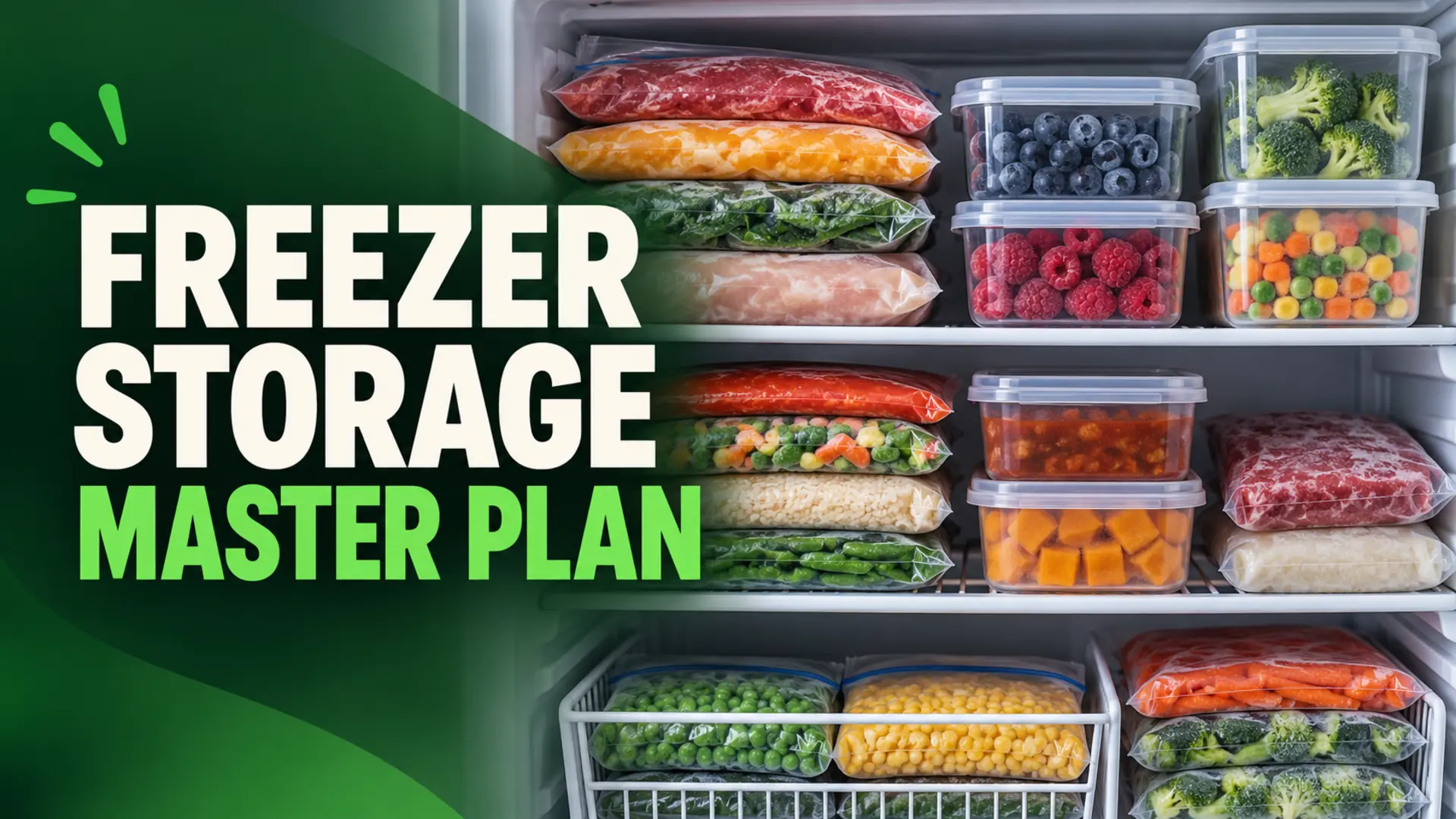
A practical freezer storage master plan makes frozen food easier to find and helps protect quality. Freeze suitable food promptly, use freezer-safe packaging, label it clearly and follow safe cooling and thawing methods.
Freezer storage master plan essentials
- Cool safely: divide cooked food into shallow containers and refrigerate promptly before freezing. Do not leave perishables at room temperature to cool for long periods.
- Limit air: use freezer-safe bags or containers and remove excess air without letting water enter the package.
- Label: write the food name, freezing date and useful reheating notes.
- Freeze flat: flatten suitable bagged foods so they stack or file neatly once solid.
- Rotate: place older suitable packages where you will see and use them first.
Organize for visibility
Group foods into simple zones such as proteins, vegetables, fruit and prepared meals. Keep a short inventory on the door or in your preferred list. A weekly refrigerator audit can identify foods to freeze, while the FIFO pantry method offers a useful rotation habit.
Thaw food safely
Use the refrigerator, cold water in a leak-proof package, or a microwave followed by immediate cooking. Avoid thawing perishables on the counter. Follow current local food-safety guidance for storage and reheating, because suitable times vary by food and packaging.
Protect quality, not perfection
Freezing slows deterioration but does not make unsafe food safe or preserve quality forever. Inspect packages, use your labels, and discard food with signs of spoilage or damaged packaging.