
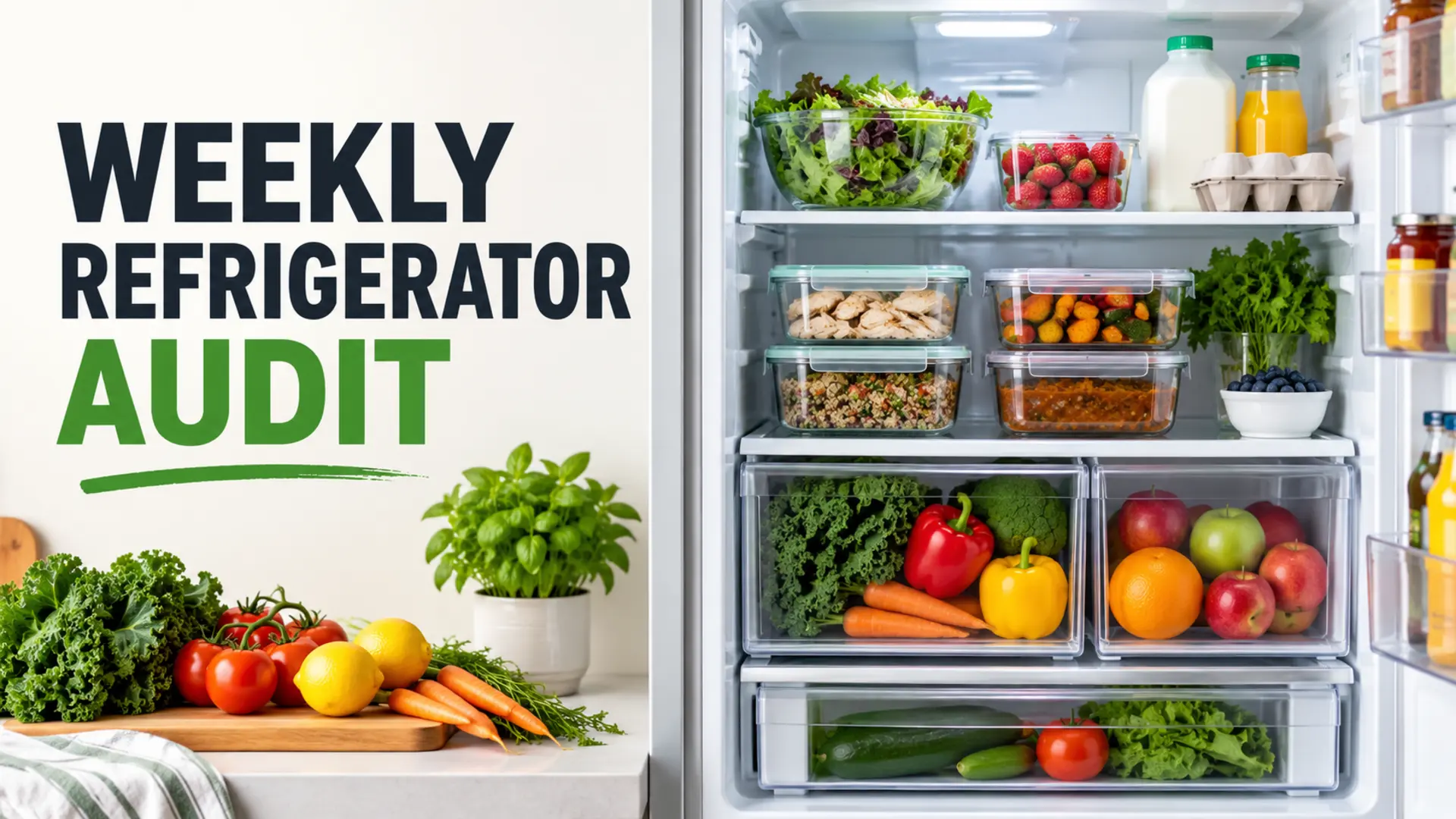
A weekly refrigerator audit gives you a clear picture of leftovers, perishables and ingredients before you write a grocery list. A short, consistent check can reduce duplicate purchases and make meal planning easier without relying on exaggerated savings claims.
Weekly refrigerator audit: a simple checklist
- Check leftovers and decide what to eat, freeze or discard.
- Review produce, dairy and opened packages for quality and dates.
- Scan condiments and frequently replaced items.
- Note ingredients that should be used soon.
- Build the first meals of the week around suitable existing food.
Create an “eat first” area
Use a visible container or shelf for foods that should be prioritized. Keep raw meat, poultry and seafood sealed and separated so they cannot drip onto ready-to-eat foods. Avoid mixing foods with incompatible allergen needs.
Turn the audit into a shopping list
Cross off items already on hand, then add only the gaps needed for planned meals. The pantry-reset guide extends the same idea to shelf-stable foods, while the last-minute dinner pantry offers flexible meal formats.
Clean with food safety in mind
Wipe spills using a food-safe method recommended for your appliance and local guidance. Check that the refrigerator maintains a safe temperature and follow package or public-health advice for storing leftovers; appearance and smell alone cannot identify every hazard.
Make the habit sustainable
A weekly refrigerator audit does not need a fixed ten-minute timer or special acrylic bins. Use whatever system is visible, accessible and easy for your household to maintain.