
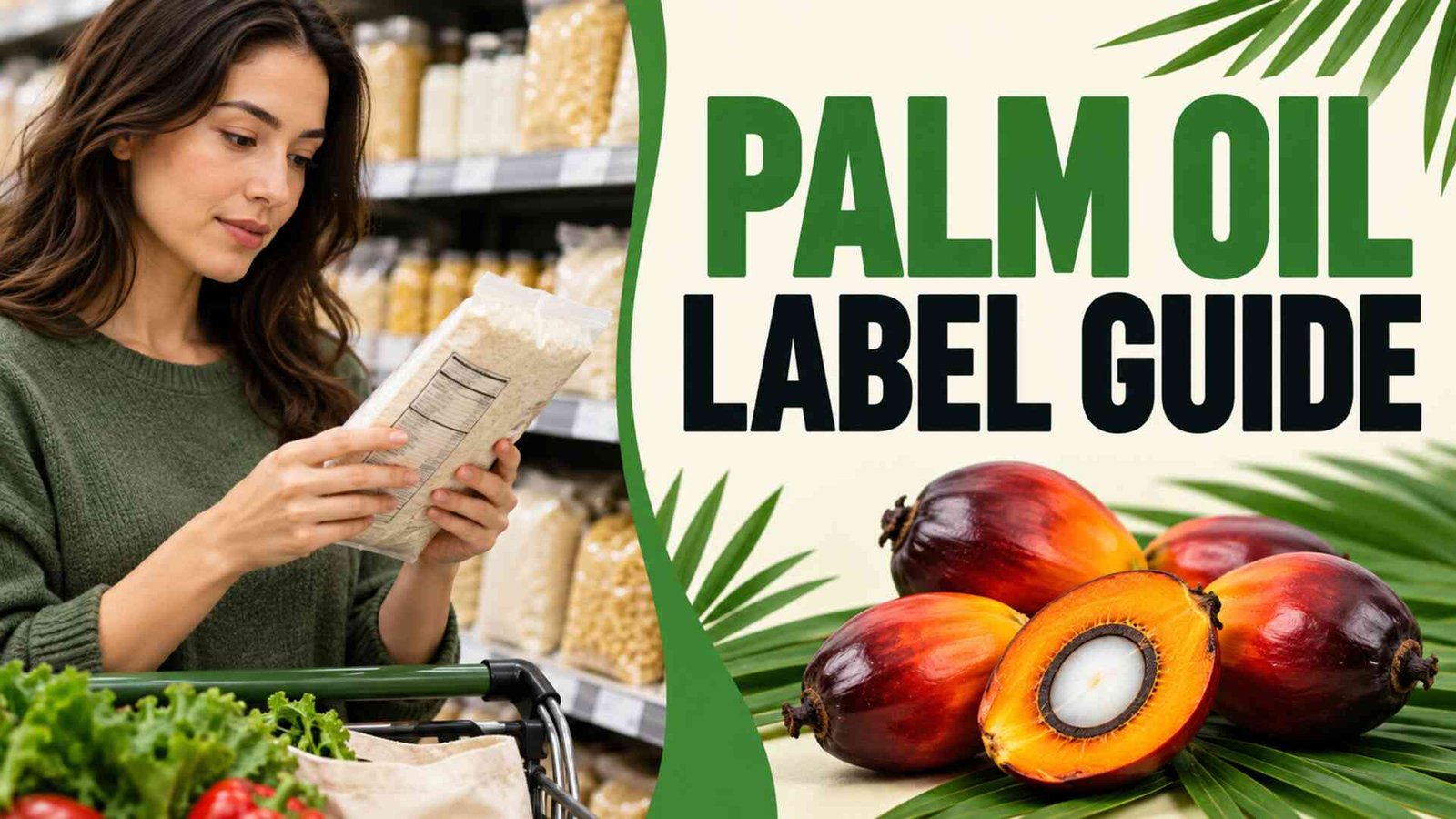
This palm oil label guide helps shoppers evaluate ingredient and sustainability claims without treating every technical ingredient as proof of palm oil. Supply chains and certification standards are complex, so verify specific claims.
How to use a palm oil label guide
Clear terms such as palm oil, palm kernel oil and palm fat directly identify palm-derived ingredients. Other emulsifiers, fatty acids and surfactants may come from palm or another source; the name alone may not reveal origin.
- Read the ingredient list and manufacturer sourcing statement.
- Ask the company when an ingredient source is unclear.
- Review the certifier’s current standard and traceability model.
- Avoid assuming generic vegetable oil is always palm oil.
Understand certification limits
Certification can provide useful criteria and chain-of-custody information, but it does not guarantee every environmental or social outcome. Standards, auditing and supply-chain categories differ.
Compare alternatives carefully
Palm-free does not automatically mean impact-free. Other oils require land, water, processing and transport, and substituting them can create different trade-offs. Consider the full product, not one ingredient alone.
Choose practical foods
For products such as nut butter, compare ingredients, allergens, nutrition, price and storage instructions. See the ultra-processed food shopping guide and healthy-fats shopping guide.
Prefer specific, verifiable claims
A palm oil label guide is most useful when it separates confirmed ingredients from possible derivatives and avoids unsupported health or deforestation guarantees.