
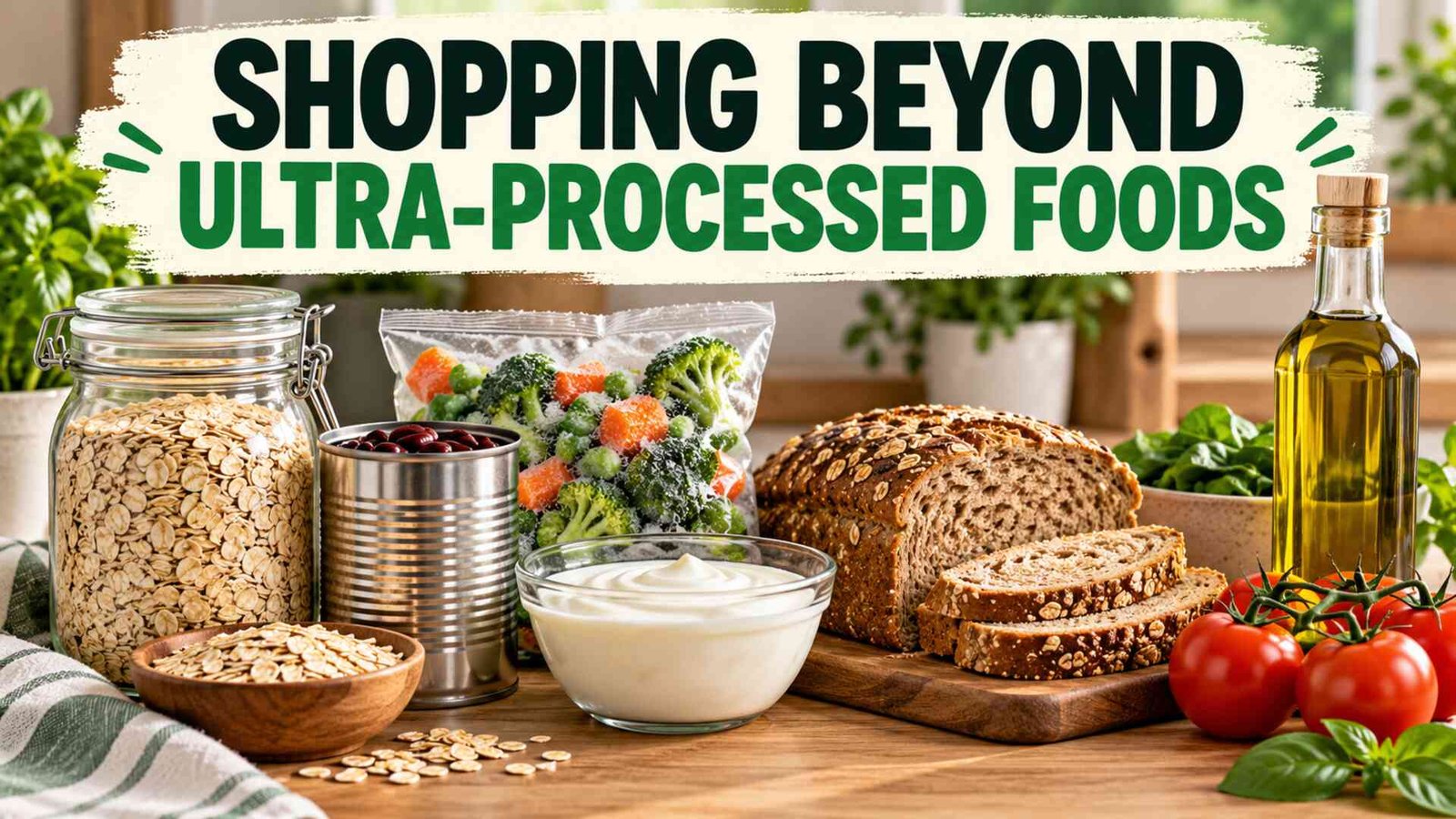
Learning how to avoid ultra-processed foods does not require eliminating every packaged product or treating processing as a simple measure of health. Processing can improve safety, convenience and accessibility. A practical goal is to choose more minimally processed staples while keeping useful packaged foods that fit your needs.
How to avoid ultra-processed foods gradually
- Choose plain oats or whole-grain cereal more often.
- Keep canned beans, fish and tomatoes for convenient meals.
- Use frozen fruit and vegetables without dismissing them as inferior.
- Compare yogurt, bread and sauces for nutrients, allergens and serving size.
- Cook extra meal components when time allows.
Understand the NOVA framework
NOVA classifies foods by the nature and purpose of processing. It is useful in research, but it does not tell you everything about a product’s nutrition, affordability or suitability. A long ingredient list, unfamiliar name or front-of-package claim alone is not a reliable verdict.
Use the nutrition-label guide to compare similar products in context.
Keep convenient foods that help
Whole-grain bread, fortified cereal, canned legumes, frozen meals and plant drinks may support accessibility, dietary needs or time constraints. Compare products rather than applying arbitrary ingredient limits. Avoid fear-based rules about additives or seed oils that are not supported by the overall evidence.
Build easy meals from mixed ingredients
- Canned beans, frozen vegetables and rice.
- Whole-grain toast, eggs and fruit.
- Plain yogurt or an alternative with oats and berries.
- Soup made from vegetables, lentils and a suitable packaged stock.
The last-minute dinner pantry offers more flexible combinations.
A realistic conclusion
To avoid ultra-processed foods sustainably, emphasize variety and useful cooking skills while leaving room for convenience, culture, budget and enjoyment. Gradual changes are more practical than purity rules.