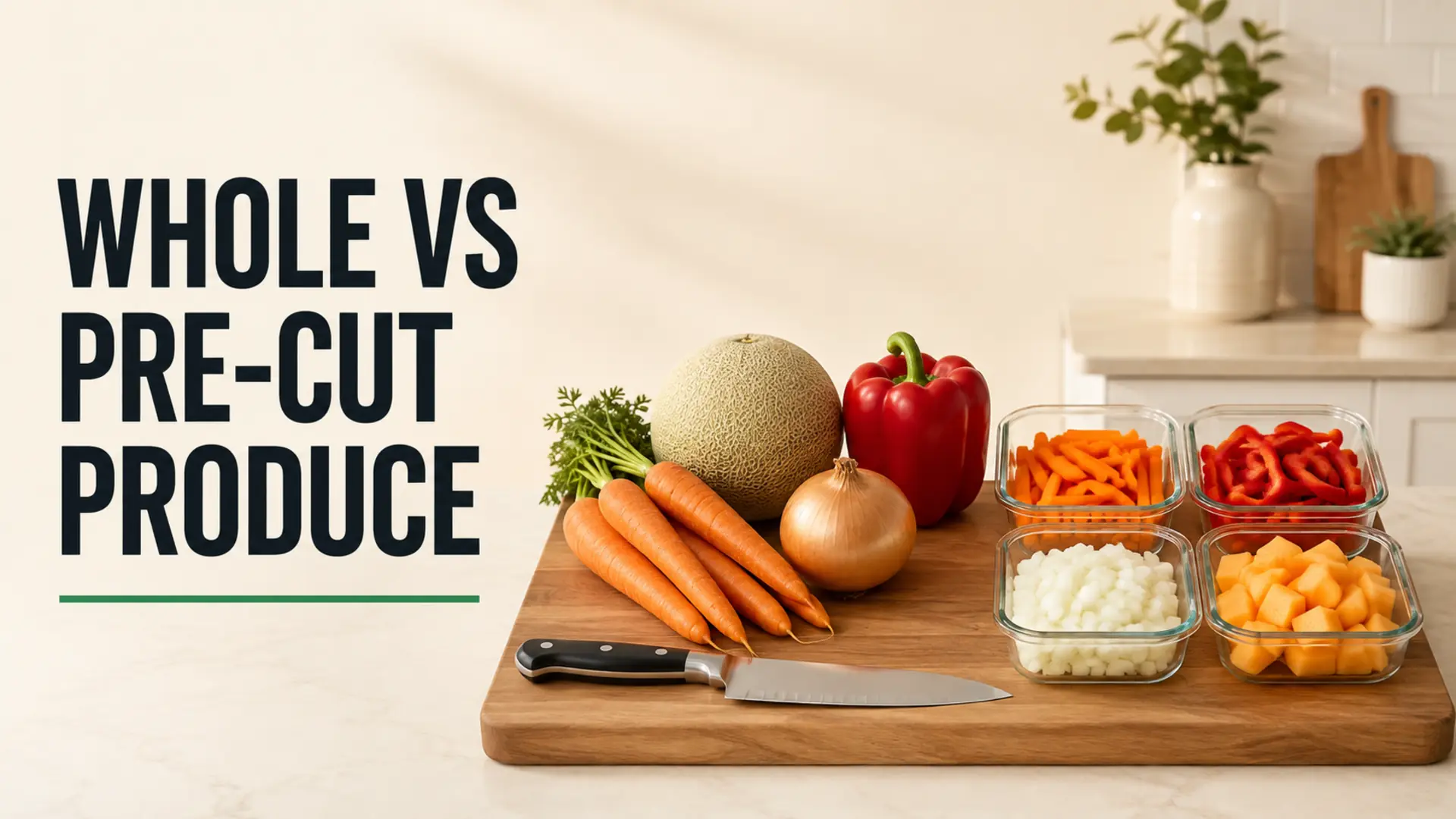
The cost of pre-cut fruits and vegetables includes more than the shelf price. Prepared produce can cost more per unit of weight, but it may also reduce preparation time, improve accessibility or prevent waste for some households. A useful comparison considers the portion you will eat, the work required and how quickly each option will be used.
How to compare the cost of pre-cut fruits and vegetables
Compare equivalent products on the same day and at the same store. Use the unit price shown on the shelf when it uses the same measurement. If one package is priced by item and the other by weight, calculate a common unit before deciding.
Price per usable unit = package price ÷ amount you expect to eat
- Check net weight rather than judging by container size.
- Account for peels, cores, stems or seeds removed from whole produce.
- Include only the quantity your household is likely to use.
- Compare store-prepared, factory-packed, frozen and whole options where available.
Our guide to using unit pricing at the supermarket explains how to normalize package comparisons.
Why pre-cut produce may cost more
The price may reflect washing, trimming, cutting, packaging, refrigeration, handling and a shorter selling window. The difference varies by product, store, season and location, so a universal markup percentage is not reliable. Promotions and package sizes can also change the result.
Whole produce can offer more flexibility because you control the cut and portion size. However, the lowest shelf price is not automatically the best value if preparation is difficult or much of the item will be discarded.
When prepared produce can be worthwhile
Pre-cut fruit and vegetables can be a practical purchase when they make nutritious food easier to prepare or eat. They may help people with limited mobility, pain, fatigue, visual impairment, reduced grip strength, limited kitchen equipment or a temporary injury. They can also support a particularly busy week when the realistic alternative is not using the produce at all.
- A smaller prepared portion may prevent a large whole item from spoiling.
- Ready-to-cook vegetables may make a planned meal more achievable.
- Uniform pieces can shorten some cooking tasks.
- A shared household may value the reduced preparation and cleanup.
Consider storage life and food safety
Cut produce has more exposed surface area and should be handled according to its label and local food-safety guidance. Keep refrigerated products cold, avoid damaged or leaking packages and use them within the stated storage period. Whole produce also varies widely in storage needs, so do not apply one rule to every fruit or vegetable.
For general healthy-eating information, the existing Canada’s Food Guide is one national reference; readers elsewhere should follow guidance from their own public-health authority.
Nutrition depends on more than cutting
Nutrient changes depend on the food, processing, storage temperature, light exposure and time. It is misleading to apply one fixed nutrient-loss percentage to all prepared produce. The more useful household goal is to choose fruits and vegetables that can be stored safely and eaten while they are still in good condition.
Frozen produce can also be worth comparing, especially for cooked dishes. Check added ingredients, package size and cooking use rather than assuming fresh, frozen or pre-cut is always superior.
Reduce the cost of convenience
- Buy only the prepared quantity needed for specific meals.
- Compare several cuts; sliced produce may cost differently from diced produce.
- Use frozen chopped vegetables for soups, curries and stir-fries when appropriate.
- Prepare only sturdy produce in advance and store it correctly.
- Choose one high-effort prepared ingredient and cut easier items yourself.
- Share preparation tasks within the household when possible.
A quick pantry and refrigerator audit before shopping helps avoid buying prepared produce that duplicates food already at home.
Try a mixed preparation strategy
The choice does not need to be all whole or all pre-cut. Buy whole apples, carrots or peppers when they are easy for you to prepare, while choosing cubed squash, trimmed greens or a fruit cup when those save meaningful effort. A mixed approach directs convenience spending to the tasks that create the greatest barrier.
A simple weekly workflow
- Choose the meals that need produce.
- Identify which preparation tasks are realistic that week.
- Compare whole, prepared and frozen unit prices.
- Buy quantities that match the meal plan.
- Store the most perishable items visibly and use them first.
Track what your household actually uses
For two or three shopping cycles, note the purchase price, usable amount, preparation time and discarded quantity. Add any forgotten prepared packages to the calculation. The method in our guide to calculating household grocery cost per person can help keep the comparison consistent.
If waste is the main concern, combine this review with practical steps for using refrigerator ingredients before buying more.
Choose value, not a universal rule
The true cost of pre-cut fruits and vegetables depends on price, usable yield, time, accessibility and waste. Whole produce may be economical when you can prepare and use it; pre-cut produce may be sensible when it removes a genuine barrier. Compare the options for the meal and household in front of you.