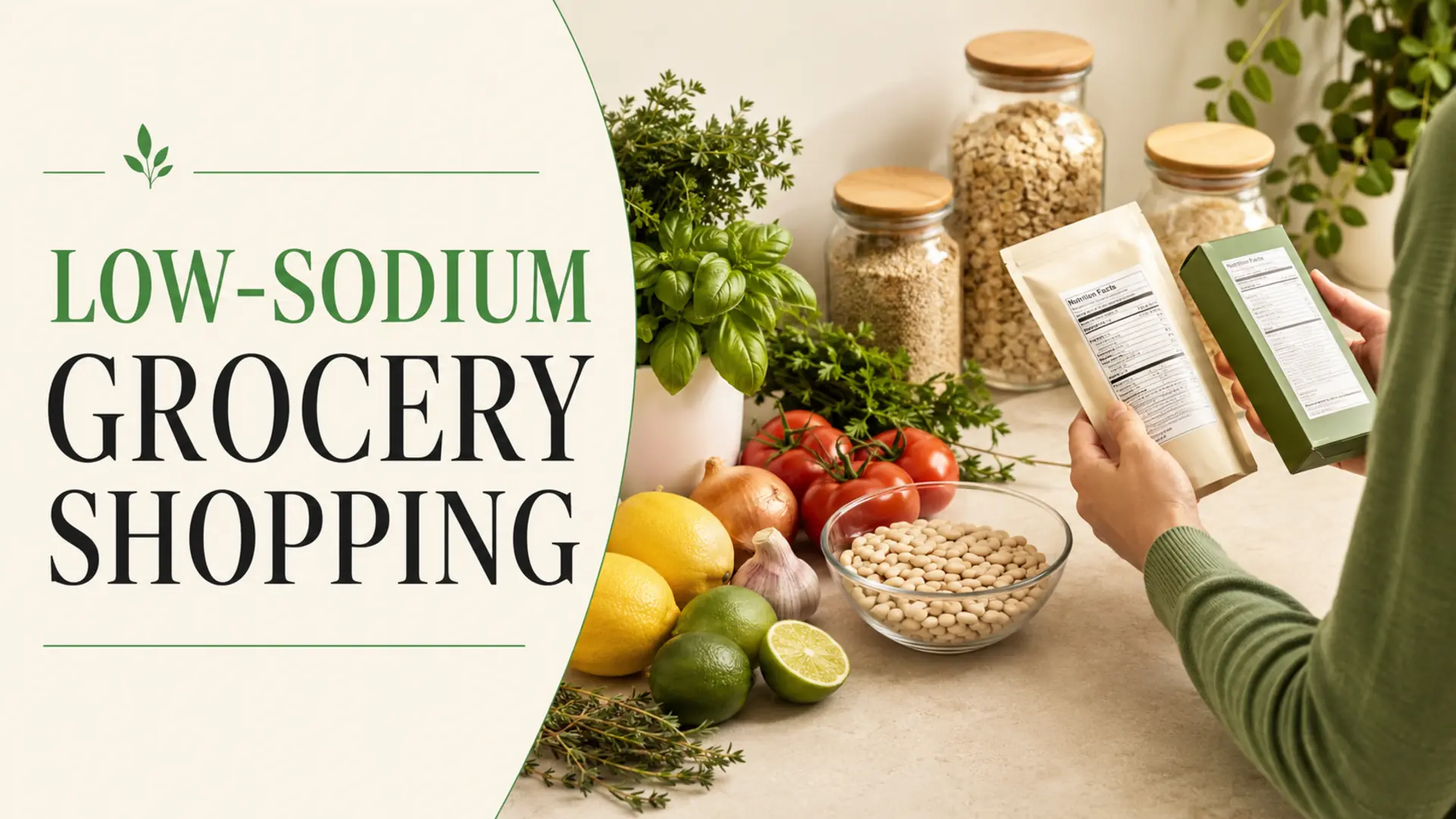
A useful low-sodium grocery shopping strategy compares similar products, checks serving sizes and builds meals around foods that need little added salt. It does not require banning every packaged food or following one universal number. Sodium guidance and medical needs vary, so use the recommendations for your country and any individualized advice from your clinician or registered dietitian.
Sodium occurs naturally in some foods and is also added for flavour, preservation and texture. The practical goal is to notice where larger amounts enter your usual meals, then make manageable swaps that still fit your budget, culture and cooking routine.
Start Your Low-Sodium Grocery Shopping Strategy With Labels
Compare products within the same category because breads, soups, sauces and frozen meals can differ substantially. Check the sodium amount, serving size and number of servings you expect to eat. A package that appears moderate per serving can contribute more when the portion is larger.
In the United States, the FDA Nutrition Facts guide explains that 5% Daily Value or less per serving is considered low and 20% or more is considered high. Other countries use different label formats and claims, so follow local definitions rather than transferring U.S. percentages automatically.
Use a Personal Target, Not an Internet Prescription
The World Health Organization sodium guideline recommends that adults consume less than 2,000 mg of sodium per day, while national organizations may use different reference values. Individual targets may differ for children, athletes, people working in extreme heat, and people managing kidney, heart or other health conditions.
Do not make an aggressive sodium reduction or use potassium-based salt substitutes solely from a blog article. Some medicines and health conditions affect sodium or potassium needs. Ask an appropriately qualified professional when your target is part of medical treatment.
Check These Categories Carefully
Bread, wraps and baked goods
Sodium varies across brands and styles even when products look similar. Compare the label for the amount you normally eat, then consider fibre, allergens, price and taste as well. A lower-sodium product is not automatically the best overall choice for every shopper.
Soups, broths and sauces
Look for no-salt-added or reduced-sodium versions where available, but verify the nutrition panel because front-label terms are regulated differently across markets. Concentrated sauces, seasoning packets and bouillon can add sodium quickly when several are combined in one recipe.
Cured meats, seafood and meat alternatives
Deli meats, cured fish, sausages and some plant-based alternatives can be significant sources. Compare similar products and rotate in beans, lentils, eggs, tofu, fresh poultry, fish or other suitable proteins. Check ingredient and allergen labels rather than assuming “plant-based” means low sodium.
Canned foods
Choose no-salt-added beans, vegetables or fish when they suit the meal and budget. Draining and rinsing some canned foods may reduce surface sodium, but the result varies and does not remove all sodium. Continue to use the label as your planning reference.
Frozen and ready-made meals
Compare the full portion you will eat, not only the listed serving. Balance convenience with the rest of the meal: a prepared main can be paired with plain frozen vegetables, fruit or an unsalted grain instead of adding several salty sides.
Build the Cart Around Flexible Basics
- Produce: fresh or frozen vegetables and fruit without salty sauces.
- Grains and starches: oats, rice, barley, pasta, potatoes or locally familiar alternatives.
- Proteins: dried or no-salt-added beans, lentils, tofu, eggs, fish, poultry or other suitable choices.
- Unsalted extras: nuts, seeds and nut or seed butters when appropriate.
- Convenience items: selected after comparing sodium per realistic portion.
Start by checking food already at home with the pantry audit checklist. Then organize genuine gaps using the guide to sorting a grocery list by aisle.
Add Flavour Without Making “Zero Sodium” Claims
Lemon, lime, vinegar, garlic, ginger, onions, fresh herbs and salt-free spice blends can add contrast and aroma. Plain dried spices generally contribute little sodium, but blends, nutritional yeast, condiments and prepared pastes may contain added salt, so check their labels.
- Use citrus or vinegar to brighten beans, vegetables and grains.
- Toast suitable spices briefly to deepen aroma.
- Add fresh herbs near the end of cooking.
- Build savoury flavour with mushrooms, tomatoes or browned onions.
- Reduce sodium gradually so your cooking remains enjoyable and sustainable.
Create a Lower-Sodium Meal Formula
Choose one plain base, one protein, two vegetables and one measured flavour component. For example: rice with beans, roasted vegetables and lime; pasta with tomatoes, lentils and herbs; or fish with potatoes, greens and a yoghurt-herb sauce. The five-ingredient sheet-pan guide can help keep combinations focused.
Make One Change Per Shopping Trip
Review the foods your household eats most often and compare one category at a time. Replacing a frequently used broth, bread or sauce may be more practical than buying many specialty products that are rarely used. Keep notes on taste, price and availability so the next list reflects what actually worked.
Final Low-Sodium Shopping Checklist
- Confirm your appropriate sodium target.
- Check the pantry and plan realistic meals.
- Compare serving sizes and sodium within each category.
- Choose several minimally seasoned meal components.
- Add acids, aromatics, herbs and verified salt-free spices.
- Review sauces, condiments and convenience foods together.
- Keep the approach flexible enough to repeat.
A strong low-sodium grocery shopping strategy is built on comparison, not fear. Read the label used in your country, focus on foods you buy repeatedly and make gradual substitutions that preserve flavour and nutritional adequacy. Seek personalized advice when sodium restriction is connected to a diagnosed condition or medication.