Learning how to coordinate grocery trips between roommates starts with a few clear agreements: which items are shared, who adds them to the list, who shops, and how shared costs are divided. A workable system prevents duplicate purchases and awkward kitchen disputes without turning everyday groceries into a complicated accounting project.
The best arrangement depends on household size, schedules, budgets, dietary needs, and how much food everyone actually wants to share. Set the rules together, write them down, and adjust them when the household changes.
How to coordinate grocery trips between roommates
Begin with a short household conversation before choosing an app, shopping day, or payment method. Agree on four basics:
- which groceries and household supplies are communal
- which foods remain personal
- how shared purchases will be approved and divided
- how shopping responsibility will rotate or be assigned
Keep the first version simple. You can add more detail after everyone has used the system for a week or two.
Separate shared, personal, and optional items
A two-tier system is often too rigid. Three categories give roommates more control:
Shared essentials
These are items everyone regularly uses and has agreed to fund. Examples might include cooking oil, salt, basic spices, dish soap, rubbish bags, paper products, or a shared milk. The exact list should reflect the household rather than a universal template.
Personal groceries
Personal meals, snacks, beverages, specialty ingredients, and items required for allergies or dietary preferences stay with the person who bought them. Dedicated shelves, bins, or simple colour markers can make ownership obvious.
Optional shared purchases
Some items are useful to several people but not everyone. A roommate can ask before buying, record who opted in, and divide the cost only among those people. This avoids forcing an equal split when usage is unequal.
Create one reliable shared grocery list
Use one list that every roommate can access. A paper list on the refrigerator can work, but a shared digital list is easier when people shop at different times. Add an item when it is running low, not after it is completely gone.
Write enough detail to prevent mistakes. “Milk” may be unclear; “shared 2% milk, medium carton” is actionable. Use quantity notes only when they matter. The goal is clarity, not a catalogue.
Our guide to preventing duplicate purchases with shared lists explains useful update habits for households.
Choose a shopping rotation that matches real schedules
A strict weekly turn may look fair but fail when work, study, travel, or caregiving schedules change. Choose one of these flexible approaches:
- Rotating shopper: one person handles the shared list each week or shopping cycle.
- Whoever is already going: the next person visiting a store claims the list and tells the group.
- Store-based roles: one roommate buys supermarket items while another handles a market, warehouse club, or specialist shop.
- Delivery rotation: roommates alternate ordering, checking substitutions, and putting items away.
Before anyone leaves, they should mark the trip as claimed. During the shop, mark items complete as they enter the basket. This is especially useful when two people may shop on the same day.
Set a fair shared-expense method
Equal splitting is convenient only when usage is reasonably equal and everyone has agreed to it. Other options include splitting by household member, tracking only communal purchases, or assigning recurring categories of similar value.
Keep receipts until costs are settled. Record the date, total, shared items, and who paid. Avoid assuming that one named payment app is available or suitable everywhere; a spreadsheet, household ledger, bank transfer, cash envelope, or locally available expense tool can all work.
Set a regular settlement time, such as after each trip or at the end of the week. Small, predictable reconciliations are easier than reconstructing a month of receipts.
Organize the refrigerator, freezer, and pantry
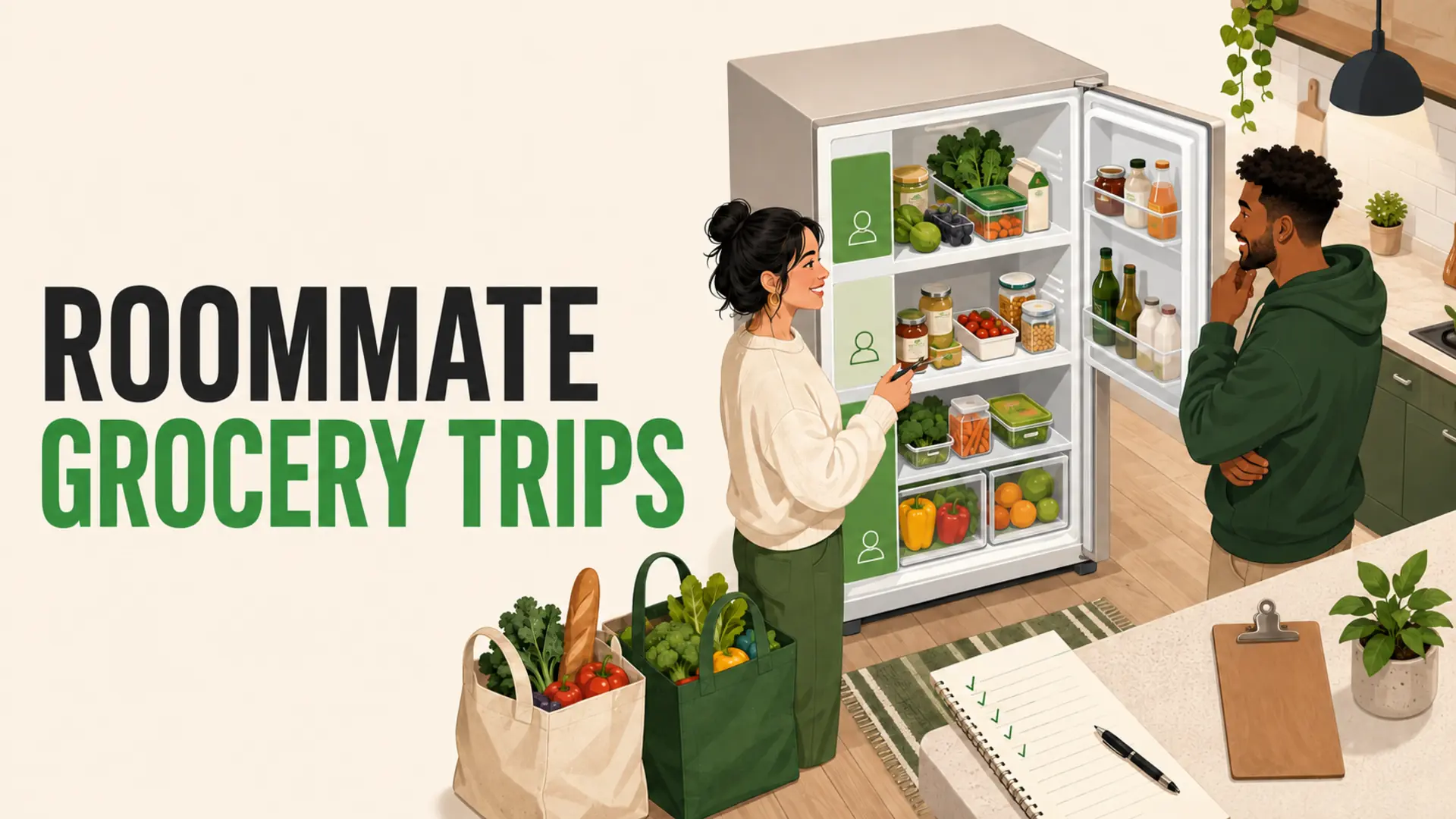
Physical organization should match the rules on the shared list. Give each roommate a shelf or bin where possible, then reserve a clearly visible area for communal foods. Door shelves are not automatically ideal for every shared item, so place foods according to storage needs rather than convenience alone.
Date leftovers, use transparent containers when practical, and avoid moving someone else’s food without asking. A shared “use soon” section can help roommates spot food that should be eaten first. For a broader reset, follow this monthly pantry-audit checklist.
Handle substitutions and spending limits
Agree on what a shopper can change without asking. For example, roommates might approve any comparable brand below a price limit but require a message before buying a larger size, premium version, or different flavour.
If an item is unavailable, the shopper can:
- skip it and leave it on the list
- choose an agreed substitute
- send one concise question to the group
A few written substitution rules reduce delays and keep the final bill predictable. Our ingredient-swapping guide can help with common meal ingredients.
Plan around allergies and dietary boundaries
Allergies, intolerances, religious practices, and medically necessary diets require more than casual labels. Discuss cross-contact risks, shared utensils, storage areas, and cleaning expectations. Never assume a personal item is safe to share simply because it looks similar to a communal product.
If a roommate’s health could be affected, follow their specific instructions and the relevant package labels. The household system should make safety easier, not pressure someone to share foods or preparation equipment.
A five-minute pre-trip checklist
- Check the refrigerator, freezer, pantry, and household-supply cupboard.
- Remove items already in stock and confirm unclear quantities.
- Identify personal requests and optional shared purchases.
- Confirm who is shopping, the store, and any spending limit.
- Review acceptable substitutions.
- Mark the trip as claimed so nobody duplicates it.
Organizing the final list by the store’s layout can make the trip easier; use this guide to organize a shopping list by supermarket aisle.
Review the roommate grocery system regularly
After the first two weeks, ask what caused confusion: unclear ownership, unequal use, missed list updates, inconvenient shopping turns, or slow reimbursements. Change one rule at a time and keep what works.
To coordinate grocery trips between roommates successfully, aim for visible rules, one shared source of truth, fair cost decisions, and room for personal boundaries. A lightweight system that everyone actually follows is better than a perfect plan that creates more work than the shopping itself.