
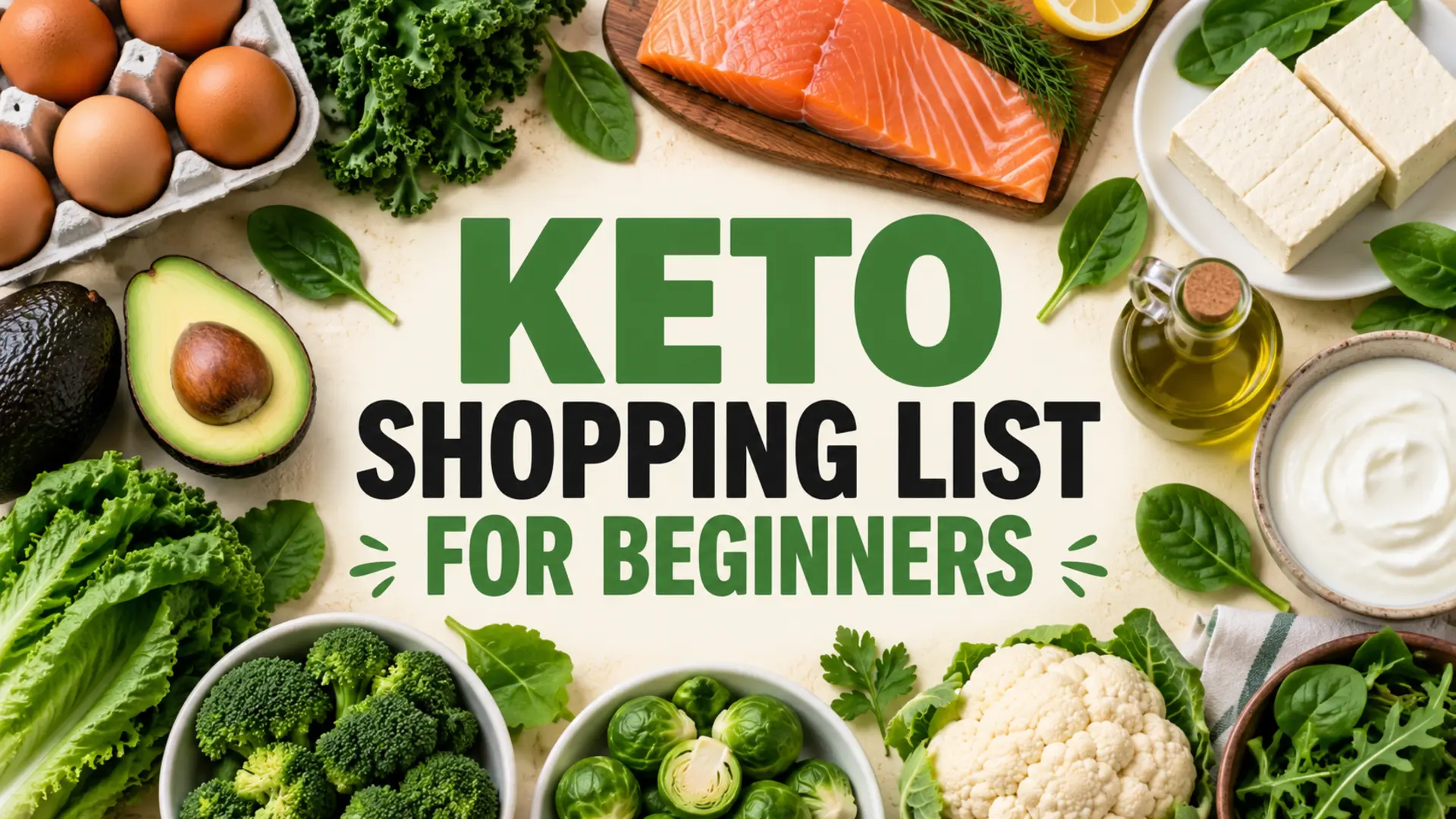
A keto shopping list for beginners should begin with medical context. A ketogenic diet is highly restrictive and may be inappropriate with certain conditions, medications, pregnancy, eating-disorder history or individual nutrient needs.
Before Using a Keto Shopping List for Beginners
Speak with a qualified healthcare professional, particularly if you use glucose-lowering or blood-pressure medication or require a therapeutic diet. Do not change medication based on a grocery guide.
Build a Varied Shopping List
- Non-starchy vegetables and leafy greens
- Eggs, fish, poultry, tofu or other suitable proteins
- Avocado, olives, seeds and appropriate oils
- Plain dairy or alternatives that fit individual needs
- Herbs, spices and low-sugar flavourings
Check labels for allergens and nutrients instead of relying on “keto” marketing. The macro-friendly meal-prep guide explains flexible tracking.
Consider Nutrients and Food Quality
Include variety and discuss fibre, electrolytes and supplementation with a qualified professional. Avoid claims that ketosis guarantees weight loss, better health or treatment of disease.
Plan Safe, Practical Meals
Use familiar meal formats and safe storage. For broader protein ideas, see the high-protein meal-prep plans.
Review How You Feel
Seek medical advice for concerning symptoms. A keto shopping list for beginners is only a planning aid, not individualized medical care.
For general nutrition guidance, see the World Health Organization healthy-diet guidance.