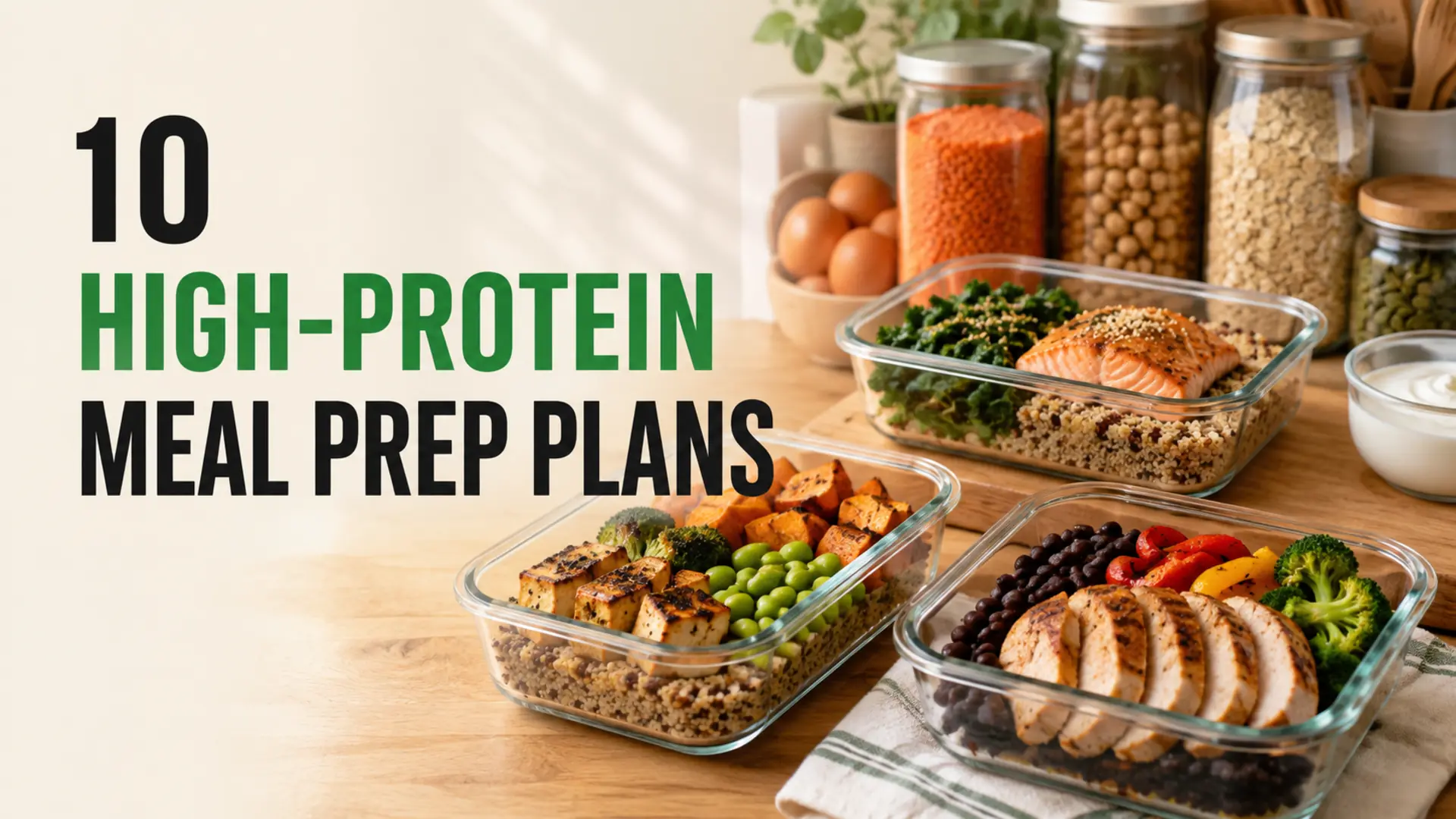
These high-protein meal prep plans offer ten flexible ways to combine a protein food with vegetables, grains or other practical sides. They include animal- and plant-based options, but they do not prescribe one protein target for everyone. Portion sizes and nutrient totals depend on the ingredients, brands and quantities you choose.
Protein needs vary with age, body size, activity, pregnancy or breastfeeding, health conditions and overall eating pattern. If you have kidney disease, another condition affected by protein intake or a medically prescribed diet, use advice from a qualified healthcare professional rather than a general meal plan.
How to Use These High-Protein Meal Prep Plans
- Choose two or three meal patterns that suit your week.
- Decide how many portions you genuinely need.
- Adjust ingredients for dietary needs and verified allergens.
- Check the pantry, refrigerator and freezer.
- Combine overlapping ingredients into one shopping list.
- Cook, cool and store food using guidance appropriate to each ingredient.
USDA MyPlate recommends varying protein foods and lists seafood, meat, poultry, eggs, beans, peas, lentils, nuts, seeds and soy products as options. Its official Protein Foods guidance also notes that individual amounts depend on several personal factors.
10 High-Protein Meal Prep Plans and Shopping Lists
1. Chicken, Quinoa and Roasted Vegetable Bowls
Prepare seasoned chicken with quinoa and a mix of roasted peppers, broccoli and onions. Keep sauce or dressing separate when that helps the vegetables retain their texture.
Shopping list: chicken, quinoa, broccoli, bell peppers, onions, cooking oil and a seasoning or sauce. Add lemon or fresh herbs if they fit the chosen flavour.
2. Tofu, Edamame and Brown Rice Bowls
Combine firm tofu and shelled edamame with brown rice and roasted or stir-fried vegetables. Use a sauce that suits the meal and check labels carefully when avoiding gluten, soy or another allergen.
Shopping list: firm tofu, shelled edamame, brown rice, carrots, broccoli, cooking oil and a suitable sauce or seasoning.
3. Salmon, Lentil and Greens Boxes
Pair cooked salmon with lentils, sturdy greens and roasted vegetables. Store the fish promptly and follow safe storage guidance for the amount of time you plan to keep it.
Shopping list: salmon, lentils, kale or another sturdy green, carrots, lemon, cooking oil and herbs.
4. Turkey and Bean Chilli
Make a chilli using lean ground turkey, beans, tomatoes, onions and peppers. Portion it with rice or bread if desired. A plant-based version can use an additional variety of beans or lentils instead of turkey.
Shopping list: ground turkey or extra legumes, beans, canned tomatoes, onion, bell pepper, chilli seasoning and an optional grain or bread.
5. Egg, Bean and Vegetable Breakfast Wraps
Fill wraps with cooked eggs, beans and sautéed vegetables. Prepare only the number that fits your storage plan, and test one frozen wrap before committing to a large batch.
Shopping list: eggs, beans, tortillas or wraps, spinach, bell peppers, onions and an optional cheese or dairy-free alternative.
6. Tuna and Chickpea Lunch Salad
Combine tuna and chickpeas with crunchy vegetables and a simple dressing. Keep wet ingredients separate until serving when possible. Choose the tuna type and frequency that fit local food-safety and dietary guidance.
Shopping list: canned tuna, chickpeas, cucumber, tomatoes, red onion, greens, lemon and cooking or dressing oil.
7. Lean Beef, Broccoli and Rice
Use a lean cut of beef with broccoli, peppers and rice. Slice meat consistently and cook it safely. A sauce can bring the components together, but review sodium and allergen information when those are concerns.
Shopping list: lean beef, broccoli, bell peppers, rice, garlic, cooking oil and a suitable stir-fry sauce or seasoning.
8. Tempeh and Lentil Curry
Combine tempeh and lentils with tomatoes, spinach and a curry seasoning. Serve it with a grain or flatbread if desired. This meal pattern uses two plant-based protein foods without depending on a supplement.
Shopping list: tempeh, lentils, canned tomatoes, spinach, onions, curry seasoning and an optional grain or bread.
9. Yogurt, Oats and Seed Breakfast Jars
Layer plain Greek-style yogurt or another suitable high-protein yogurt with oats, seeds and fruit. Add crunchy toppings near serving time. Check the nutrition label because protein content differs widely between products.
Shopping list: plain yogurt, rolled oats, chia or pumpkin seeds, berries or another fruit, and an optional nut or seed butter.
10. Black Bean, Egg and Sweet Potato Bowls
Build bowls with black beans, cooked eggs, roasted sweet potatoes, greens and salsa. Keep avocado or delicate fresh toppings separate and add them when serving.
Shopping list: black beans, eggs, sweet potatoes, greens, salsa, onions and an optional fresh topping.
Build a Balanced Meal Around the Protein Food
A high-protein label does not automatically make a meal balanced. Include vegetables or fruit, a suitable carbohydrate source and fats that fit your overall eating pattern. Variety also helps prevent every meal from depending on the same meat or packaged product.
- Rotate animal and plant-based protein foods when appropriate.
- Choose vegetables in different colours and textures.
- Use whole grains, potatoes, fruit or other carbohydrate foods that suit the meal.
- Review sodium, saturated fat, added sugar and allergen information on packaged foods.
- Adjust portions to appetite, personal needs and professional advice.
Create One Master Shopping List
After selecting the plans, merge only true duplicates. Broccoli used in two bowls can become one line, but fresh spinach and frozen spinach may need to remain separate if the recipes use them differently.
- Protein foods: group meat, seafood, eggs, dairy, beans, lentils, soy products, nuts and seeds as appropriate.
- Produce: combine compatible vegetables and fruit, then confirm total quantities.
- Grains and starches: review rice, quinoa, oats, wraps, bread and potatoes.
- Pantry items: check oils, canned tomatoes, sauces, herbs and spices.
- Storage supplies: add containers or labels only when genuinely needed.
Use the guide on how to make a grocery list for a complete pantry-check and grouping process.
Plan Quantities Before Shopping
Count the portions needed for each meal rather than buying a fixed weekly quantity from a generic list. Consider restaurant plans, leftovers, changing schedules and meals already in the freezer.
The framework for planning 21 meals a week can help connect these prepared meals with breakfasts, lunches and flexible dinners.
Cook and Store Meal Prep Safely
Cook animal proteins to safe internal temperatures and prevent raw juices from contacting ready-to-eat food. Divide cooked meals into suitable containers and refrigerate or freeze them promptly according to reliable food-safety guidance.
The freezer meal prep checklist covers cooling, packaging, labels, thawing and food-specific storage guidance. The batch cooking guide for beginners can help you start with a manageable number of components.
Avoid Relying on Unverified Nutrition Totals
Protein values change with portion size, cooked weight, recipe modifications and product formulation. If a precise amount matters, calculate it from the actual package labels and reliable food-composition data, or work with a registered dietitian.
Do not assume that a meal photo or recipe title proves a particular nutrient total. Treat these plans as adaptable cooking and shopping ideas rather than guaranteed macronutrient prescriptions.
Choose Two Plans and Start Small
Begin with two high-protein meal prep plans that use overlapping vegetables or grains. Prepare a practical number of portions, note how well they store and adjust the next shopping list based on what your household actually ate.
A useful meal-prep routine combines varied protein foods with balanced components, realistic quantities and safe storage. The goal is not to chase one universal number—it is to create meals that fit your needs and can be planned consistently.