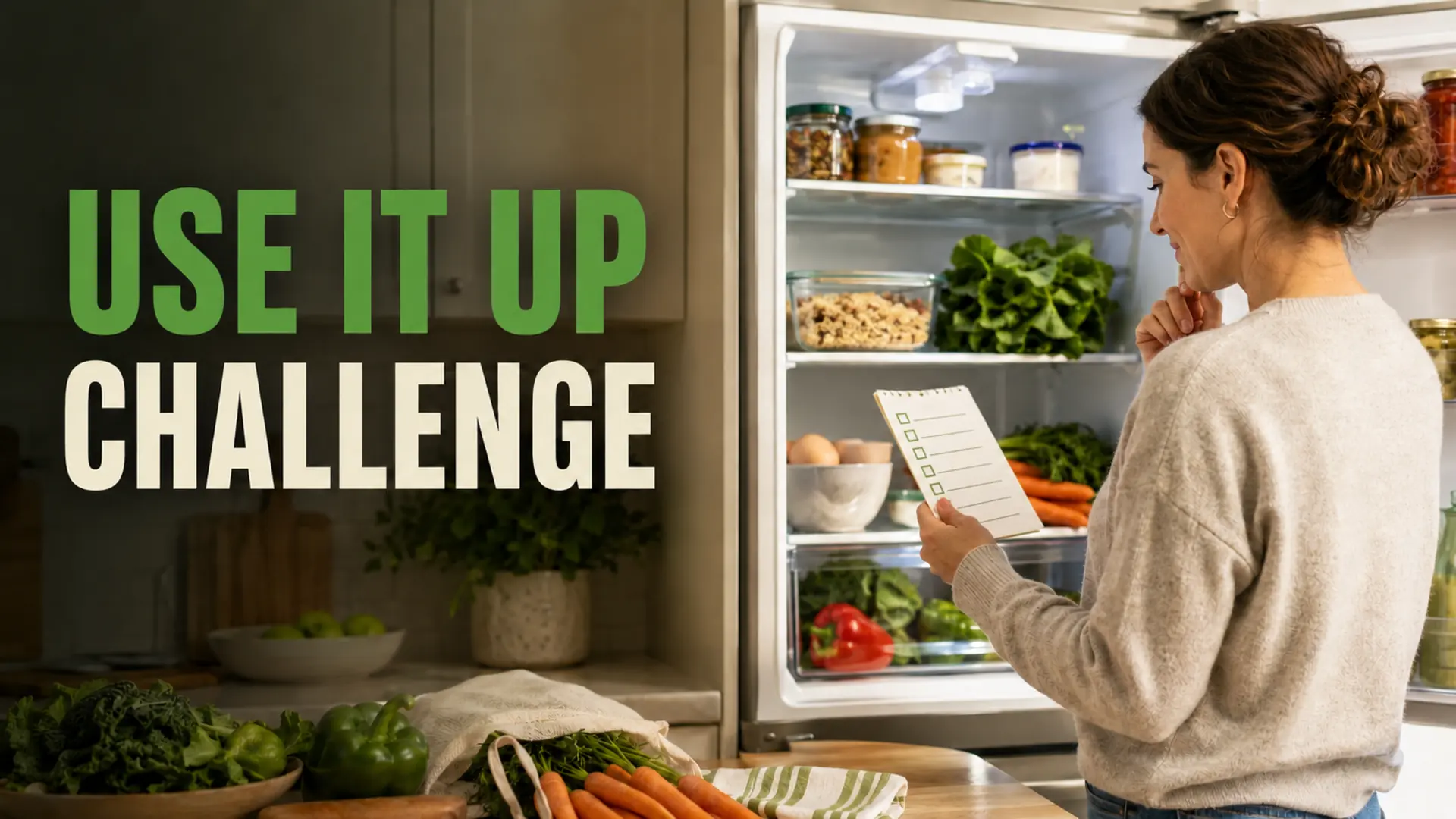
The Use It Up Challenge is a short, flexible plan for turning food already in your refrigerator, freezer and pantry into meals before buying more. It does not require an unsafe or rigid zero-spend week: essential groceries, dietary needs and food-safety rules always come first.
What is the Use It Up Challenge?
The challenge asks you to pause routine shopping, review what is already at home and build several meals around ingredients that need attention. You can run it for one meal, a weekend or a full week depending on your supplies and household.
The goal is not to empty every shelf. It is to use suitable food intentionally, identify items your household does not enjoy and create a more accurate grocery list afterward.
Start with a fridge, freezer and pantry check
Take everything one zone at a time so chilled food does not stay out unnecessarily. Check package instructions, storage conditions and signs of spoilage. When in doubt about safety, discard the item rather than trying to save it.
- Use first: suitable leftovers, cut produce, open dairy products and ripe ingredients.
- Use soon: unopened chilled foods, sturdy produce and defrosted items.
- Flexible backup: frozen foods, grains, pasta, legumes and canned goods.
- Do not use: spoiled food, damaged packages or items stored unsafely.
If the cupboards need a fuller review, use this pantry audit checklist to record quantities and priority items.
Set challenge rules that fit your household
- Choose a realistic start and end date.
- Allow essential purchases such as milk, medication-related foods or a missing staple.
- Respect allergies, medical diets, sensory needs and cultural preferences.
- Use perishable foods first while keeping shelf-stable backups available.
- Write down anything that runs out instead of immediately making an unplanned trip.
A flexible top-up list is often more practical than a strict ban on shopping. Buying one ingredient that helps use several foods may prevent more waste than refusing every purchase.
Build meals with a simple formula
Instead of searching for a recipe that matches every ingredient, combine one meal foundation, one protein or substantial component, vegetables and a flavour direction.
- Foundation: rice, pasta, bread, potatoes, oats or another familiar grain.
- Protein: beans, lentils, eggs, tofu, fish, meat or a suitable alternative.
- Produce: start with the vegetables or fruit that should be used soon.
- Flavour: choose a sauce, spice blend, herb, broth or dressing that makes the combination coherent.
Use only substitutions that make sense for the recipe and dietary needs. These ingredient-swapping tips can help without encouraging random replacements.
Seven flexible meal formats for using food up
1. Grain bowls
Combine cooked grain with beans, vegetables and a sauce. Keep components separate until serving when household members prefer different toppings.
2. Soups and stews
Use suitable vegetables, legumes, grains and cooked proteins in a broth-based meal. Add ingredients according to cooking time rather than placing everything in the pot at once.
3. Egg dishes
Frittatas, omelettes and scrambles can use cooked vegetables, herbs and small amounts of cheese. Reheat leftovers safely before combining when necessary.
4. Pasta or noodle skillets
Pair an open package of pasta or noodles with vegetables and a simple tomato, oil-based or broth-style sauce. Add a suitable protein to make the meal more substantial.
5. Tacos, wraps and sandwiches
Use cooked fillings, beans, chopped vegetables and small amounts of sauce. This format works well when the household has several ingredients in modest quantities.
6. Curries and braises
Lentils, chickpeas, vegetables and suitable proteins can be cooked with a familiar spice blend and liquid. Do not assume every ingredient has the same cooking or food-safety requirements.
7. Snack plates and simple lunches
Small portions of bread, fruit, vegetables, dips, eggs or cheese can become a practical lunch without forcing unrelated foods into one recipe.
Plan the order of meals
Use the most perishable suitable ingredients early, then move toward freezer and pantry foods. A simple three-stage plan might be:
- Early meals: leftovers, ripe produce and open chilled foods.
- Middle meals: sturdy vegetables, eggs and defrosted ingredients.
- Later meals: frozen vegetables, canned goods, grains and legumes.
This fridge-first meal-planning method provides a repeatable way to prioritize food before writing the next list.
Keep food safety ahead of the challenge
A challenge does not extend a product’s safe storage time. Follow label directions and local food-safety guidance for chilling, thawing, reheating and leftovers. Do not taste food to determine whether it is safe. Keep raw animal products separate from ready-to-eat foods and refrigerate perishable items promptly.
Record what the challenge teaches you
At the end, note which foods were easy to use, which were repeatedly avoided and what small purchase helped complete meals. Update future quantities accordingly. If multiple open packages accumulated, buy a smaller size or wait longer before replacing them.
Connect the results to a broader food-waste and household-budget plan so the exercise improves future shopping rather than becoming a one-time cleanout.
Avoid common challenge mistakes
- Forcing a full week when there is not enough appropriate food.
- Using unsafe leftovers to avoid discarding them.
- Making substitutions that conflict with allergies or the recipe.
- Cooking too much at once and creating a new batch of leftovers.
- Replacing takeout with an exhausting meal plan that cannot be repeated.
- Buying a large top-up order that defeats the inventory-first approach.
Make using food up a regular habit
The Use It Up Challenge works best as a calm inventory reset, not a punishment or guaranteed savings event. Start small, prioritize safety and build meals around what genuinely needs attention. The EPA’s household food-waste guidance also recommends planning, storage and using food already on hand—habits that can make every future grocery list more accurate.