
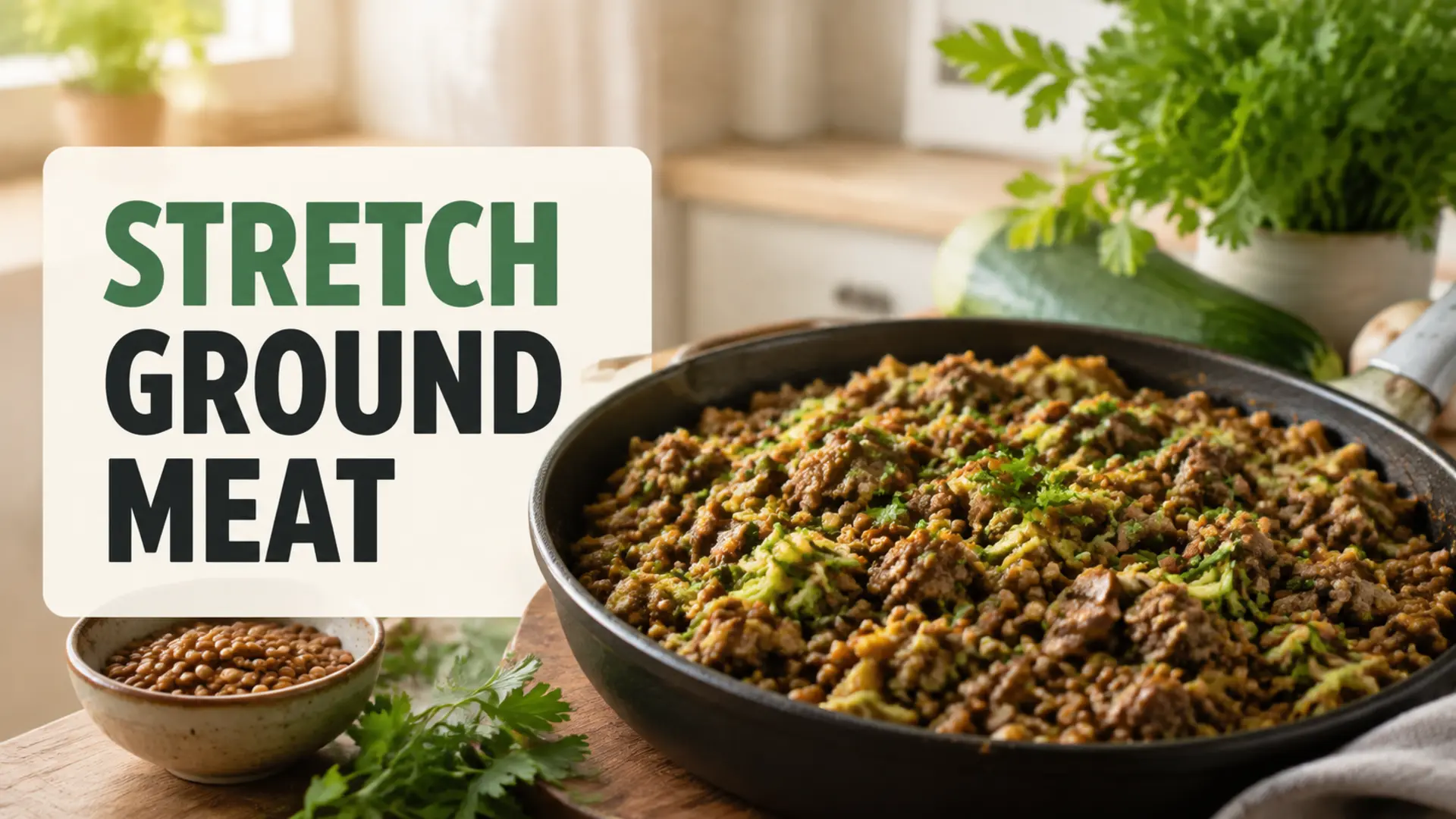
Learning how to stretch ground meat can make weeknight meals more flexible without relying on a rigid serving promise. The basic idea is simple: combine beef, turkey, chicken, pork or a plant-based ground product with an ingredient that suits the dish, then adjust the seasoning, moisture and texture as you cook.
The best ratio depends on your recipe and household. Start with a modest amount of extender, taste the cooked mixture, and add more only if the texture still works. Compare local unit prices before shopping, because the lowest-cost option can change by store, season and package size.
How to Stretch Ground Meat Without Losing the Dish
Choose the extender by function rather than treating every option as interchangeable. Lentils and beans add body, mushrooms deepen savoury flavour, oats help bind shaped mixtures, and finely chopped vegetables add moisture. For a first attempt, replace only part of the meat mixture and keep the familiar seasonings. This makes it easier to judge the result before using a larger proportion.
1. Fold in Cooked Lentils
Brown or green lentils hold their shape and work well in tomato sauces, shepherd’s pie filling, chilli and sloppy-joe-style mixtures. Drain them well, stir them into fully browned meat, and let the sauce simmer long enough for the flavours to combine. Red lentils soften more and are better when you want a smoother filling.
2. Add Finely Chopped Mushrooms
Finely chop mushrooms by hand or pulse them briefly in a food processor. Cook them until their released moisture has mostly evaporated, then combine them with the ground meat. This method suits pasta sauce, meatloaf, burgers and savoury skillet meals. Cooking off excess liquid helps prevent a watery result.
3. Mix in Beans
Black, pinto, kidney or white beans can stretch taco filling, chilli, burrito bowls and casseroles. Drain and rinse canned beans when appropriate, then mash some and leave some whole for varied texture. Match the bean to the sauce and seasoning rather than expecting it to disappear completely.
4. Use Rolled Oats as a Binder
Rolled oats are most useful in meatballs, patties and meatloaf, where they absorb moisture and help the mixture hold together. Let the oats hydrate in the recipe’s liquid before shaping. Add gradually: too much can make the finished dish dense or mute the seasoning.
5. Grate Zucchini or Carrots
Grated vegetables can add colour and moisture to sauces, taco filling, meatloaf and patties. Squeeze very watery zucchini when the recipe needs a firm texture, or cook it down in a skillet mixture. Carrots bring a mild sweetness, so balance them with savoury spices, herbs or acidity.
6. Try Riced Cauliflower
Riced cauliflower works best in highly seasoned skillets, stuffed vegetables and bowl-style meals. Sauté it before combining so excess moisture can escape. Its texture remains noticeable in lightly seasoned dishes, which is not a problem when the recipe is designed around the mixture.
7. Add Cooked Rice or Another Grain
Cooked rice, barley, bulgur or quinoa can extend stuffed peppers, cabbage rolls, casseroles and skillet meals. Use a grain that fits the cooking time and flavour of the dish. Leftover cooked grains are convenient, but cool and store them safely and use them within the guidance for your location.
8. Use Diced Potatoes
Small cubes of potato suit picadillo-style dishes, hash, curries and savoury fillings. Cut them evenly and give them enough time to become tender. Because potatoes absorb seasoning, check the final dish for salt, spice and acidity after everything is cooked.
9. Consider Textured Vegetable Protein
Textured vegetable protein, often called TVP, is a shelf-stable soy product that can be rehydrated and mixed into sauces, chilli or taco filling. Follow the package directions because granule size and liquid needs vary. Check labels when cooking for someone with a soy allergy or other dietary restriction.
10. Build the Meal Around More Than the Filling
You do not have to hide a large amount of extender in the meat. A smaller portion of a well-seasoned mixture can feel complete when served with vegetables, grains, beans, salad or a satisfying sauce. Our guide to budget-friendly plant-based shopping offers complementary staples, while meal planning around meatless meals can help you vary protein choices across the week.
Compare Cost, Yield and Waste
Check the price per standard weight or volume rather than relying on the package price. Include any preparation waste and consider whether the remaining ingredient will be used. A large bag is not economical if most of it sits unused. A quick pantry audit can reveal lentils, oats, rice or beans you already own, and a structured grocery list can prevent duplicate purchases.
Cook and Store the Mixture Safely
Ground meat must be handled according to the product and local food-safety guidance. Avoid judging doneness by colour alone; use an appropriate food thermometer and follow the recommended safe internal temperature for the specific meat. Refrigerate leftovers promptly in shallow containers, and consult FoodSafety.gov’s cooking and storage charts or your country’s food-safety authority for current guidance.
A Flexible Starting Plan
- Choose one extender that naturally fits the recipe.
- Prepare it separately so its moisture and texture are controlled.
- Brown the meat safely, drain only if the recipe calls for it, and add the extender gradually.
- Adjust sauce, seasoning and liquid after the mixture comes together.
- Record the ratio your household enjoyed for the next shopping list.
The goal is not to make every meal taste identical or promise that one package will produce a fixed number of servings. It is to stretch ground meat thoughtfully, use ingredients you will actually eat, and create a repeatable mixture that fits your budget, dietary needs and favourite recipes.
Frequently Asked Questions
What can I add to ground meat to make it go further?
Lentils, beans, mushrooms, oats, grated vegetables, rice, potatoes, riced cauliflower, or textured vegetable protein can extend ground meat when they suit the recipe. Start with a modest amount, adjust seasoning and moisture, and keep dietary needs in mind.
What is the best ratio of meat to lentils or vegetables?
There is no single best ratio. Begin with roughly one part cooked extender to three or four parts meat, then adjust after testing the cooked texture and flavor. Meatballs need different binding and moisture than chili, tacos, or pasta sauce.
Can I mix cooked lentils directly into raw ground meat?
For loose mixtures such as chili, cook the meat safely and add cooked lentils during preparation. For formed products, follow a tested recipe so moisture, binding, and safe cooking remain appropriate. Avoid cross-contaminating ready-to-eat ingredients with raw meat.
How do mushrooms help stretch ground meat?
Finely chopped mushrooms add moisture, savory flavor, and volume, especially in sauces, burgers, and taco fillings. Cook off excess moisture when needed. They do not replace safe meat handling, and anyone with an allergy or intolerance needs a suitable alternative.
Can oats be used to extend meatballs or meatloaf?
Yes, rolled oats can act as a binder and extender in many recipes. Add them gradually with the recipe’s liquid and seasonings because too much can make the texture dry or dense. Use certified gluten-free oats when required.
Does stretching ground meat lower protein per serving?
It usually lowers the amount of meat in each portion, while the added ingredient contributes its own nutrients. Lentils and beans add plant protein and fiber; vegetables add volume and variety. Evaluate the entire meal and individual dietary needs rather than assuming equal nutrition.
How should stretched ground-meat dishes be cooked safely?
Cook the mixture to the safe internal temperature for the specific meat and measure the center with a food thermometer. FoodSafety.gov lists 160°F (71°C) for ground beef and pork and 165°F (74°C) for ground poultry. Ingredients do not lower the required temperature.
Can stretched ground meat be frozen?
Many fully cooked mixtures freeze well. Cool and refrigerate promptly, portion into freezer-safe containers, label the date, and reheat safely. For uncooked mixtures, follow a tested recipe and the storage guidance for the raw meat used.
Which dishes work best with meat extenders?
Chili, tacos, pasta sauce, stuffed vegetables, casseroles, meatloaf, meatballs, and shepherd’s pie accept added ingredients well. Choose extenders that match the dish’s texture and flavor rather than forcing the same mixture into every recipe.
Does stretching ground meat always save money?
No. Compare the extender’s local price, cooked yield, preparation time, and likelihood of use. Specialty substitutes can cost more than the meat saved. A method is economical only when the household enjoys the result and avoids waste.