
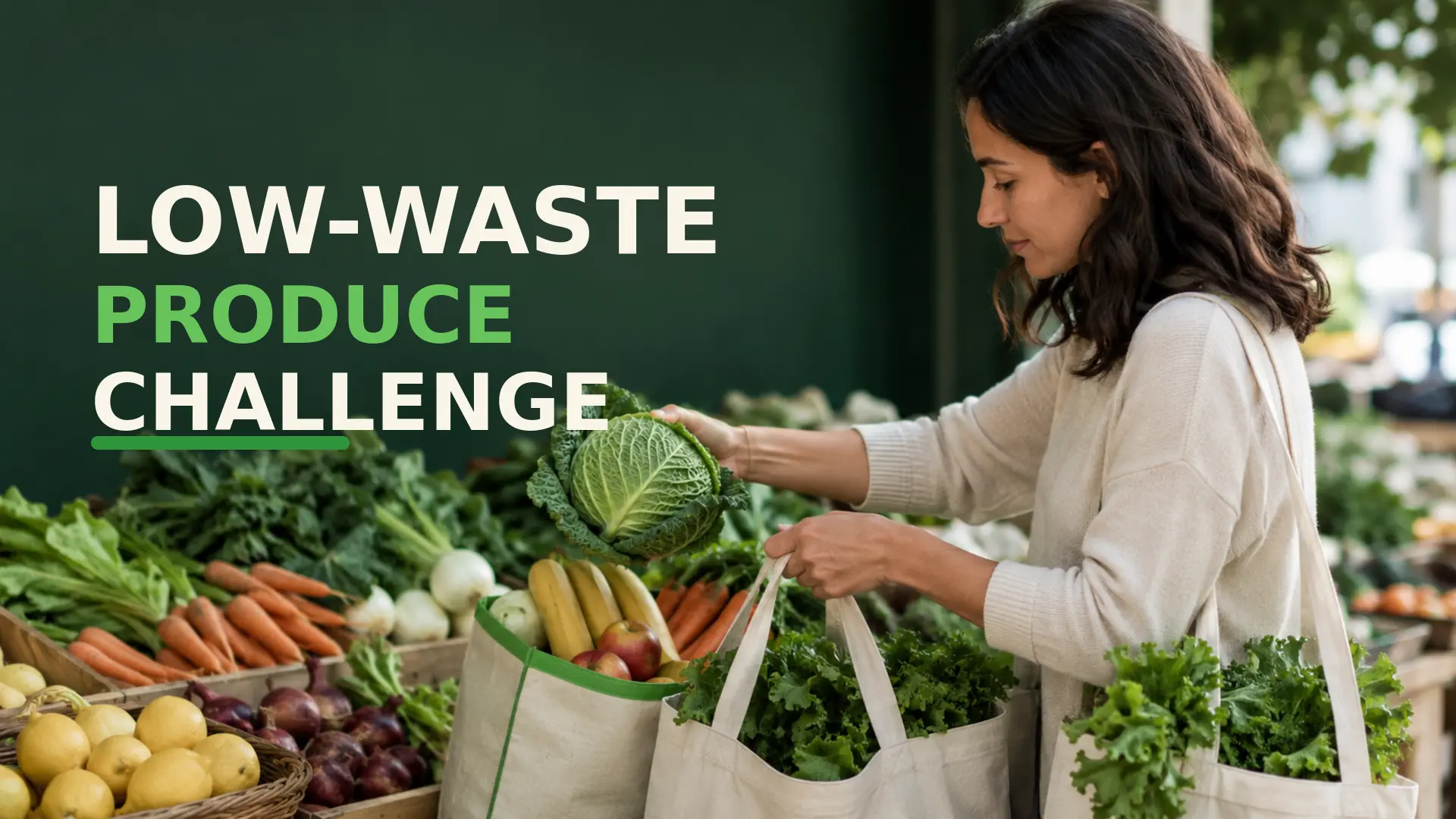
A $20 zero-waste produce challenge is a useful planning exercise, but it should not depend on one fixed receipt or promise that every edible scrap will be used. Produce prices, package sizes, seasons and household needs vary widely. Treat the amount as a flexible spending cap, then choose a manageable mix of fruits and vegetables that fits your local prices and actual meals.
The goal is practical: buy produce with a clear purpose, store it well and use more of what you purchase. If $20 is unrealistic where you live—or does not provide enough food for your household—adjust the budget rather than sacrificing adequate nutrition.
How the $20 zero-waste produce challenge works
Start by checking your refrigerator, freezer and pantry. Then choose several meals and snacks that share ingredients. Shop with your chosen spending limit, keep the receipt and record what remains at the end of the week. Your result is not a pass-or-fail score; it is information for the next shop.
- Set a produce budget that suits local prices and your household.
- Plan uses for each item before adding it to the list.
- Include durable produce and a smaller amount of quick-use produce.
- Store items according to their needs.
- Track what was eaten, frozen, composted or discarded.
Check what you already have first
A five-minute inventory prevents duplicate purchases and helps older food become the starting point for meals. Look for vegetables that need cooking soon, fruit suitable for snacks or freezing, and ingredients that can support soups, grain bowls, salads or stir-fries. A regular pantry audit and inventory check makes this step easier.
Build a flexible produce list
Instead of copying exact weights and prices, divide the list into roles. Choose one or two sturdy vegetables, one leafy or tender item, two fruits, and flavour-building produce such as onions, garlic, herbs or citrus. Buy quantities that match your storage space and cooking schedule.
- Durable vegetables: cabbage, carrots, onions, squash or sweet potatoes.
- Quick-use vegetables: leafy greens, mushrooms, ripe tomatoes or tender herbs.
- Fruit: a mix of ready-to-eat and longer-keeping options.
- Flavour builders: garlic, lemon, lime, ginger or fresh herbs.
These are examples, not a required basket. Choose culturally familiar foods, respect dietary needs and substitute whatever is affordable and useful in your area.
Compare usable value, not package price alone
A larger bag is not automatically the better buy. Compare unit prices, but also consider how much you can realistically eat before quality declines. Loose produce may cost more per unit yet waste less for a small household. Imperfect-looking produce can be good value when it is sound, appropriately priced and suitable for your planned use.
Give every item at least two possible uses
Flexible plans are more resilient than single-recipe plans. Cabbage might become slaw, a stir-fry or soup. Carrots can be eaten raw, roasted or cooked into a sauce. Fruit can serve as a snack, breakfast topping or freezer ingredient. This approach makes it easier to adapt when schedules or appetites change.
For more structure, use a reusable weekly shopping template and note the intended meals beside high-risk items.
Schedule tender produce early
Plan leafy greens, ripe berries, cut produce and delicate herbs for earlier meals. Save sturdy vegetables and longer-keeping fruit for later in the week. Check condition rather than relying on a rigid day-by-day rule, because freshness at purchase and home storage conditions differ.
Store produce for quality and safety
Storage needs vary. Some foods benefit from refrigeration, while others keep better in a cool, dry place. Keep produce visible, use breathable or moisture-controlling containers where appropriate, and avoid washing items early if extra moisture will accelerate deterioration. Refrigerate cut produce promptly and keep it separate from raw meat, poultry and seafood.
If food is ripening faster than expected, move it into the meal plan, cook it or freeze it using appropriate methods. The guide to freezing food safely explains cooling, packaging, labels and thawing.
Use edible parts thoughtfully
Some stems, leaves, peels and cores are edible, but not every scrap belongs in a recipe. Wash produce under running water, remove damaged or spoiled portions, and confirm that a part is edible before using it. Tough broccoli stems can be peeled and sliced; clean carrot tops can flavour a sauce; citrus zest can add flavour before juicing.
Do not use mouldy food or assume cooking makes spoiled produce safe. Also avoid turning questionable scraps into stock merely to meet a “zero-waste” target. Safety and palatability come first.
Create a simple rescue plan
Choose one flexible end-of-week meal for produce that remains in good condition. Soup, curry, frittata, pasta sauce, grain bowls and roasted vegetables can accommodate changing quantities. Leftovers can also be transformed with the ideas in this guide to repurposing leftovers into new meals.
Track outcomes without chasing perfection
At the end of the challenge, review the receipt and remaining food. Record which items were fully used, which needed freezing, and which were discarded or composted. Note the reason: too much purchased, forgotten storage, an unexpected schedule change, poor quality at purchase or a meal that nobody wanted.
The US Environmental Protection Agency recommends preventing wasted food before relying on composting or other management options. Its food-waste prevention guidance includes planning, storage and preparation ideas that readers can adapt; readers outside the United States can also consult their local food-safety and waste authorities.
What success looks like
Success is not an empty refrigerator or a claim of using 100% of every item. A useful result is a satisfying week of meals, less avoidable waste and clearer information about the quantities your household actually uses. Composting unavoidable scraps can be helpful where suitable facilities exist, but it does not replace buying thoughtfully.
Make the next produce shop easier
Repeat the challenge with one small adjustment: buy less of an item that lingered, replace an unpopular choice, or schedule a delicate ingredient earlier. Over several shops, your list will become more accurate than any universal receipt because it reflects your household, local market and routine.
A realistic low-waste conclusion
The $20 zero-waste produce challenge works best as a flexible experiment, not a guarantee. Start with an inventory, plan overlapping uses, buy realistic quantities, store food carefully and review what happened. Those habits can reduce avoidable waste while keeping the grocery list practical, nourishing and responsive to real life.
Frequently Asked Questions
What is the $20 zero-waste produce challenge?
It is a flexible exercise: set a local produce budget, plan uses before shopping, and try to eat or preserve everything purchased. The $20 figure is a target, not a universal promise.
Which produce gives the best value on a tight budget?
Compare usable unit cost, shelf life, and versatility. Cabbage, carrots, onions, potatoes, bananas, apples, and seasonal or frozen produce often work well, but local prices and preferences should decide.
How do I plan produce without creating waste?
Check current inventory, choose meals with overlapping ingredients, and assign at least two uses to every item. Buy tender produce for early meals and durable produce for later in the week.
Does frozen produce count in a zero-waste challenge?
Yes, if it supports the goal. Frozen fruit and vegetables can reduce spoilage and let you use only what is needed, although the best value depends on local prices and preparation.
How can I store vegetables so they last longer?
Follow food-specific storage needs, keep the refrigerator at a safe temperature, control excess moisture, and separate items that affect each other’s ripening. Avoid washing produce too early unless guidance recommends it.
What should I do with produce that is starting to soften?
Inspect it first and discard spoiled food. Use sound but aging produce promptly in soup, sauce, smoothies, baking, roasting, or freezing when the texture suits that future use.
Can vegetable scraps always be used for stock?
No. Use clean, sound, edible scraps that produce a pleasant flavor. Avoid moldy or spoiled material, and remember that some trimmings are bitter, dirty, tough, or otherwise unsuitable.
How do I calculate whether packaged produce is a good deal?
Compare the price with the edible amount you expect to use. A larger bag may have a lower unit price but cost more per eaten serving if part of it spoils.
What if produce costs more than $20 in my area?
Adjust the target rather than sacrificing adequate food. Keep the method—inventory, flexible planning, unit-price comparison, proper storage, and a rescue plan—and use a budget that reflects local prices.
How should I measure success in a low-waste produce challenge?
Record what was eaten, frozen, composted, or discarded and why. Success is reducing avoidable waste and learning realistic quantities, not forcing unsafe food use or achieving a perfect zero.