
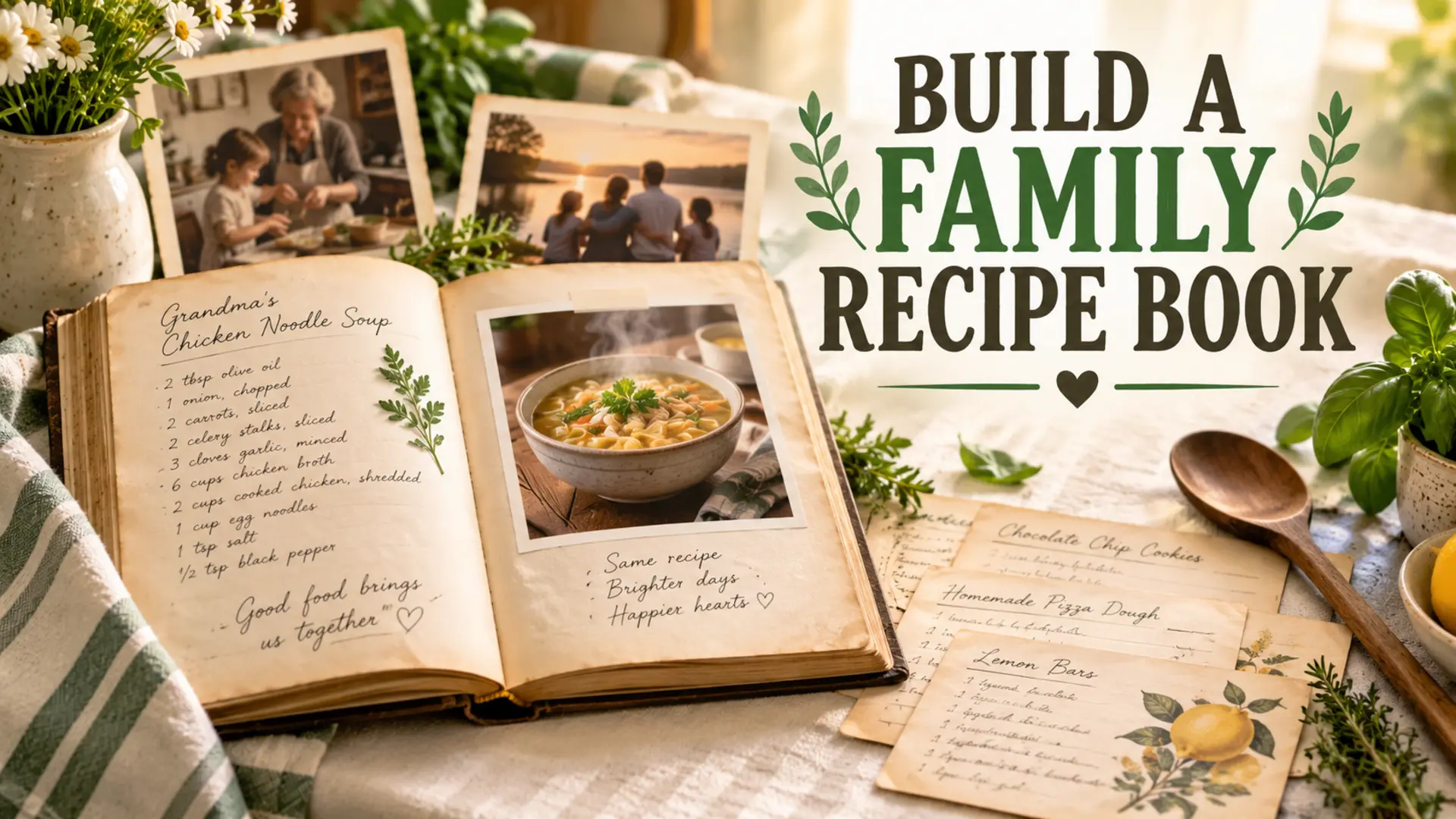
Learning how to build a family recipe book is partly about food and partly about preserving context. Record recipes with permission, test unclear steps, and save both the original wording and a practical cooking version.
Build a Family Recipe Book With Consent
Ask relatives what they are comfortable sharing, recording and publishing. Note the contributor, occasion and story, but avoid adding private details without permission.
Document the Recipe While It Is Made
- List ingredients in order of use.
- Record pan sizes, visual cues and approximate timing.
- Weigh informal amounts during a real cooking session.
- Photograph original cards and finished dishes.
Do not assign universal conversions to vague historical terms. Test the recipe and clearly label estimates. The recipe-scaling guide can help with verified quantity changes.
Create a Clear Standard Format
Include yield, ingredients, method, equipment, storage notes, allergens and substitutions that have actually been tested. Preserve original language separately when it adds historical value.
Store More Than One Copy
Keep a searchable digital master, an independent backup and, if useful, a printed edition. Use durable file formats and descriptive filenames. See how to create a digital master recipe box.
Keep the Collection Alive
A family recipe book becomes more useful when relatives can correct, test and add to it. Date substantial revisions so future cooks understand what changed.