
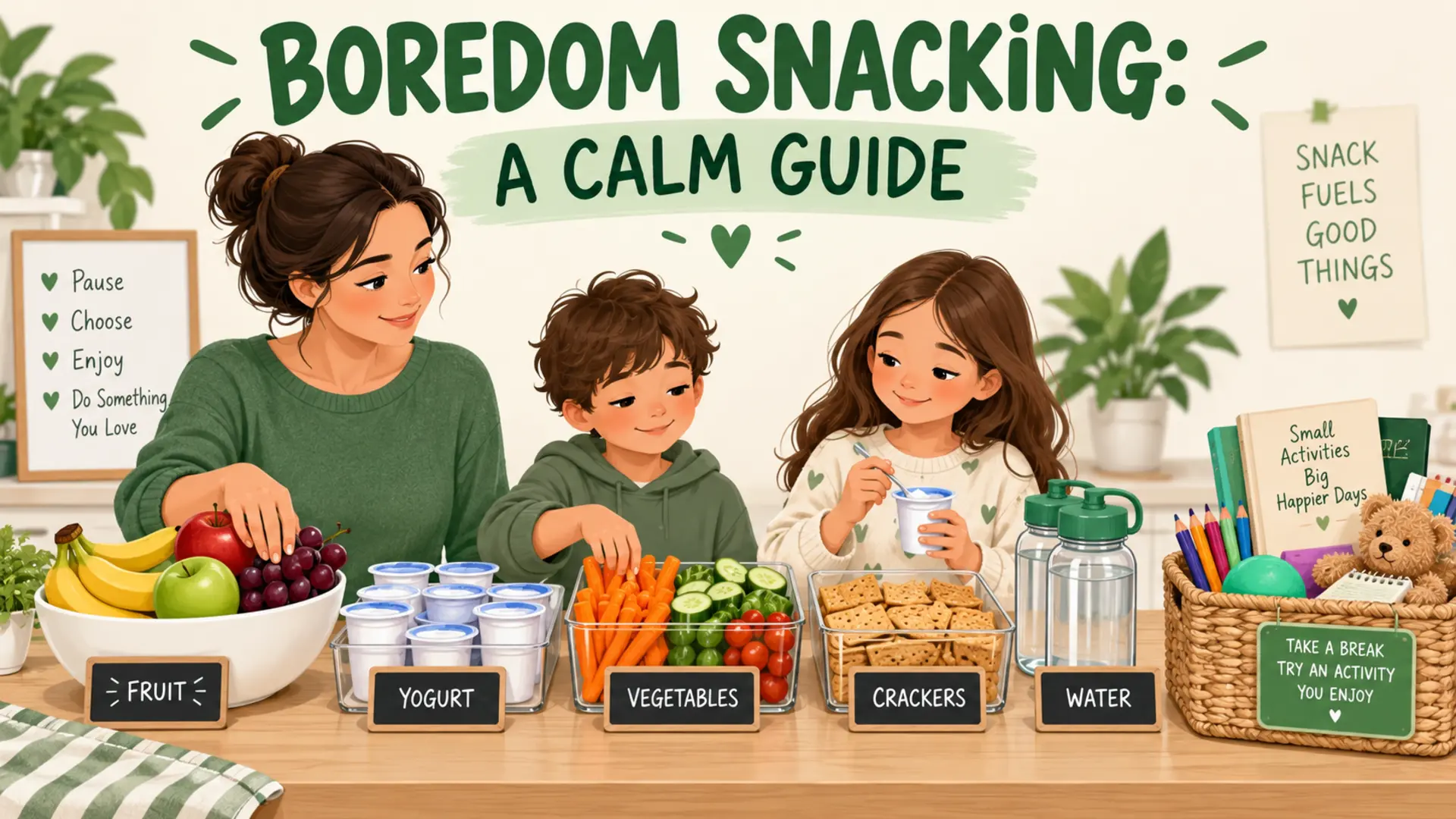
Boredom snacking can happen for many reasons, including hunger, habit, availability, emotion or a desire for stimulation. A calm response avoids shame, rigid food rules and unsupported claims about a child’s brain or metabolism.
Approach Boredom Snacking With Curiosity
Ask whether the child is hungry and offer a suitable snack without interrogation. Children’s appetites vary across days and growth stages, so elapsed time since a meal is not a reliable test of genuine hunger.
Stock Varied, Age-Appropriate Snacks
- Fruit prepared safely for the child
- Yogurt or a suitable alternative
- Vegetables with an appropriate dip
- Crackers, toast or another grain
- Cheese, egg, beans or another familiar protein
Whole nuts, popcorn, frozen grapes and hard raw foods can pose choking risks for young children. Modify foods according to authoritative guidance and individual ability.
Keep Food Language Neutral
Avoid describing foods as clean, inflammatory, addictive or morally good and bad. Offer structure and variety while allowing room for family preferences, culture and medical needs.
Offer Activities Without Making Them a Test
Reading, drawing, outdoor play or helping with a household task may answer boredom, but food should not be withheld until an activity is completed. Water can be offered normally rather than used as a mandatory hunger test.
The homeschool snack-station guide provides ideas for organized access, while sensory-friendly grocery shopping covers individualized supports.
Seek Individual Guidance When Needed
Consult a qualified professional when eating patterns cause distress, interfere with growth, or involve medical, sensory or feeding concerns. A calm, consistent household routine is more helpful than policing boredom snacking.