
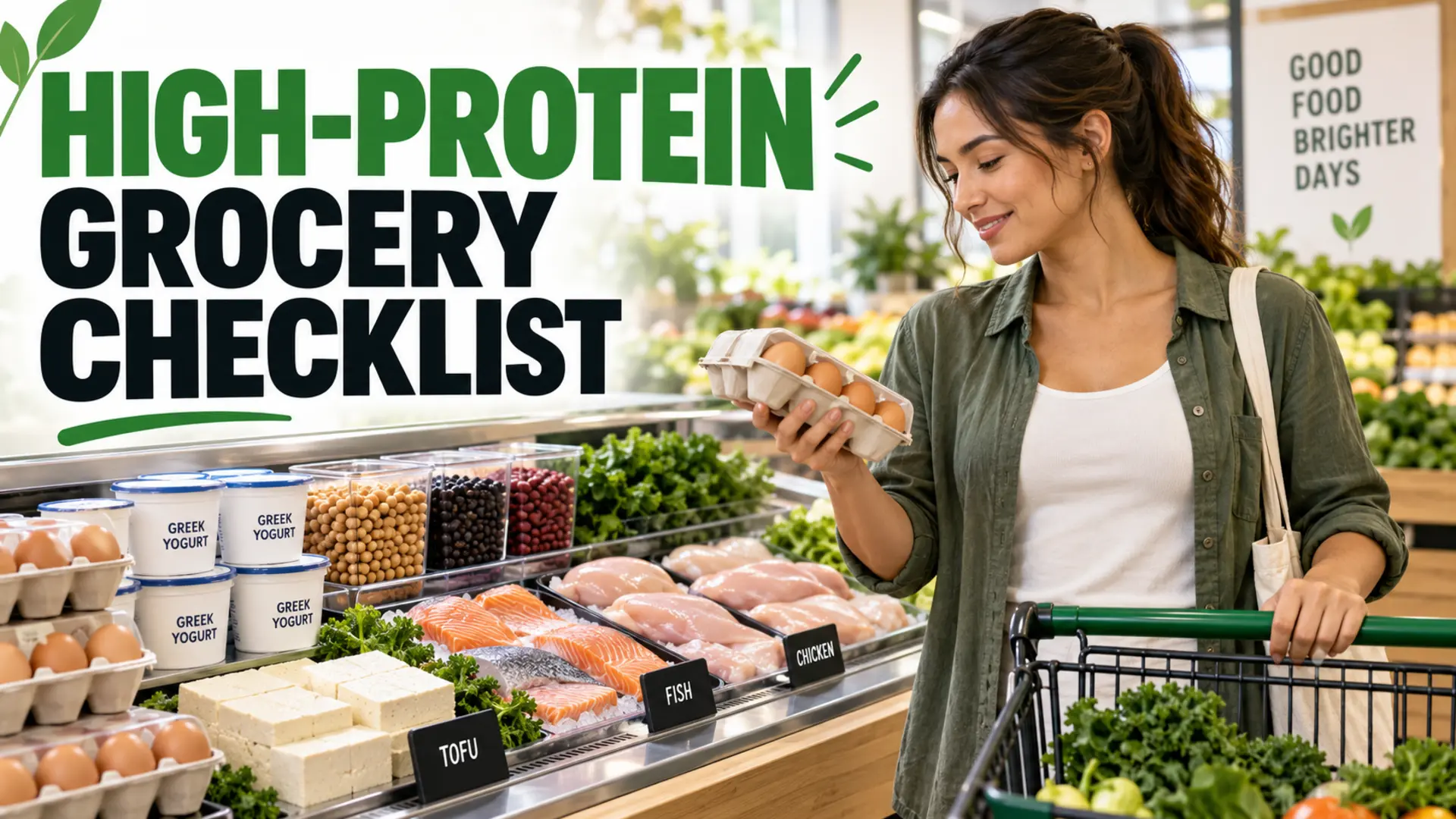
A high-protein grocery checklist can make strength-training meals easier to plan without turning food into a rigid formula. Protein needs vary with body size, training, overall energy intake, health, age, and personal goals, so use this guide as a flexible shopping framework rather than a prescription.
Build a high-protein grocery checklist by food group
- Eggs and dairy: eggs, plain yogurt, cottage cheese, milk, or suitable fortified alternatives.
- Meat and seafood: chicken, turkey, lean or higher-fat cuts that suit your meals, fish, and canned seafood.
- Plant proteins: tofu, tempeh, beans, lentils, peas, edamame, nuts, seeds, and nut or seed butters.
- Meal partners: grains, potatoes, fruit, vegetables, and fats for balanced, satisfying meals.
Choose options that fit your budget, culture, cooking facilities, allergies, and preferences. Fresh, frozen, canned, and dried foods can all be useful.
Plan meals before quantities
Start with three or four repeatable meal formats: yogurt with oats and fruit, eggs with toast and vegetables, a bean or lentil bowl, a tofu stir-fry, or chicken or fish with grains and produce. Then buy amounts based on the number of people, meals at home, and realistic storage life.
Spreading protein-containing foods across regular meals may be more practical than concentrating everything in one sitting, but there is no single schedule that suits everyone. A registered dietitian can help with targets when performance, medical conditions, or weight changes make precision important.
Compare value and reduce waste
- Compare unit prices and edible yield.
- Use dried or canned pulses in soups, bowls, curries, and pasta sauces.
- Freeze suitable portions before their use-by date.
- Choose larger packages only when you can store and use them safely.
Supplements are optional convenience products, not a requirement for strength progress. If you use one, check ingredients, allergens, serving guidance, and independent sport-certification where relevant.
Food safety for meal preparation
Keep raw animal foods separate from ready-to-eat ingredients, cook foods according to reliable local guidance, cool leftovers promptly, and refrigerate or freeze them in shallow containers. Use insulated containers and cold packs when transporting perishable meals.
Make the checklist work for you
Our student-athlete protein shopping guide covers family and school-day considerations, while the store-comparison guide can help you decide where a second shopping stop is worthwhile.
Conclusion
A useful high-protein grocery checklist is varied, affordable, and realistic. Choose several protein sources you enjoy, pair them with the rest of a balanced meal, and adjust quantities from experience or qualified individual advice.