
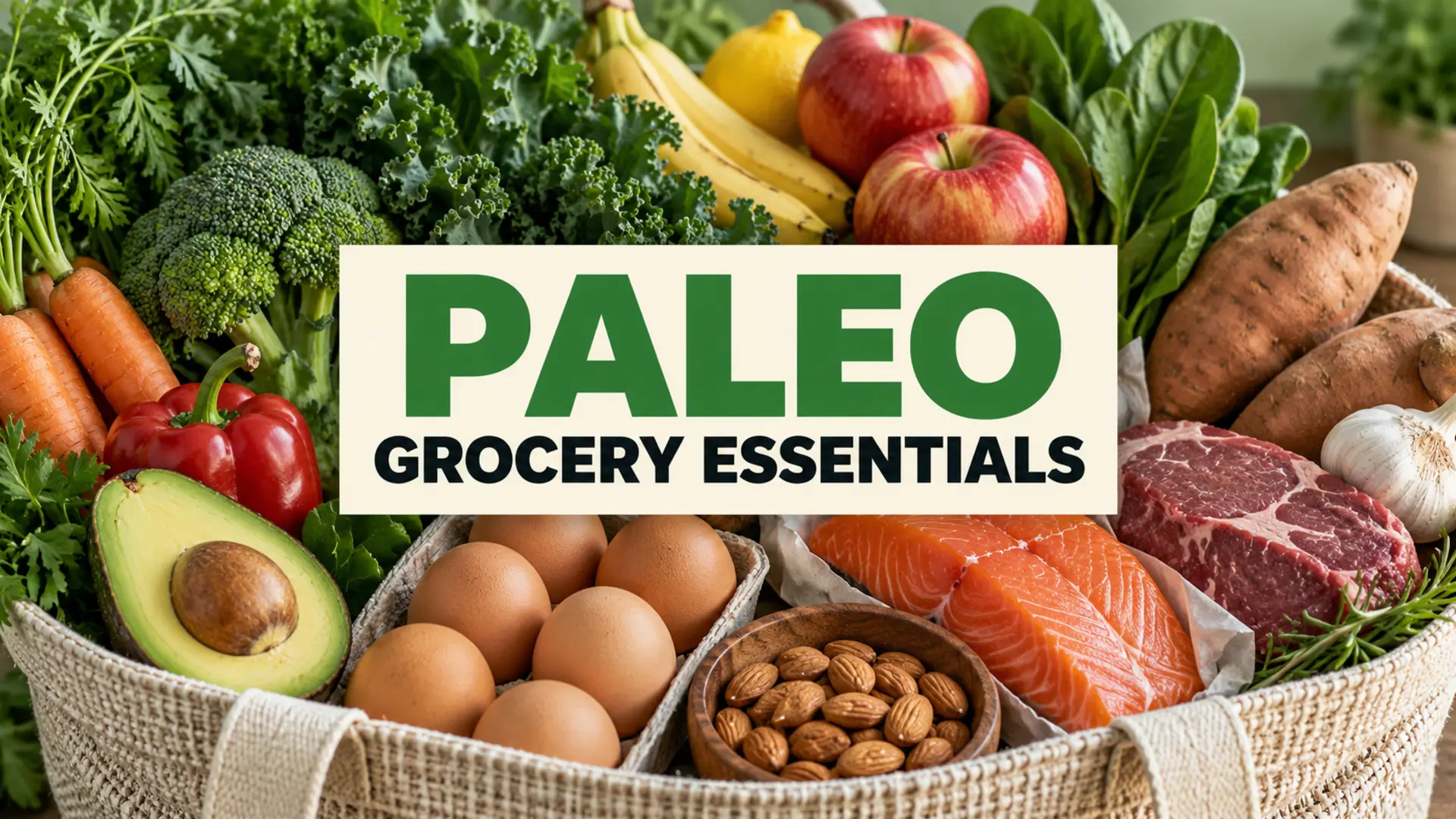
Paleo grocery essentials usually emphasize vegetables, fruit, eggs, meat, fish, nuts, seeds, and selected fats while excluding grains, legumes, and dairy. Definitions vary, and the pattern is not medically necessary for most people.
Paleo grocery essentials by aisle
- Vegetables, fruit, potatoes, and other roots.
- Eggs, fish, poultry, and meat.
- Nuts, seeds, avocado, olives, and cooking oils.
- Herbs, spices, citrus, and suitable sauces.
- Frozen and canned foods with ingredients that fit your chosen version.
Plan complete meals
Build meals from a protein food, several vegetables, a suitable starch, and flavourful fats or sauces. Examples include eggs with vegetables and potatoes, fish with roasted roots and greens, or chicken with fruit salsa and salad.
Understand the trade-offs
Removing whole grains, legumes, and dairy can reduce affordable sources of fibre, calcium, and other nutrients. “Paleo” does not automatically mean healthier, and pasture-raised, grass-fed, wild, or organic products are optional rather than requirements. People with medical conditions, pregnancy, high training demands, or an eating-disorder history should seek individual guidance.
Read packaged-food labels
Product marketing and ingredient lists vary. Compare allergens, serving sizes, nutrients, price, and usefulness instead of relying on a paleo badge. Avoid assuming that every additive or seed oil is harmful.
Keep shopping realistic
Choose frozen vegetables, canned fish, and conventional produce when useful. The nutrition-label guide can help compare products, and the balanced grocery list explains why minimally and moderately processed foods can both be practical.
Conclusion
A paleo grocery list can organize a preferred eating pattern, but it should remain varied and nutritionally adequate. Adapt restrictions to your needs rather than treating them as universal health rules.