
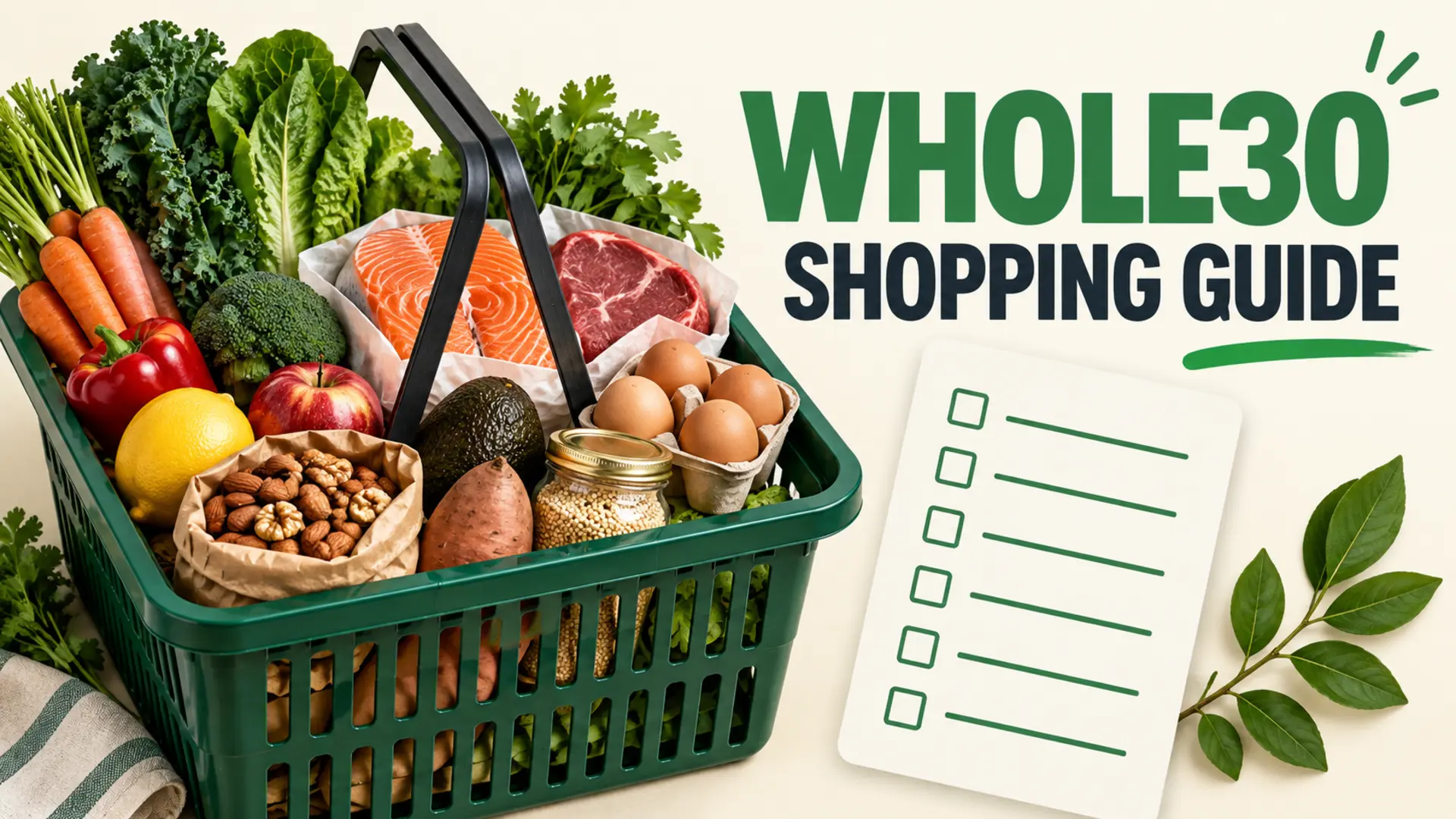
A Whole30 shopping guide can help people following the branded 30-day elimination program organize groceries, but product rules and approved items can change. Verify current requirements through official Whole30 materials rather than relying on an old brand list.
Whole30 shopping guide basics
Common versions emphasize vegetables, fruit, eggs, meat, seafood, nuts, seeds, and selected fats while excluding grains, legumes, dairy, alcohol, added sweeteners, and many recreated baked foods. Always check the current program rules if strict compliance matters to you.
Read every ingredient list
Prepared meats, stocks, sauces, dressings, nut products, and canned foods may contain ingredients excluded by the program. “Approved” branding is not available in every country and does not replace allergen or nutrition checks.
Build simple meals
- Eggs, potatoes, and vegetables.
- Fish with roasted roots and greens.
- Chicken with salad, fruit, and an allowed dressing.
- Meat or eggs with vegetable soup and avocado.
Consider whether restriction is appropriate
Whole30 is not a diagnostic test and should not replace medical evaluation. Restrictive plans may be unsuitable during pregnancy, childhood, intensive training, certain medical conditions, or eating-disorder recovery. Eliminating many food groups can also raise cost and reduce fibre, calcium, or other nutrients unless carefully planned.
Plan for the end of the program
If you complete an elimination period, reintroduce foods methodically rather than assuming every excluded food is harmful. A clinician or registered dietitian can help investigate symptoms and maintain nutritional adequacy.
See our nutrition-label guide for comparison steps and the paleo grocery guide for related restriction trade-offs.
Conclusion
A reliable Whole30 shopping guide focuses on current rules, careful labels, realistic meals, and an intentional reintroduction plan—without unsupported product or health claims.