
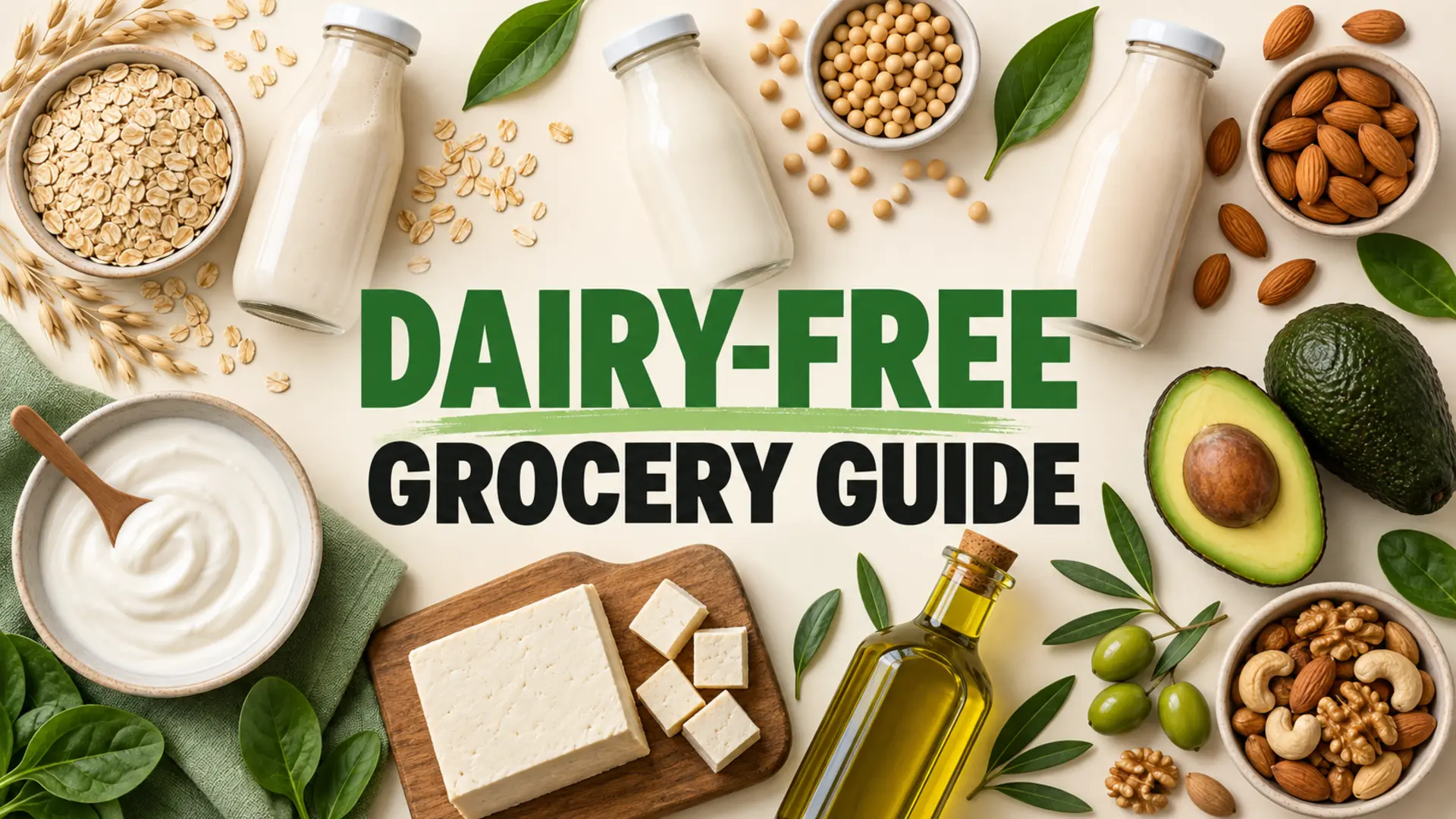
A dairy-free grocery guide should consider why dairy is being avoided, because milk allergy, lactose intolerance, vegan preferences, and personal taste require different choices. “Dairy-free” and “lactose-free” are not interchangeable.
Dairy-free grocery guide for milk alternatives
Soy, oat, pea, almond, coconut, rice, and other drinks differ in protein, carbohydrate, fat, allergens, fortification, and cooking performance. Compare calcium, vitamin D, vitamin B12, added sugars, protein, and serving size where relevant. Shake fortified drinks if the label instructs you to do so.
Cheese and yogurt alternatives
Plant-based yogurts and cheeses vary widely. Some are fortified and protein-rich; others mainly provide starch or fat. Choose based on the role in your meal, flavour, allergens, and nutritional needs rather than expecting an exact dairy equivalent.
Butter alternatives for cooking
Oils, dairy-free spreads, avocado, nut or seed butters, and coconut products can replace butter in different situations. Baking substitutions depend on the recipe’s water and fat balance, so use tested directions instead of a universal one-to-one swap.
Check allergens and cross-contact
Plant alternatives can contain soy, tree nuts, oats, coconut, sesame, or other allergens. For milk allergy, check precautionary statements and contact manufacturers when information is unclear. Lactose-free cow’s milk still contains milk protein and is not safe for a milk allergy.
Plan for nutrition needs
Children, pregnant people, older adults, and anyone relying heavily on milk alternatives may need professional advice. Our nutrition-label guide can help compare products, while the plant-based protein and iron checklist covers complementary foods.
Conclusion
A useful dairy-free grocery guide matches each substitute to its job, checks allergens carefully, and considers fortification and protein as part of the whole diet.