
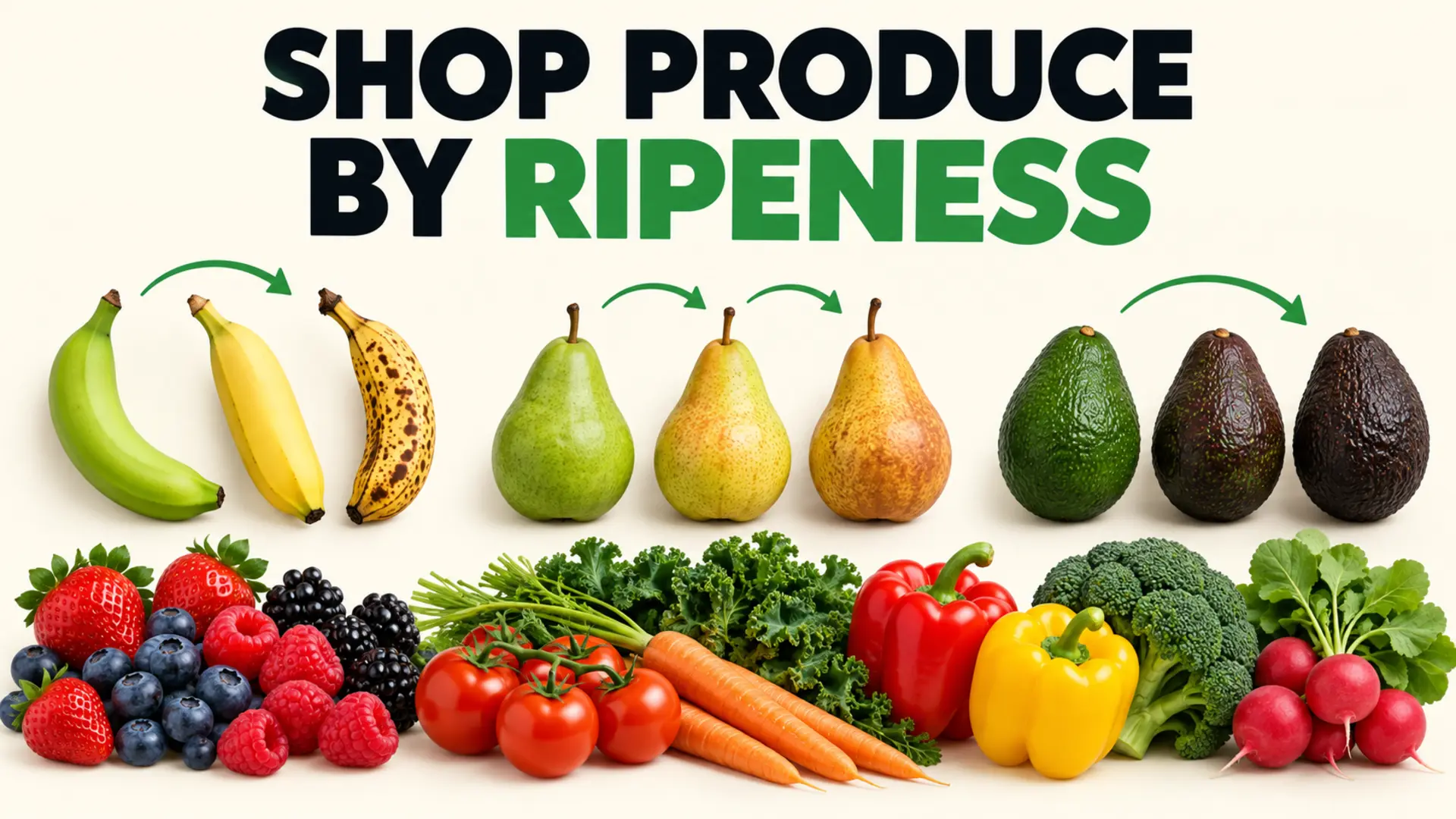
Learning to shop produce by ripeness can help spread fruit and vegetable use across the week. Choose a mix based on when you expect to eat it, while remembering that ripening and storage vary by produce type.
How to shop produce by ripeness
- Buy some ready-to-eat fruit for the next day or two.
- Choose firmer bananas, pears, avocados or stone fruit for later.
- Select berries and delicate greens only in quantities you can use soon.
- Add longer-lasting vegetables such as carrots, cabbage or squash.
Bananas, pears and avocados can continue changing after harvest, while strawberries and grapes will not become sweeter in the same way. Quality, variety and growing conditions can change the timeline, so inspect produce rather than following a rigid calendar.
Store each item appropriately
Refrigeration can slow further softening for many ripe fruits, but storage recommendations differ. Keep damaged or mouldy items away from sound produce and follow local food-safety guidance. Our weekly refrigerator audit can help monitor what needs attention.
Rescue suitable produce
Freeze ripe bananas, cook soft tomatoes or add flexible vegetables to soup before they spoil. Discard produce showing unsafe mould, decay or odours instead of trying to save everything. See the zero-waste grocery blueprint for broader planning ideas.
Adjust the next shop
When you shop produce by ripeness, note what matured too quickly or remained unused. Buying a different quantity next time is often more effective than relying on universal storage “hacks.”