
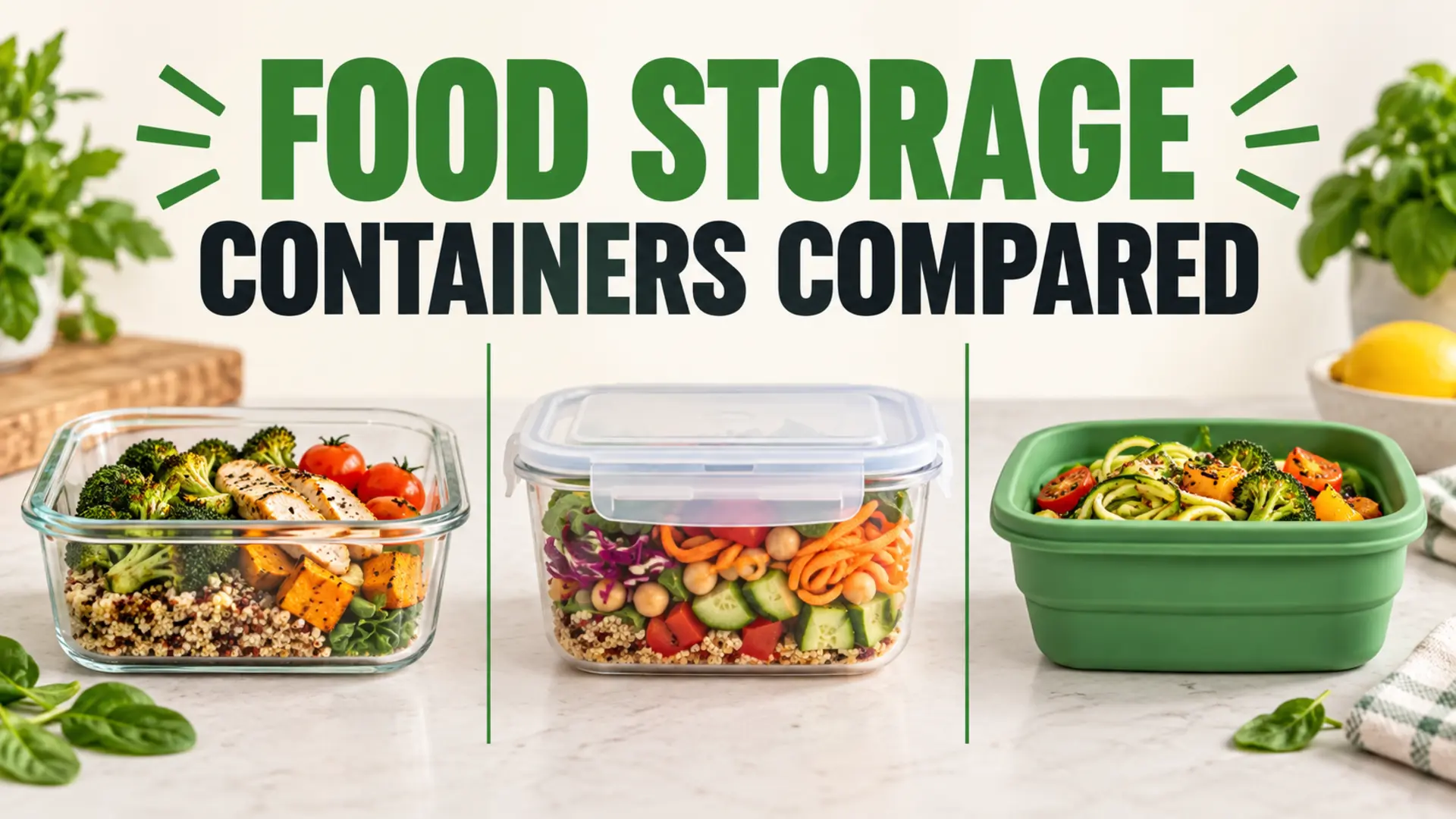
With food storage containers compared side by side, there is no single best material for every kitchen. Glass, reusable plastic and silicone each have useful applications, limits and care requirements.
Food storage containers compared
- Glass: resists stains and odours and may be suitable for reheating when the manufacturer allows it. It is heavier and can chip or break.
- Reusable plastic: lightweight and convenient for transport. Replace containers that are cracked, warped or heavily damaged, and follow heating instructions.
- Silicone: flexible and compact for storage. Quality, temperature limits and cleaning directions vary by product.
Check the instructions, not assumptions
“Freezer-safe,” “microwave-safe,” “oven-safe” and “dishwasher-safe” are separate claims. Check the manufacturer’s guidance for the container and lid. Allow steam to escape when reheating and avoid sudden temperature changes that could damage some materials.
Seals and maintenance
A well-fitting lid can reduce spills and exposure to air, but it does not guarantee a fixed shelf life. Wash lids, valves and removable gaskets thoroughly and let every part dry before storage.
Use containers with the freezer storage master plan, and rotate prepared food during a weekly refrigerator audit.
Choose for your routine
Consider weight, breakage risk, available space, replacement parts and how you cook. Food safety still depends on prompt cooling, suitable storage temperatures and timely use—not container material alone.