
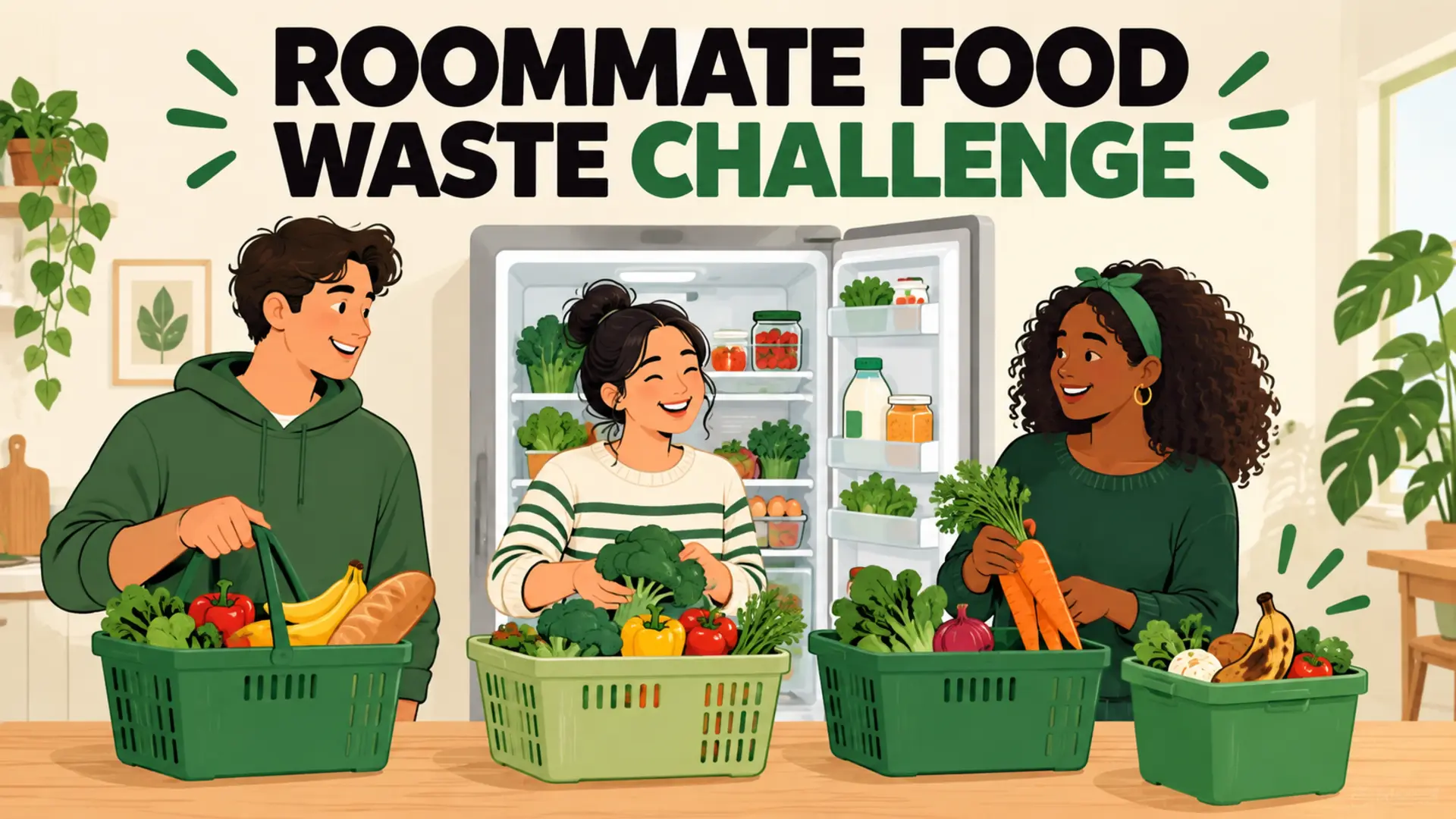
A roommate food waste challenge can make a shared kitchen easier to manage when everyone agrees on the rules. Keep the system voluntary, visible and respectful of ownership, dietary needs, allergies and different budgets.
Set up a roommate food waste challenge
- Agree on the goal: choose a short trial focused on using suitable food, not achieving zero waste.
- Label ownership: mark personal food clearly and define which staples are genuinely shared.
- Create an eat-first area: only place food there with the owner’s permission and note relevant allergens.
- Use one shared list: record communal items before anyone shops.
- Check in weekly: discuss what worked without fines, blame or public scoring.
Organize the shared refrigerator
Give each person a defined shelf or bin and keep raw meat or seafood contained below ready-to-eat food. Use clear labels for prepared dishes and dates. Follow local food-safety guidance rather than assuming a leftover is safe because it looks acceptable.
A weekly refrigerator audit provides the basic check-in, while planning meals from your fridge can turn suitable shared ingredients into dinner.
Make collaboration easier
Use neutral prompts such as “available to share” or “please use soon.” Avoid penalties: they can encourage people to eat food they do not want or keep questionable leftovers.
Measure useful progress
At the end of the trial, keep only the habits roommates found helpful. Better communication and fewer duplicate purchases are worthwhile even if some unavoidable waste remains.