
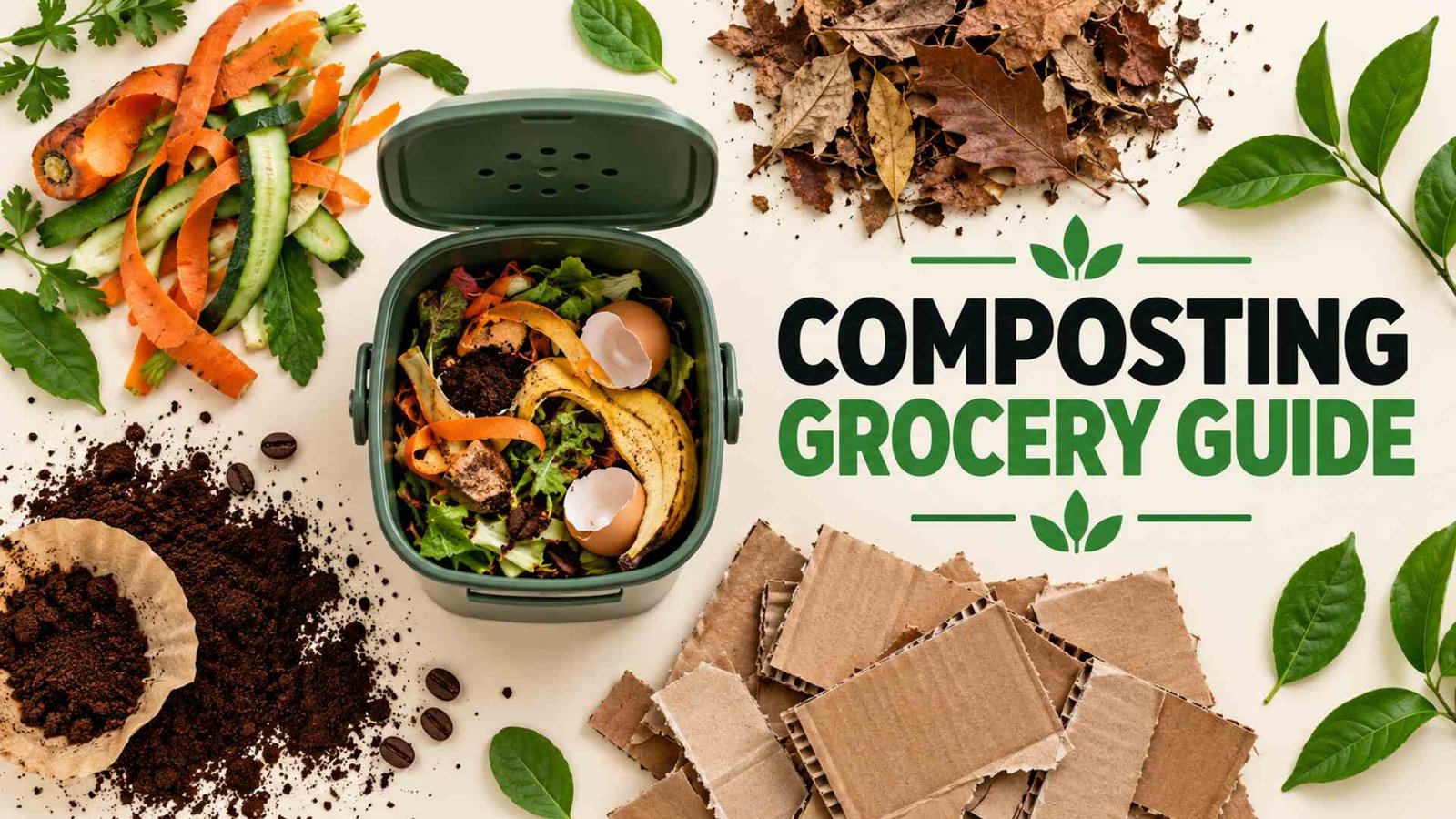
A composting grocery guide can help you separate suitable food scraps from packaging and materials that do not belong in your local system. Rules vary among backyard piles, municipal bins, community programmes and specialist methods, so check local instructions first.
Composting grocery guide: common materials
- Often accepted: fruit and vegetable trimmings, coffee grounds, loose tea leaves and eggshells.
- Useful browns: dry leaves and plain, uncoated paper or cardboard when your system permits them.
- Check locally: meat, bones, dairy, cooked food, compostable packaging and tea bags.
- Keep out: conventional plastic, produce stickers, glass, metal and cleaning chemicals.
Manage a backyard pile
Combine moist food scraps with dry carbon-rich material, keep the pile aerated and adjust moisture gradually. There is no universal ratio that guarantees an odour-free pile. Cover exposed food and avoid adding materials that attract pests in your setting.
Reduce edible waste before composting by following the zero-waste grocery blueprint and using suitable produce parts from the root-to-stem cooking guide.
Apartment-friendly collection
A closed countertop container or freezer-safe scrap container can hold accepted materials until collection. Clean containers regularly and do not overfill them. Confirm whether frozen scraps are accepted.
Follow the destination’s rules
Composting is most effective when scraps are sorted for the system receiving them. Use municipal or programme guidance whenever it differs from general advice.