
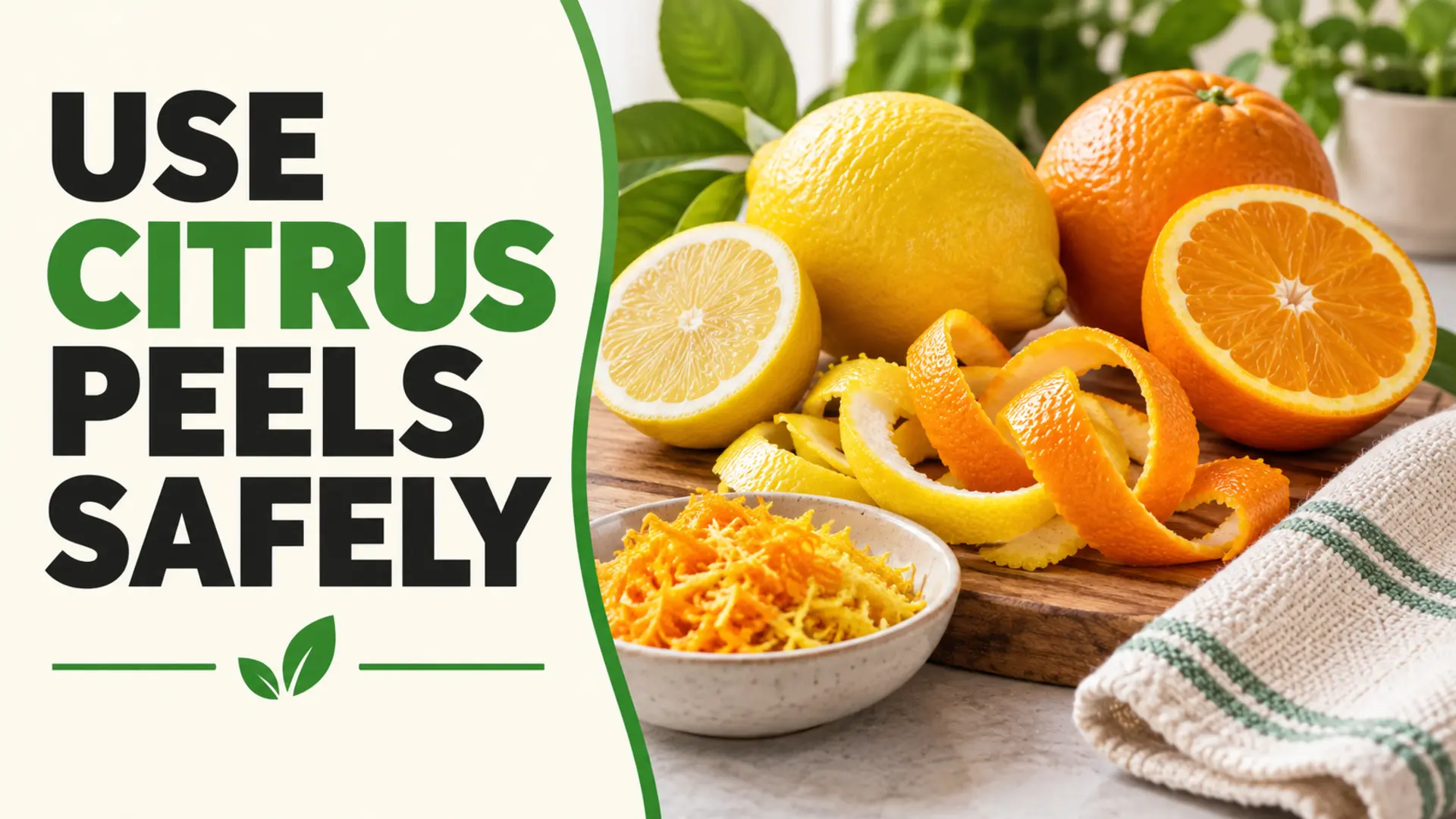
You can use citrus peels safely for flavouring and selected household tasks when the fruit is sound and the method suits the surface or recipe. Wash citrus under running water before zesting and discard mouldy or spoiled fruit.
Use citrus peels safely in cooking
- Fresh zest: grate only the coloured outer layer into sauces, baking or dressings.
- Frozen zest: freeze small labelled portions in a suitable container for later cooking.
- Dried peel: follow a reliable drying method and store only when fully dry.
- Candied peel: use a tested recipe and store the finished food as directed.
Avoid zesting fruit treated with a product not intended for consumption, and account for citrus allergies or medication advice where relevant.
Household uses and limitations
Citrus peel can add fragrance to some vinegar-based cleaning mixtures, but homemade products are not proven disinfectants. Never mix vinegar or citrus solutions with bleach or other cleaners. Test delicate stone, wood, metal and sealed surfaces before wider use.
Find more edible produce ideas in the root-to-stem cooking guide, and sort remaining scraps with the composting grocery guide.
Avoid disposal damage
Do not assume citrus peels are safe for every garbage disposal or drain. Follow the appliance manufacturer’s instructions and local plumbing guidance.
Use only what is suitable
Using citrus peels can add flavour and reduce some waste, but safety and compatibility matter more than using every peel.