
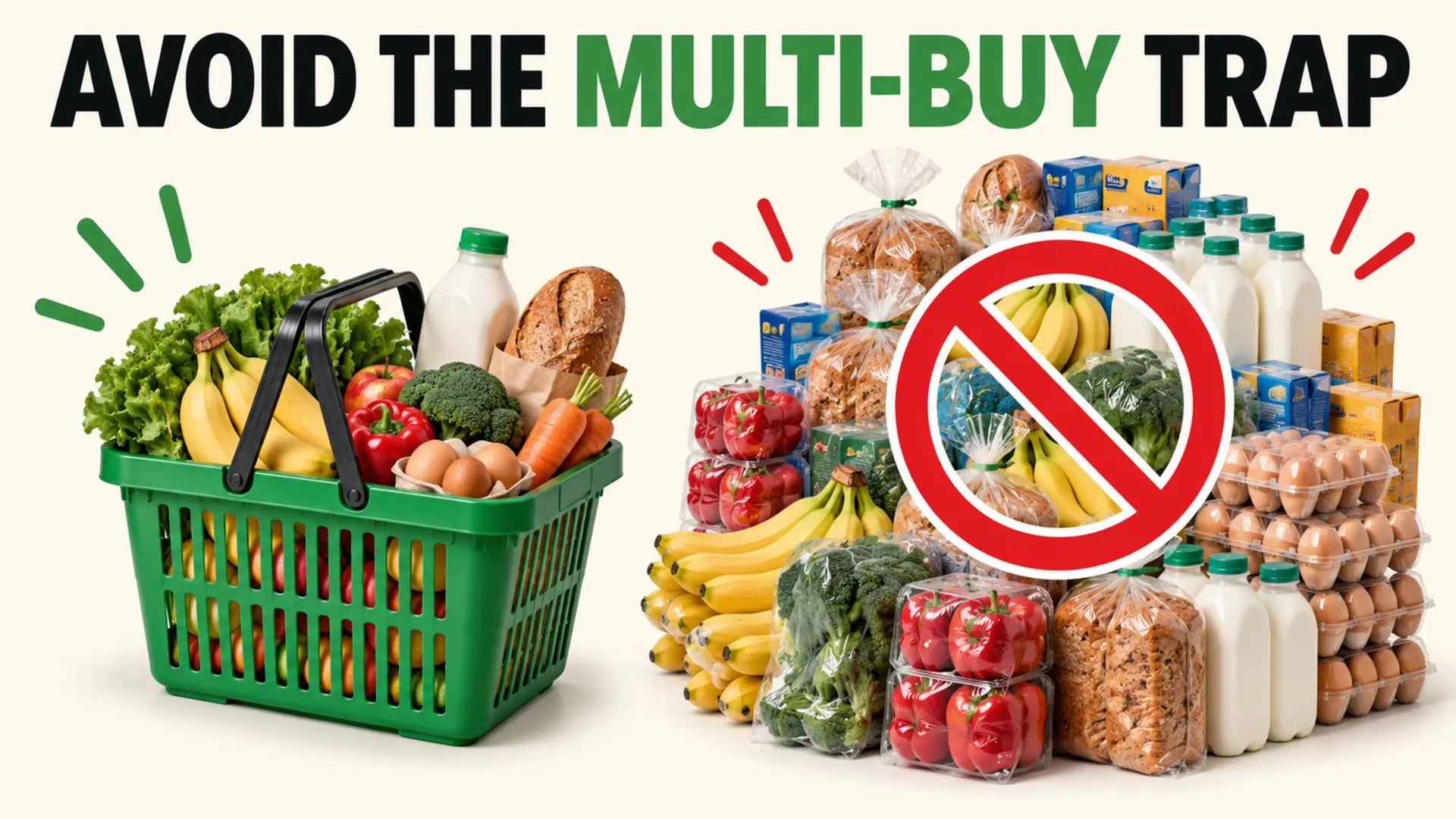
To avoid the multi-buy trap, judge a promotion by what you will use—not the size of the discount sign. A larger pack or multi-item offer only provides value when the price is lower and every item fits your storage and meal plan.
How to avoid the multi-buy trap
- Read the promotion terms; some offers require a minimum quantity and others do not.
- Compare unit prices using the same unit and product type.
- Check available refrigerator, freezer and pantry space.
- Estimate realistic use before quality declines.
- Confirm whether freezing or sharing is practical and safe.
Be cautious with perishables
Fresh berries, greens, dairy and bread may not last long enough for a large purchase. Buy the promotion only when you have a clear plan. Shelf-stable goods can also become waste when storage is poor or preferences change.
Review what you own through a weekly refrigerator audit, and compare quantities with the zero-waste grocery blueprint.
Calculate value after likely use
A lower unit price does not help if part of the package is discarded. Include transport, storage and preparation effort in your decision, particularly for very large packs.
Let your plan lead
Use a flexible grocery list and treat unplanned promotions as optional. The simplest way to avoid the multi-buy trap is to buy the amount your household genuinely expects to use.