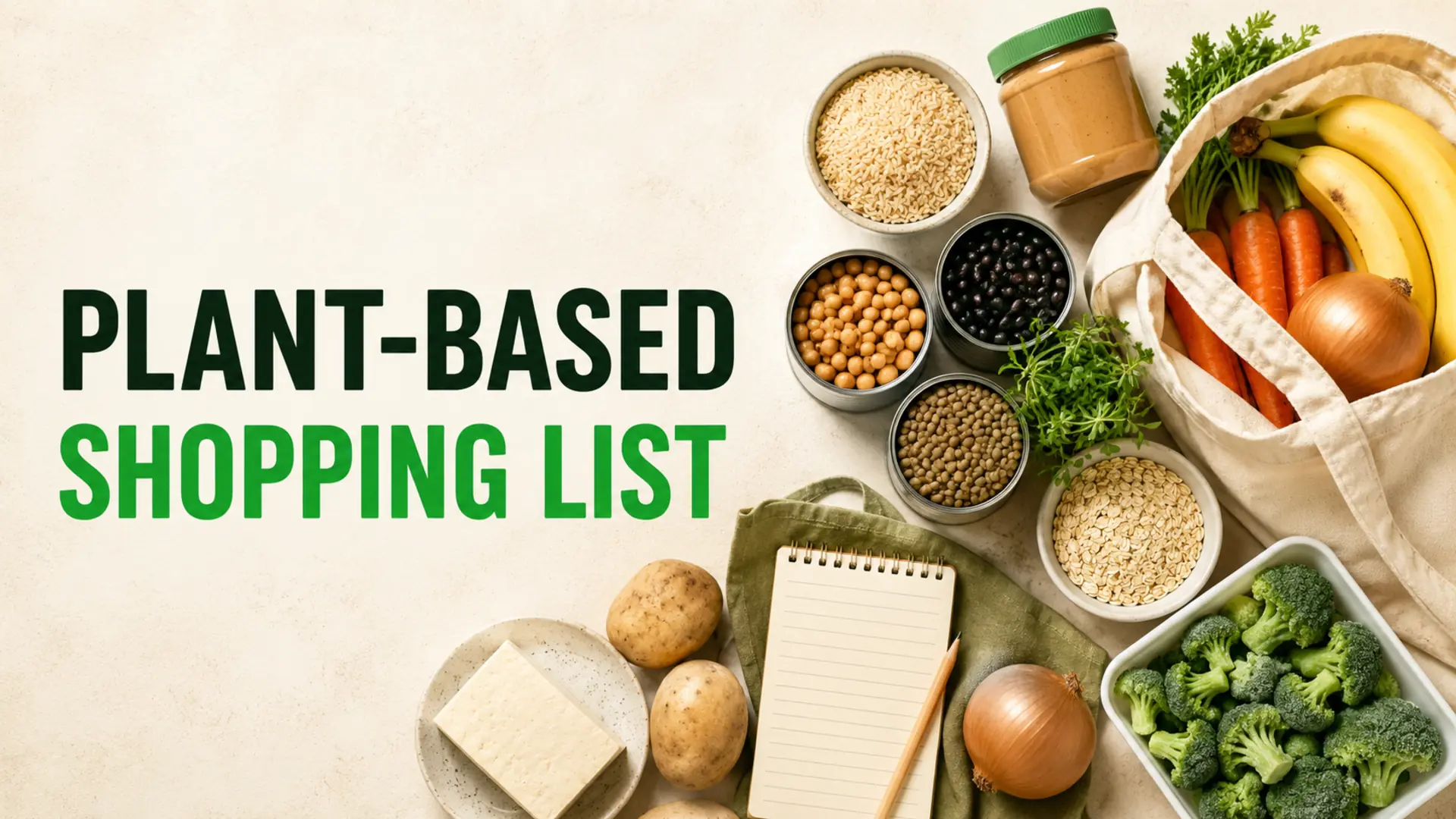
A budget-friendly plant-based shopping list is built around adaptable staples rather than a fixed weekly price. Food costs vary by country, store, season, package size and household needs, so a useful list should help you compare options and plan complete meals without promising that everyone can shop for the same amount.
Start with legumes, grains or starchy foods, vegetables, fruit and a few flavour-building ingredients. Add convenience products when they genuinely fit the budget and routine. A plant-based list can include fully vegan meals or simply help a household eat more plant foods.
Budget-friendly plant-based shopping list
Beans, lentils and other protein-rich foods
- Dry or canned lentils
- Chickpeas, black beans, kidney beans or local alternatives
- Tofu or tempeh when competitively priced
- Peanut butter or another suitable nut or seed butter
- Unsalted nuts and seeds in quantities the household will use
- Frozen edamame or peas where available
Grains and starchy foods
- Rice
- Oats
- Pasta or noodles
- Potatoes or sweet potatoes
- Bread, wraps or tortillas
- Quinoa, barley, millet or other grains when they fit the budget and dietary needs
Vegetables and fruit
- Onions, carrots, cabbage and other versatile local vegetables
- Seasonal produce with a practical price and clear meal use
- Frozen vegetables without unnecessary sauces
- Bananas, apples, citrus or other durable fruit
- Frozen fruit for oats, smoothies or desserts
- Fresh herbs only when several meals will use them
Flavour and cooking staples
- Cooking oil
- Tinned tomatoes or tomato paste
- Stock or ingredients for a simple broth
- Vinegar and citrus
- Soy sauce, tamari or another suitable savoury condiment
- Garlic, cumin, paprika, curry powder or regularly used spices
- Mustard, salsa or another versatile sauce
Choose ingredients that can serve several meals
The lowest sticker price is not always the most useful purchase. A practical staple should fit several meals, store well enough for your routine and be something the household will actually eat. Buying a large package that goes unused is not a saving.
| Staple | Possible meals | Planning advantage |
|---|---|---|
| Lentils | Soup, curry, pasta sauce or grain bowl | Works in several cuisines |
| Chickpeas | Salad, stew, wraps or roasted topping | Useful hot or cold |
| Rice | Bowls, stir-fries, sides or soup | Pairs with many ingredients |
| Potatoes | Tray meals, soup, curry or breakfast hash | Flexible across meals |
| Frozen vegetables | Soup, pasta, rice dishes or sides | Easy to portion without rushing to use the whole package |
| Peanut butter | Oats, toast, sauce or snacks | Adds flavour to sweet and savoury meals |
Compare unit prices instead of package prices
A larger package may appear expensive but cost less per gram, kilogram, ounce or serving. Check the shelf label or calculate the unit price using the same measurement for both products. Then consider storage space, cash available today and whether the food will be used before its quality declines.
- Compare the same form of the food where possible.
- Account for drained weight when comparing canned products.
- Consider cooking fuel and time when comparing dry and canned legumes.
- Do not buy bulk quantities solely because the unit price is lower.
- Record the better-value size only if it suits the household.
Decide between dried and canned legumes
Dried beans and lentils may offer a lower unit cost, but canned options can reduce soaking, cooking and planning time. The better choice depends on local prices, available equipment and the value of convenience to the household.
Use dried legumes for planned batch cooking and canned legumes for quick meals or backup food. If using canned products, compare drained weight and check the label for ingredients relevant to your needs.
Use fresh, frozen and canned produce strategically
There is no rule that fresh produce is always cheaper or better. Compare usable quantity, preparation time and likely waste. Frozen vegetables can be useful when only part of a package is needed. Canned tomatoes, corn or other vegetables may support specific recipes. Choose products with labels that fit the household’s dietary requirements.
- Buy fresh produce for planned meals and immediate snacks.
- Use frozen produce for flexible portions and backup meals.
- Choose canned produce when it suits the recipe and local price.
- Check seasonal and local options rather than assuming one item is always cheapest.
- Plan delicate produce earlier in the week and durable food later.
Build meals before building the list
Choose a few meal formulas and list only the ingredients needed to make them. This turns a collection of cheap foods into a usable plan.
Lentil and vegetable pot
Combine lentils with onions, carrots, tomatoes, spices and a grain or bread. Change the seasoning to create a soup, dal-style dish or simple stew.
Bean and roasted vegetable bowls
Use beans, potatoes or rice, roasted vegetables and a simple dressing. Keep components separate when that makes leftovers easier to reuse.
Tofu or chickpea stir-fry
Pair tofu or chickpeas with frozen or fresh vegetables, rice or noodles and a checked sauce. Substitute the protein based on price and dietary needs.
Oats with fruit and seeds
Prepare oats with fresh or frozen fruit and a suitable nut or seed topping. Adjust the quantities to appetite and individual nutrition needs.
For more adaptable options, use these high-protein meal prep plans and select the plant-based combinations that fit your preferences and budget.
Plan quantities without overbuying
Count the meals that actually need food at home, then scale recipes to the required number of portions. Leave space for schedule changes and leftovers. A low-cost ingredient becomes expensive when a household buys more than it can use.
- Count planned breakfasts, lunches and dinners.
- Choose meals with overlapping ingredients.
- Check pantry, refrigerator and freezer stock.
- Calculate recipe quantities.
- Combine duplicate ingredients across meals.
- Round purchases to practical package sizes.
- Write a use-first plan for perishable ingredients.
The Sunday grocery prep routine can help organize these steps without imposing a rigid schedule.
Check the pantry before shopping
Review opened grains, legumes, sauces and spices before adding replacements. Use suitable older food first and avoid purchasing a second package when the current one is sufficient. A periodic monthly pantry audit can make this check faster.
Organize the shopping trip
Group the finished list by the layout of the store you use. Place optional items at the end so they can be removed if the total exceeds the planned spending limit. These shopping-list-by-aisle steps explain how to create a practical store-specific order.
- Essential: ingredients required for planned meals
- Useful replacement: a staple that is genuinely low
- Optional: an item that improves variety but is not required
- Only if discounted: a flexible item with a planned use and storage space
Common budget plant-based shopping mistakes
- Following a fixed online price list: prices and currencies vary widely.
- Buying too many specialty substitutes: choose them selectively when they add value.
- Ignoring convenience: dried food is not automatically the best choice for every household.
- Buying bulk food without a plan: lower unit cost does not prevent waste.
- Choosing ingredients without meals: connect each purchase to one or more uses.
- Making universal nutrition promises: needs differ by age, health, activity and dietary pattern.
Keep plant-based meals nutritionally appropriate
A plant-based shopping list should support variety and individual nutrition needs, not only the lowest possible total. People following fully vegan diets or managing health conditions may need personalized guidance about nutrients and supplementation. Consult an appropriately qualified healthcare professional when needed.
Canada’s Food Guide recommends choosing protein foods that come from plants more often and offers broader healthy-eating and planning guidance. Readers elsewhere should use the official recommendations for their country or region.
A budget-friendly plant-based shopping list works best when it is flexible. Compare unit prices, choose ingredients with several uses, plan realistic quantities and adjust the list to local stores, seasons and household preferences.