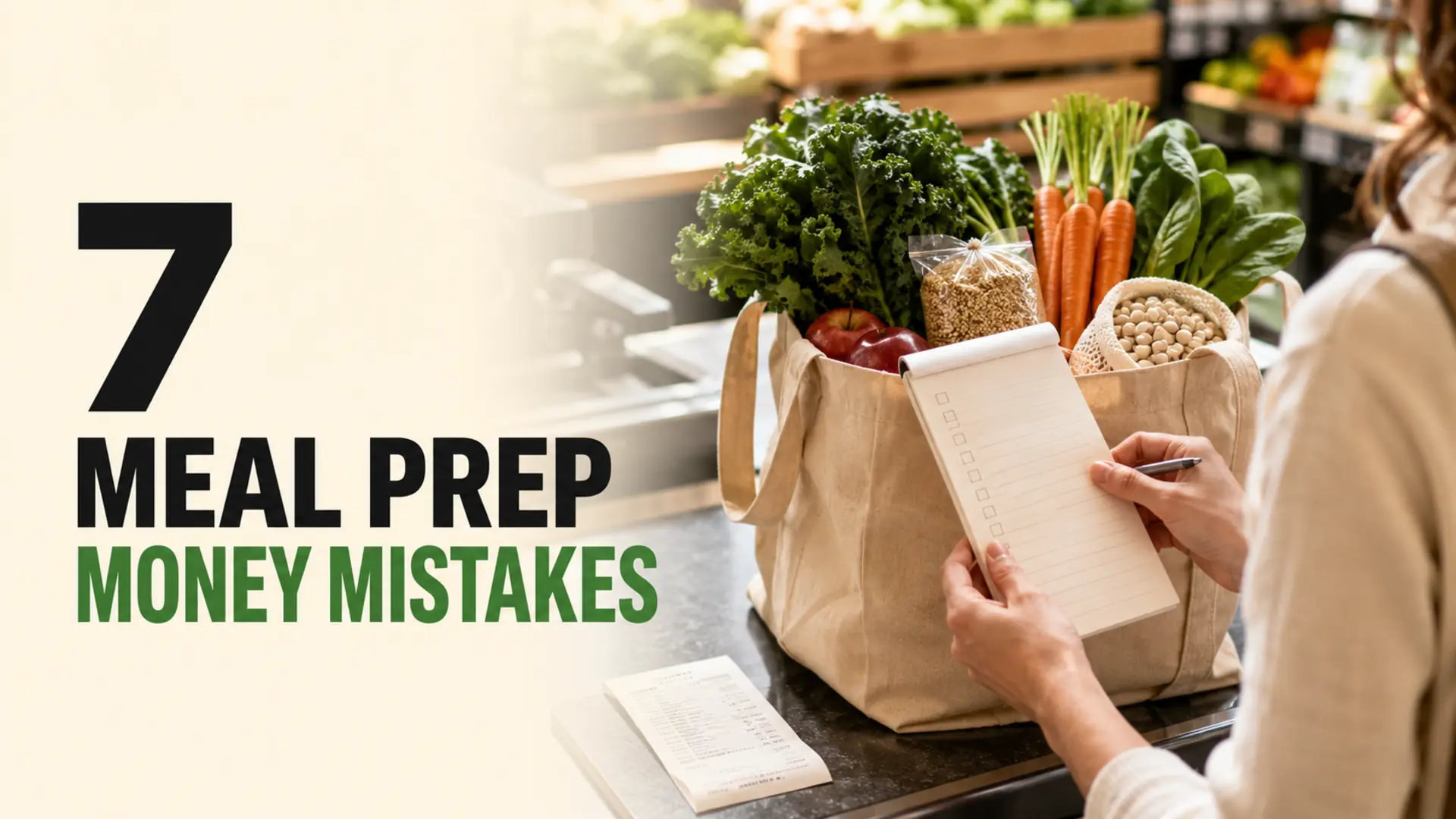
Quick answer: The most common meal prep mistakes happen before cooking begins: buying more than your plan can use, choosing ingredients for only one recipe, ignoring unit prices, skipping a pantry check and shopping without a focused list. These habits can raise the checkout total and leave food unused.
Meal prep does not automatically save money. It works best when your shopping list reflects realistic portions, your schedule and what is already at home. The seven practical fixes below help you shop with more intention without relying on rigid budgets or unrealistic savings promises.
Why Meal Prep Mistakes Start at the Store
A weekly menu can look efficient on paper while still producing an expensive grocery list. The problem is usually a mismatch: too many meals, too many unrelated ingredients or too little consideration for shelf life. A useful plan connects every purchase to a meal, snack or backup option.
Before shopping, count how many meals you will realistically eat at home. Check for restaurant plans, work lunches, leftovers and busy evenings. Then build the list around that number rather than an ideal week that may not happen.
1. Buying Convenience Produce Automatically
Pre-cut, washed or portioned produce can cost more than whole produce, but it is not always a bad purchase. It may be worthwhile when limited time, mobility or cooking confidence would otherwise prevent the food from being used.
Compare the unit price and usable quantity instead of assuming one format is always cheaper. Whole carrots may offer better value for a large batch, while a small bag of prepared vegetables may reduce waste in a one-person household. Choose the form you are most likely to use.
2. Buying Ingredients for Only One Recipe
A specialty sauce, herb or spice can be worthwhile when you enjoy it and have another use planned. It becomes a problem when one recipe needs a small amount and the remainder has no clear destination.
- Choose recipes that share ingredients during the same week.
- Check whether a pantry staple can provide a suitable flavour profile.
- Plan a second meal, dressing or marinade that uses the remainder.
- Buy the smallest practical package when the unit-price difference is reasonable.
This ingredient-overlap approach is also useful when following a zero-waste meal plan.
3. Planning Delicate Food Too Late in the Week
Fresh berries, tender greens, herbs and some seafood can be more perishable than root vegetables, cabbage, frozen produce and shelf-stable staples. Exact storage life varies with freshness, handling and refrigerator temperature, so fixed day-by-day promises are unreliable.
Schedule delicate foods earlier and sturdier or frozen ingredients later. Store produce correctly and check it during the week. If plans change, move a perishable ingredient into the next meal instead of following the original menu rigidly.
4. Shopping Without a Focused List
A vague list such as “vegetables, snacks, chicken” leaves too many decisions for the store. Write quantities and intended uses when helpful: “two bell peppers for fajitas” or “one bag of frozen peas for curry and rice bowls.” Specific entries make it easier to notice unnecessary extras.
Arrange the final list in the store’s walking order. Our guide to organizing a shopping list by aisle explains a simple method. Leave room for a deliberate substitution if an item is unavailable or unusually expensive.
5. Ignoring Unit Prices and Usable Quantity
The largest package is not automatically the best value. Compare the price per standard unit shown on the shelf label where available, while also considering whether you can use or store the full amount.
Use a two-step comparison
- Compare like-for-like unit prices, such as price per kilogram, pound, ounce or 100 grams.
- Choose the quantity your household can realistically use before quality declines.
A bulk bag may have a lower unit price but a higher total cost. It offers value only when you have storage space and a plan for the contents. Consider freezing portions or sharing a large package when appropriate.
6. Skipping the Pantry and Freezer Check
Duplicate rice, oil, canned beans and seasonings can accumulate when shoppers rely on memory. Spend a few minutes checking the pantry, refrigerator and freezer before finalizing the list. A monthly pantry audit can make this faster.
Move foods that should be used soon to a visible “use first” area. Note partial packages as well as unopened items. Build one or two meals around existing stock before adding new ingredients.
7. Choosing by Brand Instead of Value
Store brands can offer good value, but they are not automatically identical to national brands. Compare ingredient lists, package sizes, allergen information, nutrition labels and unit prices. Taste and performance can matter for some products, while simple staples may offer more flexibility.
Try a lower-cost option in a small quantity before buying multiples. Keep the products that work for your recipes and preferences rather than treating brand choice as an all-or-nothing rule.
A Better Pre-Checkout Routine
- Confirm how many meals will actually be eaten at home.
- Check the pantry, refrigerator and freezer.
- Choose recipes with overlapping ingredients.
- Place delicate foods earlier in the plan.
- Write quantities and intended uses on the list.
- Compare unit prices and package sizes.
- Review the cart once before paying and remove accidental duplicates.
If you are preparing several meals, use this freezer meal prep checklist to plan containers and storage before buying large quantities.
Keep Food Safety in the Plan
Do not keep food merely to avoid waste when it may be unsafe. Follow storage instructions, keep cold food cold during transport and discard food showing signs of spoilage. For reliable prevention ideas, see the EPA’s household food-waste guidance and use official food-safety guidance for storage and handling decisions.
Final Takeaway
The best way to avoid meal prep mistakes is to make the shopping list realistic. Plan for the meals you will actually eat, use ingredients across recipes, compare prices in consistent units and check existing food first. Small, repeatable decisions at checkout are more useful than dramatic savings claims—and they make weekly meal prep easier to maintain.