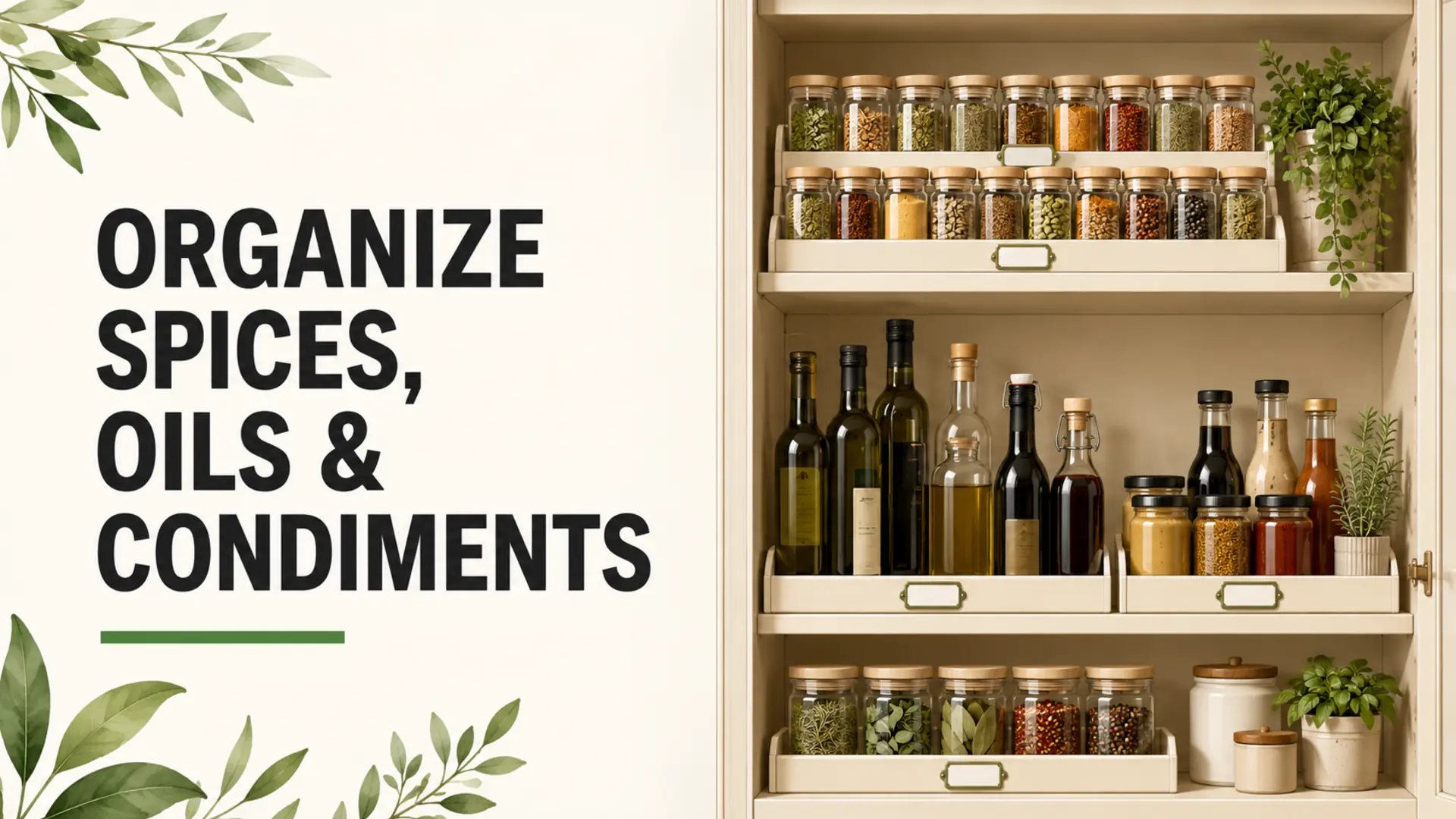
Learning how to organize spices, oils and condiments starts with one simple goal: make every item easy to see, reach and evaluate before you shop. A useful system does not require matching jars or a large pantry. It needs clear categories, safe storage locations and a quick inventory routine that works in your kitchen.
How to Organize Spices, Oils and Condiments
Begin by taking everything out of one zone at a time. Working shelf by shelf prevents the project from taking over the kitchen. Place spices together, group cooking oils and vinegars, and separate refrigerated condiments from shelf-stable products. Check packages for storage instructions as you go.
- Remove items and wipe the shelf or drawer.
- Discard leaking containers and products with visible spoilage.
- Combine exact duplicates only when the products and condition are compatible; do not mix old and new batches automatically.
- Group items by how you use them.
- Return the most frequently used products to the easiest-to-reach space.
Choose Zones That Match Your Cooking
Alphabetical storage can help a large spice collection, but it is not the only sensible option. A smaller kitchen may work better with activity-based zones. Keep everyday savory seasonings together, baking spices in another group, and frequently paired flavors in the same bin.
- Everyday seasonings: salt, pepper, garlic, paprika and other frequent choices.
- Regional flavor groups: organize combinations used for curries, Mediterranean dishes, tacos or other regular meals.
- Baking: cinnamon, nutmeg, extracts and decorating ingredients.
- Whole spices: seeds, pods and peppercorns used with a grinder or mortar.
- Specialty items: less-frequent blends kept in a labelled bin.
Place daily items between waist and eye level when possible. Reserve higher or deeper storage for occasional products. A tiered riser works well in a cabinet, while a shallow drawer keeps labels visible from above. Before buying an organizer, measure the shelf, door clearance and tallest bottle.
Store Oils Away From Heat and Light
Cooking oils are best kept according to their labels in a cool, dark location away from direct sunlight and strong heat. The cabinet beside or above an oven may become warmer than expected. Keep a smaller working bottle near the preparation area only if the location remains suitable, and store the main supply in a protected cupboard.
Do not pour different oils into an unlabelled decorative bottle. If you decant an oil, use a clean food-safe container and add the product name and date opened. Buy a size your household can reasonably use while the quality remains good rather than assuming a large container is always better value.
Organize Condiments by Storage Needs
Manufacturer directions should decide whether an opened condiment belongs in the refrigerator or pantry. In the refrigerator, use a shallow bin or door zone for products that can safely be stored there. Keep taller bottles behind shorter jars only when every label remains visible.
- Group dressings and marinades together.
- Keep cooking sauces in a separate bin from table condiments.
- Place newly purchased backups behind the open container.
- Mark homemade sauces clearly and follow the recipe’s storage guidance.
- Check allergen labels and avoid transferring products if the original label is needed.
A simple “open first” section reduces the chance of starting several containers at once. It also makes the next pantry check faster.
Use Freshness Checks, Not One Universal Timeline
Spices commonly lose aroma and flavor before they become a safety concern, while oils and condiments have different storage needs. Avoid applying one fixed disposal date to every product. Check the package date, storage instructions, seal, appearance and aroma. Discard items showing mold, leakage, a bulging lid or other signs of spoilage, and do not taste questionable food to test it.
For item-specific guidance, consult the official FoodKeeper storage resource. Its guidance covers condiments, sauces, canned goods and other household foods. Local food-safety advice and manufacturer instructions should take priority when they are more specific.
Create a Pantry Inventory That Stays Useful
An inventory should be short enough to maintain. Track only products that are easy to duplicate, difficult to see or important to your regular meals. For many households, that means core spices, cooking oils, specialty sauces and unopened backups.
- Item name and broad category
- Approximate amount: full, half-full or low
- Storage location
- Date opened when useful
- Whether a backup already exists
A paper checklist, note or grocery-list tool can all work. The important habit is checking the physical shelf before adding replacements. Our monthly pantry audit checklist provides a repeatable routine for reviewing what you have.
Build a Smarter Refill Rule
“Low” means something different for a daily cooking oil and an occasional spice. Set a refill point based on how often you use the item, package availability and how soon you expect to shop. Add an item when the remaining amount is unlikely to cover the meals you have planned—not simply because the container looks partly empty.
When making the grocery list, group replacements by the section where your store stocks them. The guide to organizing a shopping list by aisle can help keep oils, spices and refrigerated condiments in a practical shopping order.
Prevent Duplicates Before They Enter the Pantry
- Search the shelf and backup bin before adding an item.
- Use descriptive list entries such as “smoked paprika” rather than “paprika.”
- Include the preferred size only when it matters.
- Remove or mark the item as soon as another household member buys it.
- Review shared-list rules if more than one person shops.
For households coordinating purchases, these shared shopping-list practices can reduce confusion without depending on unsupported automation.
A 10-Minute Monthly Reset
Once a month, straighten the zones, wipe sticky containers, move open products forward and compare low items with upcoming meal plans. Check that labels remain readable and that oils have not migrated beside a heat source. This small reset is usually more sustainable than waiting for the pantry to become chaotic.
Keep the System Simple
The best way to organize spices, oils and condiments is the method you can maintain. Use visible categories, follow product-specific storage instructions, label decanted items and shop from a verified inventory. With a few dependable zones and a brief monthly check, the flavor pantry stays easier to use without unnecessary containers or rigid rules.