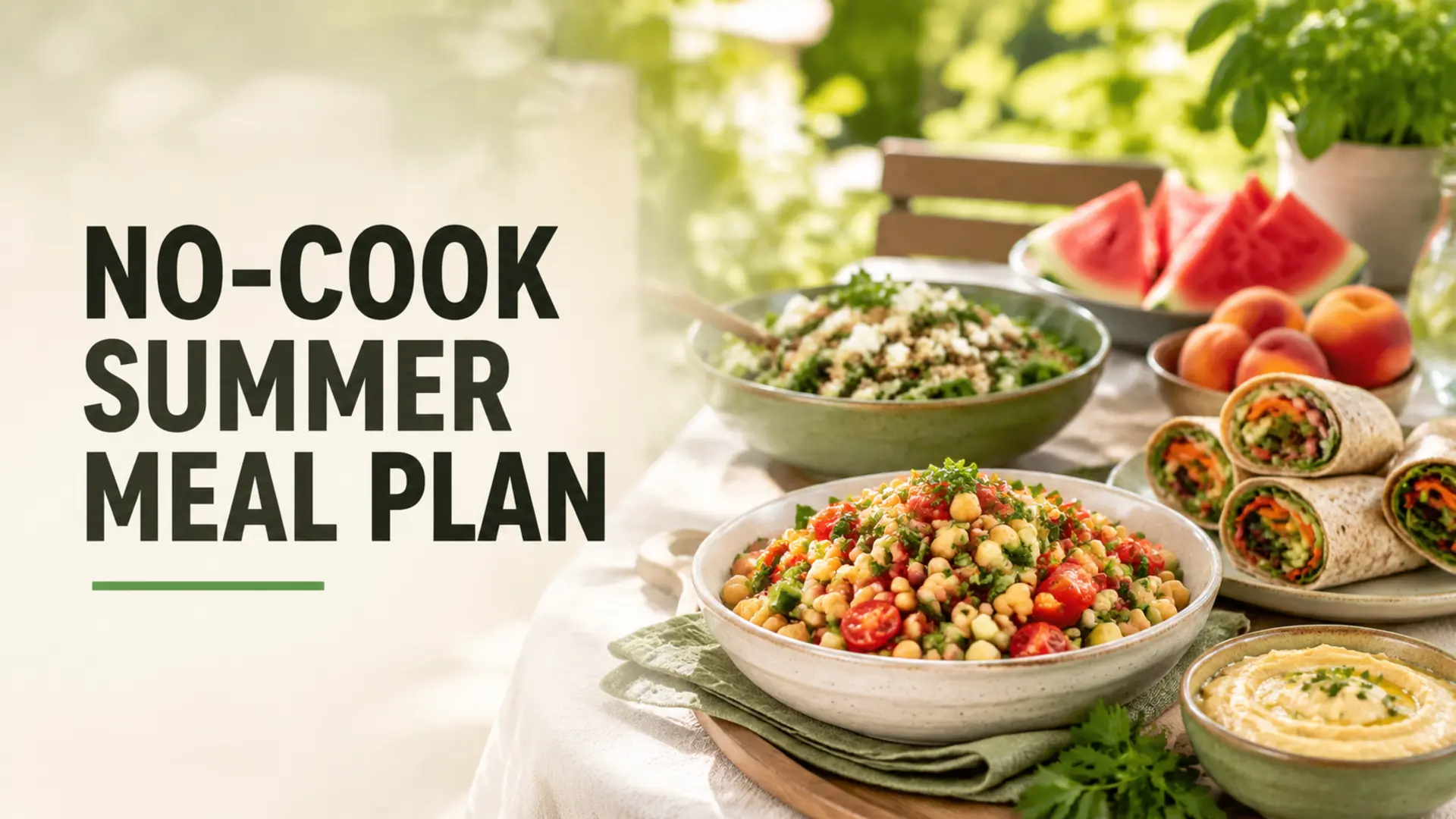
A no-cook summer meal plan makes hot-weather meals easier by combining ready-to-eat proteins, fresh produce, convenient grains and flexible sauces. The goal is not to avoid every packaged ingredient or promise dinner in a fixed number of minutes. It is to build satisfying meals without using the oven or stovetop, while keeping perishable food properly chilled.
How a No-Cook Summer Meal Plan Works
Choose a few components that can move between salads, wraps, bowls and snack-style plates. Start with two proteins, two bases, four or five produce items and two flavor options. This creates variety without filling the refrigerator with ingredients that work for only one recipe.
- Ready-to-eat proteins: canned beans or lentils, hummus, tofu intended to be eaten without cooking, yogurt, cheese, canned fish, or clearly labelled fully cooked poultry or seafood.
- Bases: whole-grain bread, tortillas, pre-cooked grains, crisp greens or canned hearts of palm.
- Produce: tomatoes, cucumbers, peppers, cabbage, carrots, peaches, berries, melon or whatever is seasonal locally.
- Flavor: vinaigrette, pesto, salsa, hummus, fresh herbs, citrus or a nut- or seed-based sauce.
Always check labels. “Pre-cooked,” “ready to heat” and “ready to eat” do not necessarily mean the same thing. If a product requires cooking, follow its instructions rather than treating it as a no-cook ingredient.
Seven Flexible No-Cook Summer Meals
1. Mediterranean Chickpea Salad
Combine rinsed chickpeas with cucumber, tomatoes, peppers, olives and feta or a plant-based alternative. Dress with lemon, olive oil and herbs. Serve with whole-grain bread or spoon it into a wrap.
2. Peanut Noodle and Vegetable Bowl
Use noodles sold as fully cooked and ready to eat, or substitute pre-cooked grains. Add shredded cabbage, carrots, edamame and peppers. Pack a peanut-lime sauce separately, and use a seed-based dressing when allergies are a concern.
3. White Bean and Tomato Toast
Mash canned white beans with lemon and herbs, then spread over sturdy bread. Top with sliced tomato and arugula. Keep the bread separate until serving if the meal will be stored for several hours.
4. Smoked Salmon or Tofu Wraps
Spread a tortilla with cream cheese, hummus or a dairy-free alternative. Add cucumber, greens, dill and either ready-to-eat smoked salmon or tofu labelled for uncooked use. Roll tightly and keep refrigerated.
5. Fully Cooked Shrimp and Black Bean Bowl
Combine chilled, fully cooked shrimp with black beans, tomato, avocado, cabbage and lime. Calling this a bowl rather than ceviche makes it clear that citrus juice is adding flavor—not cooking raw seafood.
6. Tomato, Peach and Mozzarella Plate
Layer tomatoes and peaches with mozzarella, basil and balsamic vinaigrette. Add bread, beans or another protein to make the plate more substantial. Nectarines, plums or melon can replace peaches.
7. Hummus Crunch Lunchbox
Pack hummus with carrots, cucumber, snap peas, fruit, whole-grain crackers and a protein that suits your needs. This works for dinner on a busy evening or as a portable lunch. For more combinations, see these lunchbox meal prep ideas.
No-Cook Summer Shopping List
Adjust quantities to household size, appetite and the number of meals you intend to make. Check the refrigerator and pantry before copying the list.
Proteins and Dairy
- Canned chickpeas, black beans or white beans
- Hummus or another bean dip
- Ready-to-eat tofu, canned fish or fully cooked chilled protein
- Yogurt, feta or mozzarella, if desired
Produce
- Tomatoes and cucumbers
- Bell peppers, carrots and cabbage
- Leafy greens and fresh herbs
- Avocado and lemons or limes
- Two seasonal fruits
Bases and Flavor
- Whole-grain bread, wraps or crackers
- Pre-cooked grains or ready-to-eat noodles
- Olive oil and vinegar
- Nut or seed butter
- Olives, capers, salsa or pesto
Organize the final list around your store layout using this guide to sorting a shopping list by aisle.
Prep Components Without Making Everything at Once
- Wash produce under running water and dry it well.
- Drain and rinse canned beans when appropriate.
- Mix one or two dressings and label the containers.
- Chop sturdy vegetables; leave delicate fruit, herbs and avocado for later when practical.
- Store wet ingredients separately from bread, crackers and greens.
- Assemble only the next meal or two, then refresh components midweek.
Planning around food already at home helps control the shopping list. The fridge-first meal-planning method is especially useful for ripe produce and opened condiments.
Keep No-Cook Meals Safe in Hot Weather
No-cook does not mean no food-safety work. Keep perishable ingredients refrigerated at 40°F (4°C) or below, and return them to cold storage promptly. FoodSafety.gov advises refrigerating perishables within two hours, or within one hour when exposed to temperatures above 90°F (32°C). Follow its current four steps to food safety.
- Use a cooler with ice or frozen gel packs for outdoor meals.
- Keep the cooler in the shade and open it as little as possible.
- Use only seafood, poultry and other products clearly sold as fully cooked or ready to eat.
- Prevent cross-contact when preparing meals for people with food allergies.
- Discard perishable food that has not been kept safely cold; appearance and smell are not reliable safety tests.
Reduce Waste With Ingredient Overlap
Use cucumbers in salads and wraps, herbs in dressings and bowls, and beans in toast toppings and lunchboxes. Choose fruit that can be eaten alone or added to a plate. This flexible overlap is more useful than buying a long list for seven unrelated recipes. The zero-waste meal-planning guide offers more ways to plan around quantities and leftovers.
Make the Plan Your Own
A practical no-cook summer meal plan should match your climate, household, dietary needs and access to ready-to-eat ingredients. Select a few flexible components, vary the sauces and formats, and keep perishable foods cold. With a focused shopping list and sensible substitutions, hot-weather meals can stay refreshing without rigid recipes or questionable shortcuts.