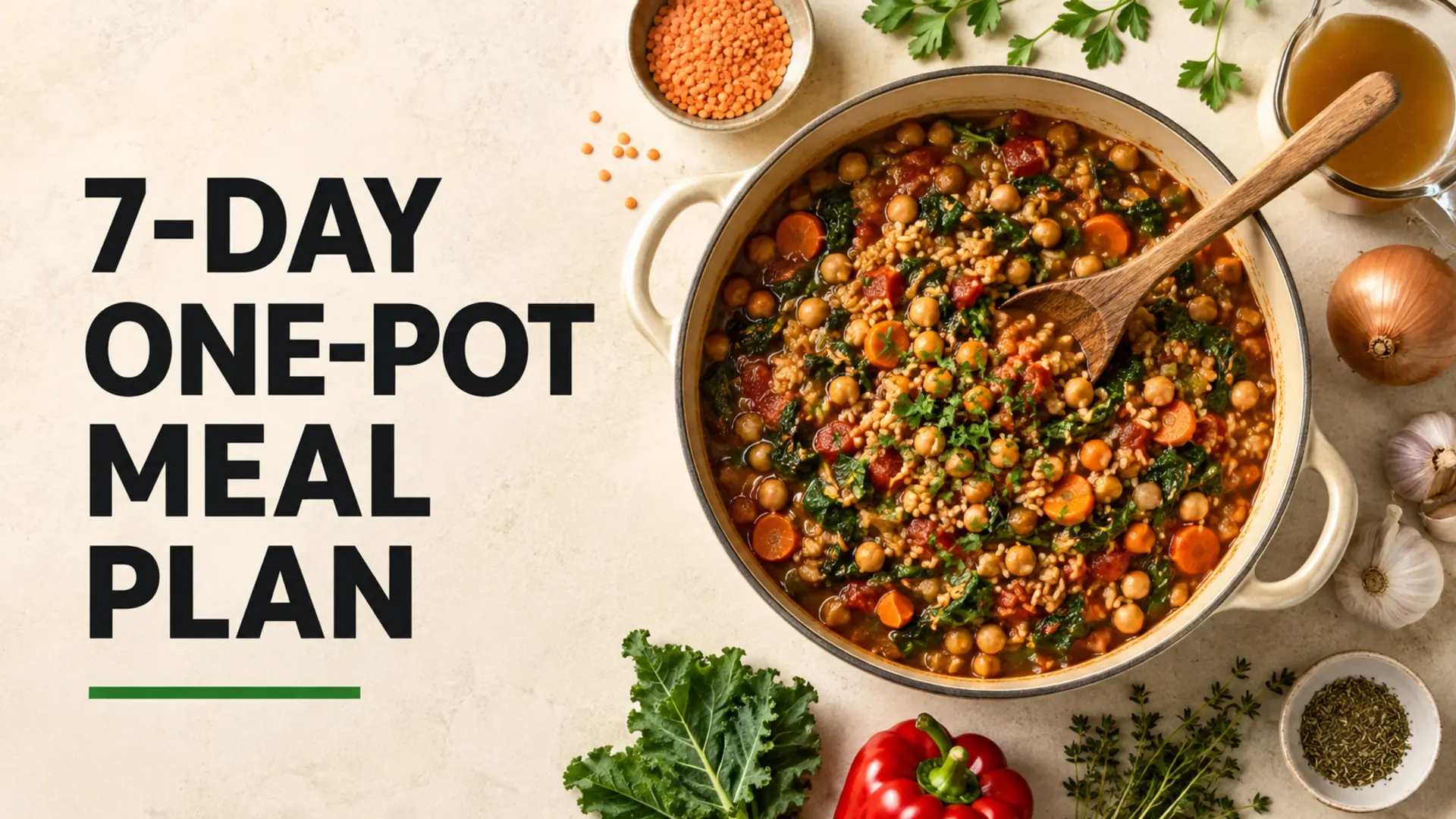
A one-pot meals 7-day plan simplifies grocery shopping by reusing a focused set of vegetables, proteins, grains and flavor builders across the week. The meals still need safe preparation and realistic cooking times, but a shared-ingredient plan can reduce the number of one-use purchases and make weeknight decisions easier.
How to Build a One-Pot Meals 7-Day Plan
Choose meals that fit the cookware and equipment you actually own. A deep skillet suits pasta and rice dishes, while a Dutch oven or stockpot works well for soups, stews and chili. Check capacity before scaling a recipe; overcrowding can affect cooking and make stirring difficult.
- Aromatic base: onions, garlic, carrots, celery or ginger.
- Protein: beans, lentils, tofu, eggs, poultry, meat or seafood.
- Starch: rice, pasta, potatoes, couscous or bread served alongside.
- Vegetables: choose several that can appear in more than one meal.
- Liquid and flavor: broth, tomatoes, coconut milk, herbs, spices or sauces.
Seven Flexible One-Pot Meal Ideas
Day 1: Tomato Chickpea and Grain Stew
Simmer onions, carrots, canned tomatoes, chickpeas and a quick-cooking grain in broth. Add spinach near the end. Adjust the liquid and timing to the grain’s package instructions.
Day 2: Chicken or Tofu Orzo
Cook chicken pieces or firm tofu with garlic, tomatoes and orzo, then fold in greens. If using poultry, verify doneness with a food thermometer rather than relying on color or timing alone.
Day 3: Lentil and Root Vegetable Soup
Combine lentils with carrots, celery, onion, potatoes and herbs. Different lentils cook at different rates, so use the package directions as a starting point and add delicate vegetables later.
Day 4: Coconut Chickpea Curry
Simmer chickpeas, peppers, spinach and a curry sauce based on coconut milk or tomatoes. Serve as-is or add a quick-cooking grain only when the pot has enough liquid and capacity.
Day 5: Sausage or Bean Gnocchi Skillet
Combine cooked sausage or white beans with peppers, gnocchi and tomato sauce. Check the sausage label carefully: some products are raw and must be fully cooked, while others are sold ready to heat.
Day 6: Vegetable Rice and Bean Pot
Use rice, beans, tomatoes, corn or peppers and a suitable amount of broth. Keep the lid closed during the rice’s main cooking period and adjust liquid for the specific rice variety.
Day 7: Planned Leftover Soup
Use only leftovers that were cooled, refrigerated and stored safely. Combine compatible cooked vegetables, grains and proteins with fresh broth, then reheat thoroughly. Do not treat every forgotten refrigerator item as suitable for a “cleanout” soup.
Create an Overlapping Grocery List
Review each meal and circle ingredients used at least twice. These become the shared core. Quantities depend on household size, appetite and whether lunches will come from leftovers.
Produce
- Onions and garlic
- Carrots and celery
- Bell peppers
- Leafy greens
- Potatoes or another sturdy vegetable
Proteins
- Beans, chickpeas and lentils
- Chicken, tofu, sausage or another preferred option
- Eggs or yogurt for optional toppings and sides
Pantry
- Canned tomatoes and broth
- Rice, orzo, gnocchi or another starch
- Coconut milk or a second sauce base
- Cooking oil, herbs and spices
Before shopping, compare the list with your pantry. The minimalist kitchen ingredient framework can help identify flexible staples already available.
Shop in the Order You Will Store Food
Group the list by store section, leaving chilled and frozen products until later in the trip when practical. Keep raw meat or poultry separated from ready-to-eat produce in the cart and shopping bags. Use this guide to organizing a shopping list by aisle to adapt the order to your regular store.
Prep Shared Ingredients Without Overcommitting
- Confirm the seven meals against your calendar.
- Wash and prepare sturdy vegetables.
- Portion proteins for the meals that require them.
- Group pantry ingredients by recipe.
- Leave delicate greens and quick-cooking seafood for later preparation.
- Freeze ingredients promptly if they will not be used within a safe refrigerator window.
If seven dinners feel too rigid, plan four or five and leave space for leftovers or a simple pantry meal. The reusable weekly shopping template can hold the recurring ingredients while leaving room for weekly changes.
Cook and Store One-Pot Meals Safely
One pot does not guarantee even cooking. Stir as the recipe directs, avoid overcrowding and use a food thermometer for meat, poultry and reheated leftovers. Follow the current FoodSafety.gov minimum-temperature chart for the ingredient you are cooking.
Refrigerate leftovers promptly in shallow containers rather than leaving a large hot pot on the counter for an extended period. Label portions, consult the official cold-storage chart, and reheat leftovers to 165°F (74°C).
Use Leftovers Intentionally
Plan where leftovers will go before cooking. A stew can become lunch, while extra cooked grains may support a later bowl. Keep a record of when food was prepared, and prioritize it in the next meal plan. The fridge-first meal-planning guide offers a useful inventory method.
Keep the Workflow Flexible
A useful one-pot meals 7-day plan is a framework, not a promise of identical cleanup or cooking times. Reuse ingredients, choose cookware with enough capacity, follow safe cooking instructions and adjust the schedule when plans change. The result is a more focused grocery list and a week of meals that remains practical.