
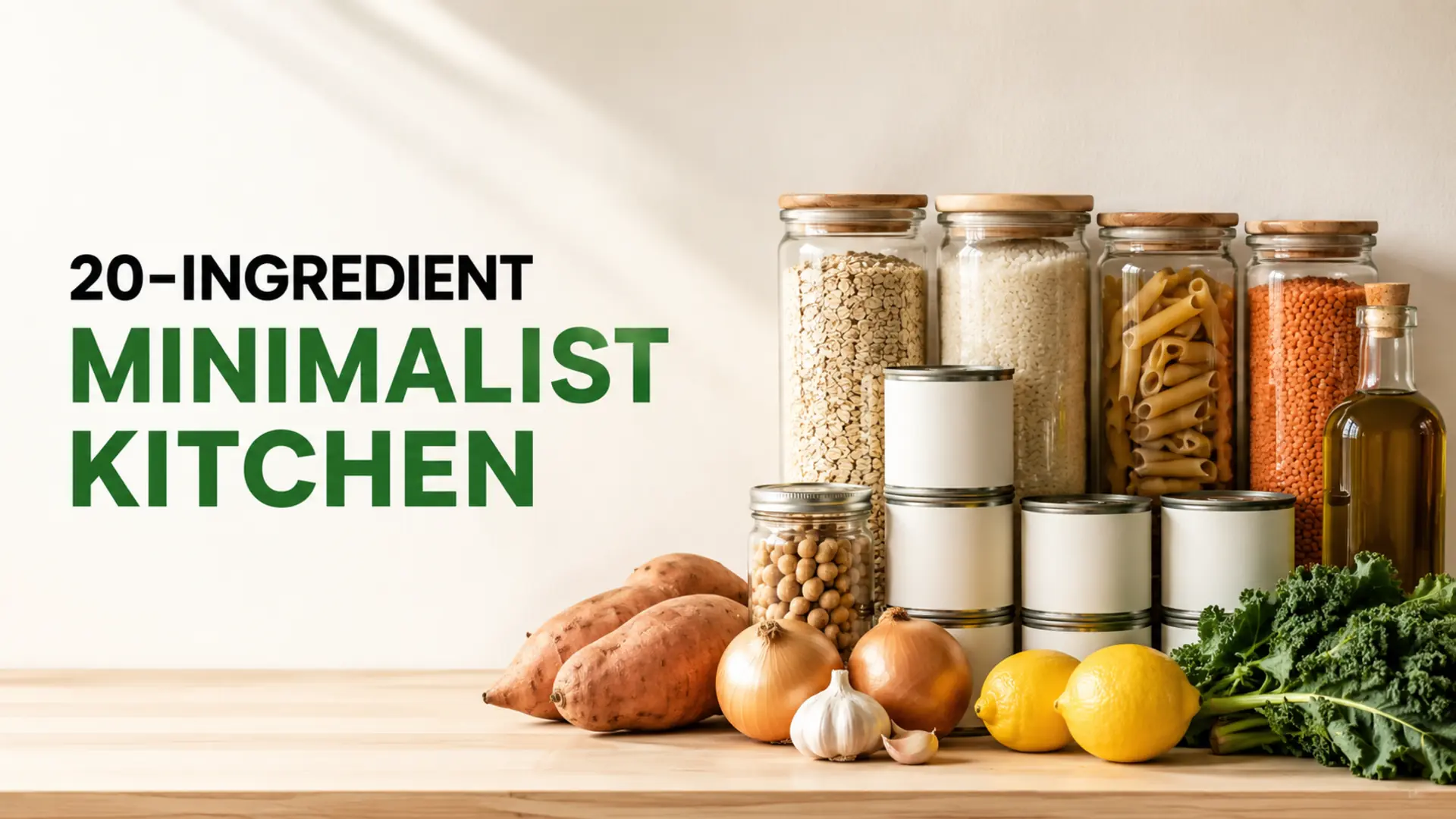
Quick answer: A practical minimalist kitchen uses a small set of versatile ingredients that your household genuinely enjoys. This guide offers 20 core ingredients as a flexible starting point—not a universal rule—then shows how to combine them into breakfasts, lunches and dinners without filling the pantry with one-use products.
The best minimalist kitchen ingredients depend on dietary needs, culture, budget, storage and local availability. Swap anything that does not suit you. The goal is to reduce decision fatigue and food waste while keeping enough variety for satisfying meals.
What Makes a Minimalist Kitchen Work?
Minimalism is not about owning the fewest possible foods. It is about choosing ingredients with several useful roles. Rice can support bowls, stir-fries and soups; yogurt can become breakfast, a sauce or a marinade; beans can fill tacos, salads and stews.
- Versatile: useful in several meal formats and flavour profiles.
- Familiar: foods your household already knows how to prepare.
- Storable: a realistic mix of shelf-stable, refrigerated and frozen ingredients.
- Adaptable: easy to swap for allergies, dietary choices or regional availability.
- Worth replenishing: used often enough to earn permanent pantry space.
20 Flexible Minimalist Kitchen Ingredients
This sample capsule pantry balances proteins, vegetables, starches and flavour builders. Quantities are intentionally omitted because household size and cooking frequency vary.
Proteins and filling staples
- Eggs
- Canned or cooked beans
- Lentils
- Chicken thighs, tofu or another preferred adaptable protein
- Plain yogurt or an unsweetened plant-based alternative
Grains and starches
- Rice or another everyday grain
- Rolled oats
- Whole-grain or regular pasta
- Potatoes or sweet potatoes
Produce and aromatics
- Onions
- Garlic
- Carrots
- Cabbage or another sturdy leafy vegetable
- Frozen mixed vegetables
- Lemons, limes or a preferred cooking acid
Fats, sauces and seasonings
- Olive oil or another everyday cooking oil
- Soy sauce, tamari or a suitable savoury seasoning
- Tomato paste or canned tomatoes
- A versatile spice blend
- Salt and black pepper, counted together as one basic seasoning set
This is not a complete nutrition prescription. Add fruit, nuts, seeds, dairy, fish, herbs or other foods according to your needs and preferences. People managing allergies or medical diets should follow appropriate professional guidance.
How to Customize the List
Replace items by role rather than searching for an exact match. If eggs are unsuitable, choose another quick protein. If rice is uncommon in your cooking, use couscous, quinoa, bulgur, tortillas or another staple. If soy sauce does not fit your diet, use a safe savoury alternative that works in your recipes.
| Role | Possible choices |
|---|---|
| Quick protein | Eggs, tofu, beans, canned fish or cooked chicken |
| Everyday starch | Rice, pasta, potatoes, bread, tortillas or another grain |
| Sturdy vegetable | Carrots, cabbage, squash, cauliflower or frozen vegetables |
| Creamy element | Yogurt, tahini, blended beans or a suitable alternative |
| Acid | Lemon, lime or vinegar |
Seven Meals From the Core Ingredients
1. Vegetable egg fried rice
Combine cooked rice, eggs, frozen vegetables, onion, garlic and soy sauce. Use chilled rice and cook ingredients thoroughly.
2. Lentil tomato pasta
Build a sauce from onions, garlic, tomato and cooked lentils, then toss it with pasta. Add cabbage or frozen vegetables for extra texture.
3. Sheet-pan protein and vegetables
Roast your chosen protein with carrots, onions and potatoes using oil and a spice blend. Match the cooking method and safe temperature to the protein.
4. Bean and sweet potato bowls
Layer roasted sweet potato, beans, cabbage and rice. Finish with a yogurt-and-lemon sauce or a suitable alternative.
5. Savoury oats
Cook oats to a porridge texture, then top with an egg, sautéed vegetables and black pepper. This uses oats beyond breakfast sweets.
6. Flexible lentil soup
Simmer lentils with onion, garlic, carrots, tomato and seasoning. Add cabbage or frozen vegetables near the appropriate stage for their texture.
7. Leftover grain and vegetable skillet
Reheat cooked grain with vegetables and a protein, then adjust the flavour with acid, seasoning and a simple sauce.
Build a Weekly Grocery List
Begin with a pantry check and choose three to five meal formulas for the week. Add only the core ingredients that need replenishing, plus a small number of seasonal or recipe-specific extras. A monthly pantry audit keeps the system from becoming cluttered again.
Use this sales-flyer dinner planning method when a versatile staple is genuinely well priced. Then arrange your list with our guide to organizing groceries by aisle.
Prevent Boredom Without Adding Clutter
Change the format before buying more ingredients. The same beans can become soup, tacos, a grain bowl or a pasta sauce. The same carrots can be roasted, grated into a salad or simmered in soup. Rotate one or two spice blends, acids or seasonal vegetables rather than stocking every possible condiment.
For more variety from a small pantry, use these ingredient-swapping tips and choose substitutions that suit the recipe’s function.
Storage and Food-Safety Basics
- Store dry ingredients in clean, dry containers and label them when helpful.
- Refrigerate perishables promptly and follow package instructions.
- Keep raw animal proteins separate from ready-to-eat foods.
- Use a food thermometer for meat, poultry and other foods requiring a safe internal temperature.
- Cool leftovers promptly in shallow containers and follow official local storage guidance.
For balanced meal inspiration, Canada’s Food Guide provides a flexible plate model. Readers elsewhere can use equivalent guidance from their own national health authority.
Final Takeaway
A minimalist kitchen is most useful when it reflects how you actually eat. Start with 20 adaptable ingredients, replace anything unsuitable and build meals from repeatable formulas. Replenish what earns its place, use what you already own and let flexibility—not a rigid number—keep the kitchen simple.