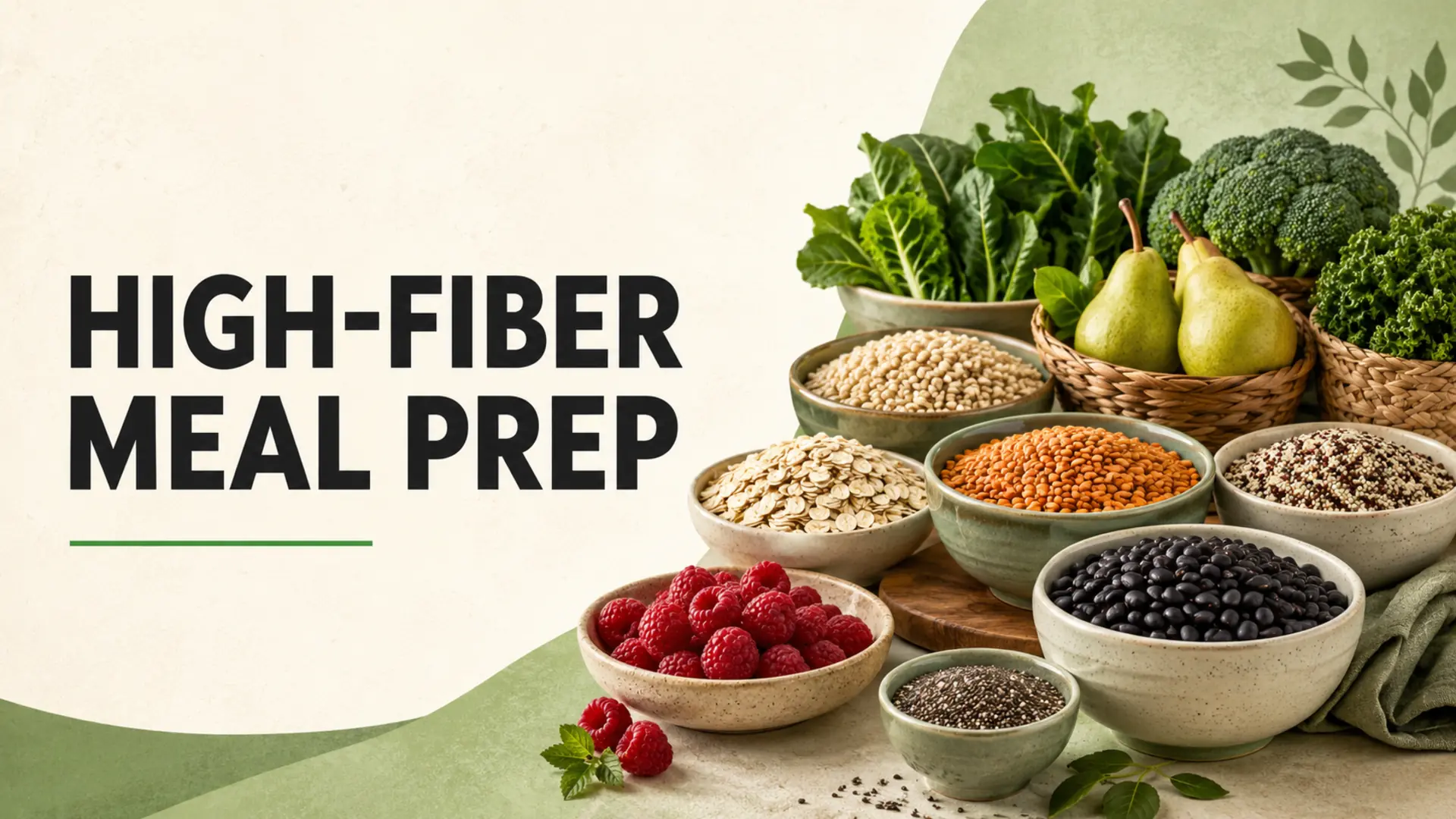
High-fiber meal prep works best when you combine beans, lentils, whole grains, vegetables, fruit, nuts and seeds across several flexible meals. You do not need to chase one universal daily target or calculate every bowl perfectly. Start with familiar foods, increase fiber gradually and adjust the plan for your dietary needs and comfort.
How to Approach High-Fiber Meal Prep
Fiber needs vary with age, sex, health and other factors. In the United States, the Nutrition Facts label uses 28 grams as the Daily Value for dietary fiber, while individualized recommendations may differ. Use labels and professional advice where appropriate rather than treating a high number as a goal for everyone.
If your current diet is relatively low in fiber, add higher-fiber foods a little at a time. The National Institute of Diabetes and Digestive and Kidney Diseases advises increasing fiber gradually and drinking enough liquids to help it work better. People with digestive conditions or medically prescribed diets should seek individualized guidance.
Essential High-Fiber Produce
Choose produce that fits your budget, season and cooking style. Fresh, frozen and canned options can all be useful; compare labels for added sodium, sugars and serving sizes when those details matter.
- Berries: useful for oats, yogurt, snacks and smoothies.
- Pears and apples: portable options that can be sliced into breakfast bowls.
- Broccoli and Brussels sprouts: suitable for roasting, steaming or adding to bowls.
- Carrots and sweet potatoes: sturdy produce for batch preparation.
- Leafy greens: add near the end of soups, curries and grain dishes.
- Avocado: useful in wraps and bowls, with portion and ripeness adjusted to the meal.
Whole Grains for Meal Prep
- Rolled oats: use for cooked oatmeal, overnight oats or homemade mixes.
- Barley: adds chew to soups and grain bowls; check whether the product is whole or pearled.
- Brown rice: a versatile base for bowls and side dishes.
- Quinoa: cooks relatively quickly and works hot or cold.
- Farro: useful for sturdy salads, but it contains gluten.
- Whole-grain pasta: a convenient option when accepted by the household.
Cooking times and liquid ratios vary by grain and processing method. Follow the package instructions rather than applying one method to every product.
Beans, Lentils, Nuts and Seeds
Legumes can anchor lunches and dinners while nuts and seeds add smaller amounts to breakfasts, snacks and sauces.
- Lentils for soups, curries and salads
- Chickpeas for bowls, hummus and wraps
- Black, white or kidney beans for chili and mixed salads
- Chia or ground flax for oats and yogurt
- Almonds, walnuts, pumpkin seeds or sunflower seeds for toppings
Rinse canned beans when appropriate, check labels for allergens and prepare dried legumes according to reliable package or recipe directions. Some beans require specific boiling and cooking steps and should not be improvised.
A Flexible High-Fiber Meal Prep Formula
Build each prepared meal from four parts:
- One whole-grain or starchy vegetable base
- One bean, lentil or other preferred protein
- At least one vegetable or fruit
- A sauce or topping such as herbs, yogurt, tahini, nuts or seeds
The formula supports variety without requiring separate recipes for every day. Adjust portions and components for appetite, allergies, tolerances and medical needs.
Five High-Fiber Meal Prep Ideas
1. Berry Overnight Oats
Combine oats with milk or a suitable alternative, berries and chia or ground flax. Refrigerate according to the ingredient labels and add crunchy toppings shortly before eating.
2. Lentil and Barley Soup
Cook lentils and barley with carrots, celery, tomatoes and greens. Confirm that the pot has enough liquid and adjust timing for the type of lentil and barley used.
3. Chickpea Quinoa Bowl
Layer quinoa, chickpeas, cucumber, tomatoes and roasted vegetables. Pack dressing separately. The adaptable combinations in this plant-based shopping-list guide can provide more ingredient ideas.
4. Bean and Sweet Potato Wrap
Fill a whole-grain wrap with black beans, roasted sweet potato, cabbage and salsa. Store wet ingredients separately when possible to protect the texture.
5. Roasted Vegetable Grain Tray
Roast broccoli, Brussels sprouts, carrots or another suitable mix, then portion with a cooked grain and lentils. Use the flexible method in the 5-ingredient sheet-pan guide to keep the ingredient list manageable.
High-Fiber Grocery List
- Produce: berries, pears, apples, carrots, broccoli, leafy greens and sweet potatoes
- Grains: oats, brown rice, quinoa, barley or whole-grain pasta
- Legumes: lentils, chickpeas and one preferred bean
- Nuts and seeds: chia, ground flax, walnuts or pumpkin seeds
- Flavor builders: herbs, citrus, tahini, yogurt or a preferred dressing
Check the pantry before shopping, then scale quantities to the meals you selected. A reusable weekly shopping template can hold the staples without assuming they must be purchased every week.
Prep in an Order That Protects Quality
- Cook the longest-cooking grain or legume first.
- Roast or steam sturdy vegetables.
- Wash produce and dry it thoroughly.
- Mix one versatile sauce.
- Cool cooked food promptly in shallow containers.
- Store delicate toppings separately and assemble as needed.
Do not assume every prepared food maintains ideal quality for five days. Consult product-specific storage guidance and freeze portions when appropriate. The batch cooking guide for beginners explains how to divide components across the week.
Increase Fiber Gradually
A sudden increase may cause discomfort for some people. Introduce new legumes, whole grains, seeds and larger produce portions gradually, and drink liquids according to your needs and medical guidance. Review the current NIDDK fiber guidance and use the FDA Nutrition Facts label guide when comparing packaged foods.
Keep the Plan Individual
High-fiber meal prep should support your routine rather than force an arbitrary target. Choose a few produce items, grains and legumes you already enjoy, add them gradually and build flexible meals around them. A focused grocery list and sensible preparation method make the plan easier to repeat while leaving room for individual needs.