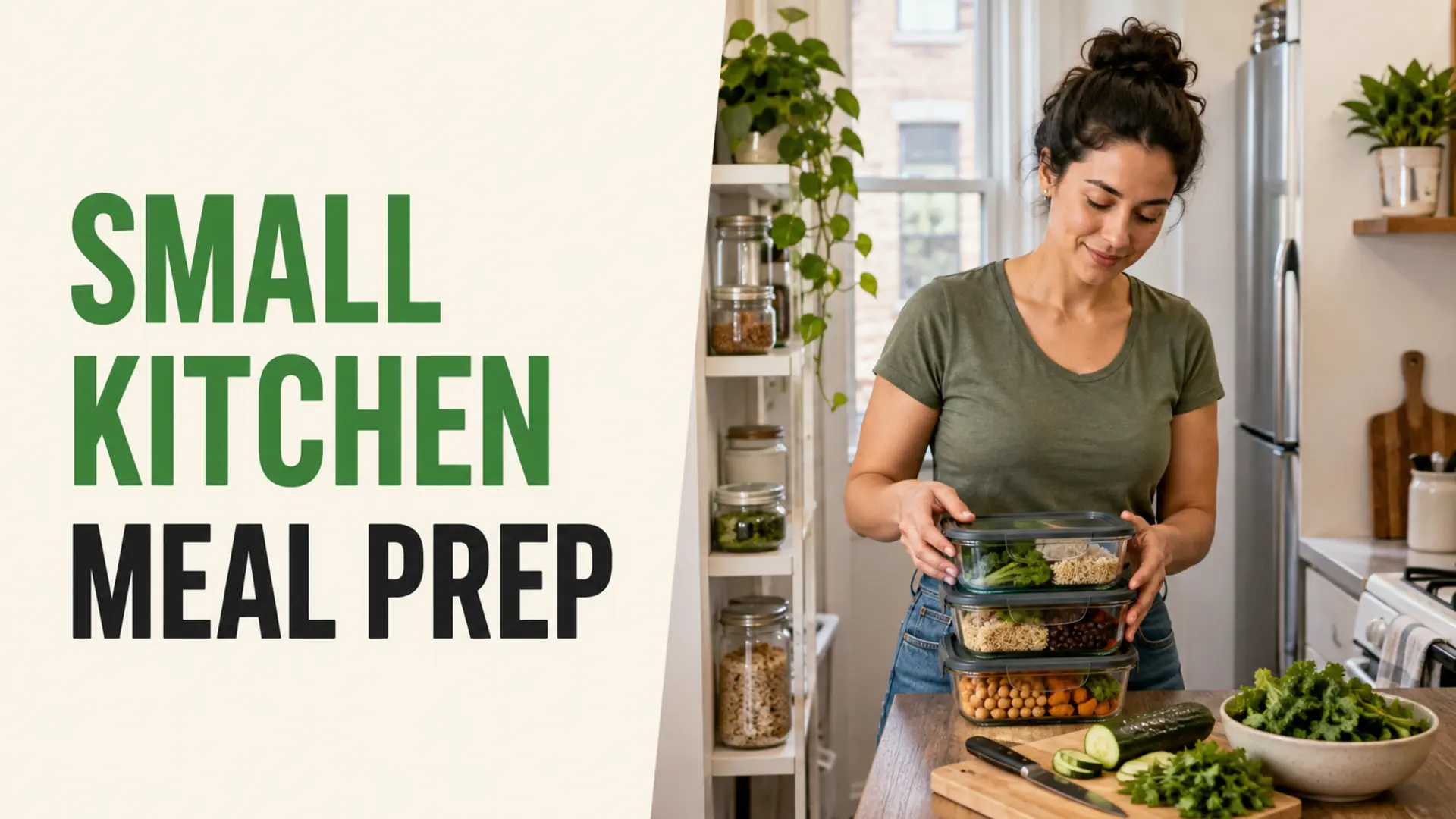
Small kitchen meal prep works best when the plan matches the space you actually have. Instead of filling every shelf with identical containers or following a fixed shopping schedule, measure your storage, choose overlapping ingredients and prepare only the amount your refrigerator can hold safely.
A compact kitchen may have limited counter space, a narrow refrigerator or few cupboards, but it can still support useful meal preparation. The key is to reduce simultaneous tasks and keep equipment, groceries and finished food moving through the space in a clear order.
Start small kitchen meal prep with a space audit
Before buying containers or groceries, look at four zones:
- Cold storage: usable refrigerator and freezer shelves, drawers and door areas.
- Dry storage: cupboards, open shelves and any safe vertical space.
- Preparation: the counter area that remains clear when appliances are in place.
- Cooking: burners, oven, microwave or other appliances you can use safely.
Measure shelf height, width and depth if you plan to buy containers. Leave room for cold air to circulate in the refrigerator rather than packing it tightly.
Choose containers for the food and shelf
Rectangular containers often stack efficiently, but they do not automatically save a fixed percentage of space. Round containers can work well for soups, sauces or narrow shelves. The right choice is the shape that fits your storage and the food.
Use food-safe containers that close securely and are suitable for their intended temperature. Glass is durable and easy to see through but can be heavy; plastic is lighter but should be replaced when cracked, warped or no longer sealing. Reusable pouches can suit flat freezer storage when they are freezer-safe and leak-resistant.
Test a small set before purchasing many pieces. Containers that nest when empty and stack securely when full are usually more practical than a large mismatched collection.
Shop according to available capacity
A twice-weekly or four-day shopping cycle may suit one household but not another. Base frequency on transportation, budget, work schedule, household size and storage capacity.
Before shopping:
- Check the refrigerator, freezer and pantry.
- Identify food that should be used soon.
- Plan a few meals around those ingredients.
- Estimate realistic quantities.
- Leave space for leftovers and unexpected schedule changes.
The EPA’s current food-waste prevention guidance similarly recommends checking existing food, planning meals and buying what those meals require.
Choose compact, multi-use ingredients
Overlap reduces the number of open packages competing for space. Spinach can work in eggs, soup, pasta and grain bowls. Carrots can become snacks, roasted vegetables or soup ingredients. Beans can fill wraps, salads and stews.
Useful small-kitchen staples include:
- One or two grains or starches
- Two flexible proteins or plant-based equivalents
- Three vegetables with different storage lives
- One fresh fruit and one frozen option
- A versatile sauce, paste or dressing
- One shelf-stable backup meal
A minimalist kitchen ingredient framework can help narrow the list without forcing everyone to use the same staples.
Use vertical storage carefully
Shelf risers, shallow bins and door-mounted organizers can improve visibility when they fit securely. Keep heavy items on stable lower shelves and avoid overloading doors or temporary racks. Do not block ventilation, heat sources, electrical panels or appliance clearances.
Group items by use rather than transferring everything into decorative jars. Decanting is useful only when the new container is food-safe, labelled and able to preserve necessary cooking, allergen or expiry information. The spice, oil and condiment organization guide offers a simple zoning method.
Create one clear preparation zone
Begin with a clean counter and bring out only the ingredients needed for the current step. A rimmed tray can hold utensils and ingredients temporarily, then move away when the cutting board is needed.
Use the sink as a sink, not as permanent storage. If you place a board over part of it, use a purpose-built, stable board that cannot slide and does not interfere with safe handwashing.
Clean as you transition between tasks. In a tiny kitchen, putting one tool away can create enough space for the next step.
Do not use one cutting board without washing between food types
Preparing produce first and raw meat last does not make it safe to wash the board only once at the end. If possible, use one board for ready-to-eat produce and another for raw meat, poultry or seafood. Otherwise, prepare produce first, move it safely away, wash the board and knife thoroughly with hot soapy water, then handle raw animal foods and wash again.
The FDA’s produce-safety guidance specifically recommends separating produce from raw animal foods and washing boards, dishes, utensils and counters between tasks.
Cook components in a sensible sequence
Small kitchen meal prep does not require everything to cook at once. Choose a sequence that frees equipment:
- Start a grain or another hands-off component.
- Prepare vegetables while it cooks.
- Cook one protein or plant-based component safely.
- Make one sauce or dressing.
- Cool and portion food according to food-safety guidance.
A sheet pan, skillet or pot can be washed and reused when necessary. The one-pot meal-planning workflow provides adaptable combinations for limited cookware.
Prep components rather than many finished meals
One cooked grain, washed greens, roasted vegetables and a versatile sauce may take less refrigerator space than several fully assembled meals. Keep crisp ingredients separate from wet sauces until serving where that improves quality.
Prepare quantities that fit upcoming meals. If you expect only two lunches at home, portioning five can waste food and storage space.
Store chilled food safely
Refrigerate perishable food promptly and use shallow containers where appropriate so food cools efficiently. Keep raw meat, poultry and seafood contained and below ready-to-eat foods to prevent drips.
Storage time varies by food. Use package instructions and the current FoodSafety.gov cold-storage chart rather than a universal meal-prep deadline. Label prepared food with its contents and date, and freeze suitable portions that will not be used within the recommended refrigerated period.
A compact weekly workflow
- Five minutes: inventory the cold and dry storage areas.
- Plan: select three or four meals with overlapping ingredients.
- Shop: buy quantities that fit the measured space.
- Reset: clear one preparation zone and wash tools.
- Prepare: cook two or three flexible components.
- Store: label, stack safely and keep an “eat first” area visible.
- Review: use remaining components before the next shop.
Keep a small kitchen functional
Successful small kitchen meal prep is not about owning the perfect stack of containers. It comes from knowing your capacity, shopping for overlapping meals and keeping preparation steps safe and orderly.
Start with one short session and a few components. Adjust the container shapes, shopping frequency and cooking sequence after seeing what genuinely fits your shelves and routine.