Unexpected visitors are easier to welcome when a few flexible ingredients are already on hand. A practical stocked pantry list is not a collection of luxury foods reserved for special occasions. It is a short set of staples your household regularly uses and can combine into a simple meal, snack plate or warm drink.
The goal is comfortable hospitality, not a perfect spread. Start by asking guests about allergies, dietary needs and preferences. Then choose the simplest combination that works for the group and the time available.
Build a stocked pantry list around combinations
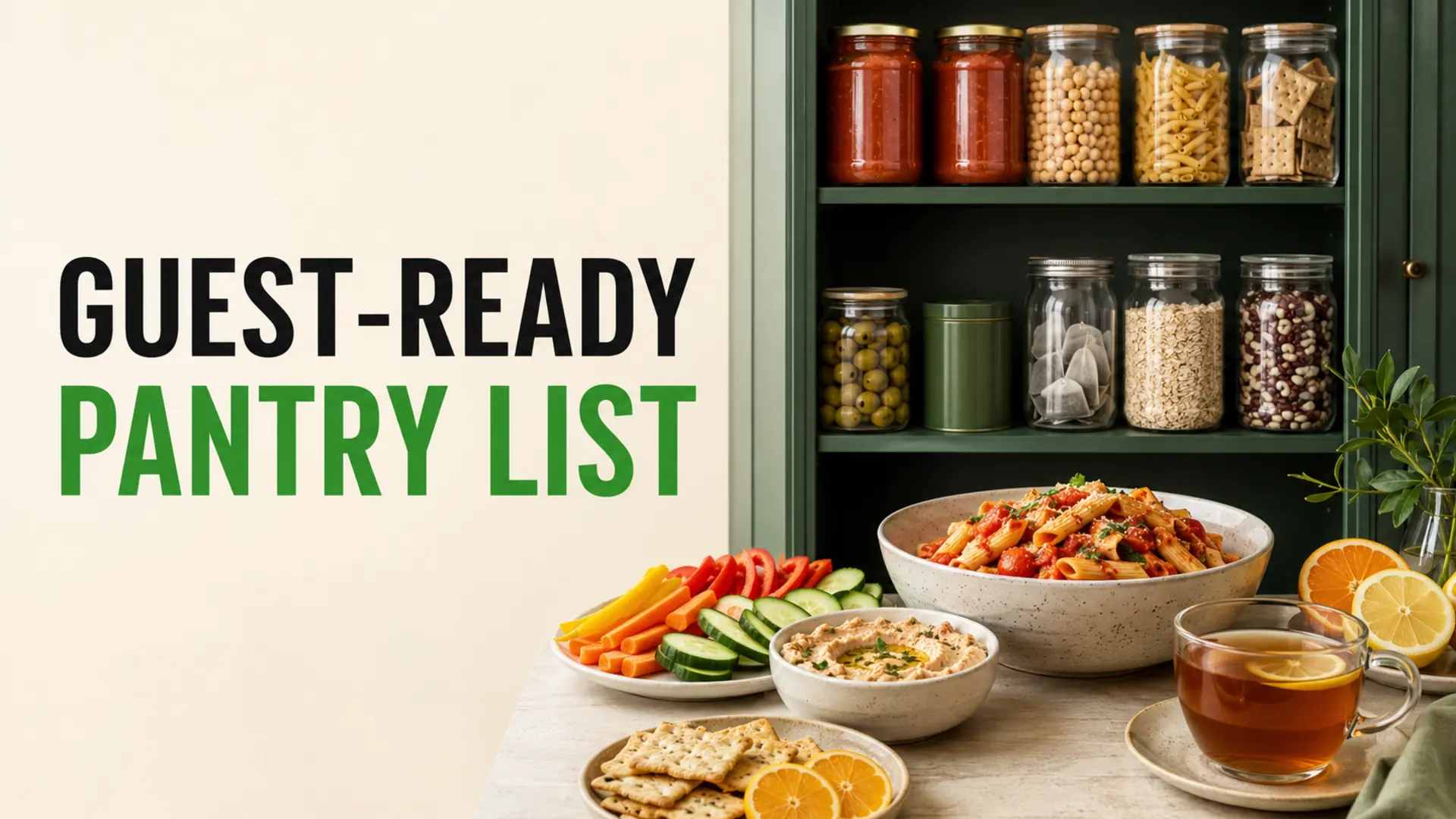
Choose ingredients that work in more than one meal. This keeps the pantry useful between visits and makes it easier to rotate food before quality declines. A balanced starting point might include:
- Meal bases: pasta, rice, couscous, oats, tortillas or shelf-stable bread alternatives.
- Protein and substance: canned beans, lentils, chickpeas, nut or seed butter, or shelf-stable fish if your household eats it.
- Vegetables and fruit: canned tomatoes, jarred peppers, frozen vegetables, dried fruit or fruit packed in juice.
- Flavour builders: olive oil, vinegar, broth, herbs, spices, mustard, olives or a familiar sauce.
- Easy extras: crackers, popcorn kernels, tea, coffee and a modest sweet item your household already enjoys.
You do not need every item. Select one or two dependable choices from each group and adapt them to local availability, cultural preferences and your usual budget. The minimalist kitchen ingredient framework offers another way to build versatile combinations without crowding the cupboards.
Choose ordinary foods, not a separate luxury reserve
A guest-ready pantry works best when it overlaps with everyday cooking. Buying specialty products only for visitors can create waste, particularly when tastes and dietary needs are unknown. Instead, keep slightly more of a few foods you already replace regularly.
For example, an extra can of beans and jar of tomato sauce may become pasta sauce, soup, a grain-bowl topping or a dip. Crackers can accompany soup or a snack plate. Oats can become breakfast, a fruit crumble topping or a simple baked dish. Versatility matters more than an expensive label.
Before adding anything, check the refrigerator, freezer and pantry. The EPA recommends looking at what you already have before shopping and planning meals around food that needs to be used. A monthly pantry audit can help identify duplicates and items approaching their best-quality date.
Five flexible ideas for unexpected guests
1. Tomato, bean and vegetable pasta
Combine pasta with canned tomatoes, beans and a vegetable from the freezer or crisper. Season with herbs, pepper and olive oil. Put cheese or another topping on the side so guests can choose whether to add it.
2. Couscous or grain bowls
Prepare a quick-cooking grain and add chickpeas, jarred vegetables, dried fruit and a simple oil-and-vinegar dressing. Serve nuts, seeds or cheese separately when allergies or preferences are uncertain.
3. Pantry soup with crackers
Simmer broth, canned tomatoes, beans and vegetables with herbs. Adjust the thickness with water or extra grains, and check packaged broth and seasonings for allergens and sodium if that matters to your guests.
4. Bean dip and a simple snack plate
Blend or mash beans with oil, lemon or vinegar and mild seasoning. Serve with crackers and whatever washed vegetables or fruit are available. Keep original packages nearby so guests can review ingredients.
5. Tea, fruit and a modest sweet
Not every visit requires a meal. Tea or coffee with fruit, crackers or a small sweet may be entirely appropriate. Let the time of day and your guests’ expectations guide the choice.
Plan for allergies and dietary preferences
Ask before opening packages or mixing ingredients. Read the full ingredient list each time because formulations can change, and do not assume a product is safe based only on its name. The FDA explains how packaged-food labels identify major allergens in the United States; readers elsewhere should follow their local labelling system.
For a guest with a serious allergy, ingredient selection is only one part of safety. Shared utensils, cutting boards, spreads and serving dishes can introduce cross-contact. Use clean equipment, keep packages available for inspection and let the guest decide whether the preparation setup meets their needs. If you cannot confidently accommodate a medical dietary restriction, say so plainly rather than making an “allergy-safe” promise.
Store staples safely and rotate them
Shelf-stable does not mean that food never deteriorates. Follow package storage instructions, keep foods away from excess heat and moisture, and inspect containers before use. Discard cans that are leaking, badly swollen or severely damaged, and do not taste food that appears unsafe.
Arrange older usable products at the front and newer ones behind them. Add pantry items to a regular meal before they sit unused, then replace only what proved helpful. Organizing seasonings and sauces is easier with clear zones; see this guide to organizing spices, oils and condiments.
Use a short guest-ready checklist
- One versatile grain or pasta
- Two canned or dried protein options
- Canned tomatoes and one other vegetable option
- Broth or a simple sauce
- Crackers or another easy accompaniment
- Oil, vinegar and familiar seasonings
- Tea, coffee or another household drink
- One optional sweet or fruit item
Copy the items that suit your home into a reusable weekly shopping template. Quantities should reflect how often you host, how much storage you have and whether your household will use the products before replacing them.
Serve prepared food with care
If a casual visit becomes a longer gathering, prepare smaller serving dishes and replenish them as needed. Follow local food-safety guidance for temperature control and time out of refrigeration. The FDA’s buffet guidance recommends keeping hot food hot and cold food cold rather than leaving large dishes at room temperature for an extended period.
Refrigerate leftovers promptly in suitable containers, label them when helpful and follow product-specific storage guidance. Do not rely on smell or appearance alone to establish safety.
A useful pantry makes hospitality simpler
The best stocked pantry list supports ordinary meals as well as unexpected guests. A few adaptable staples, clear labels and regular rotation give you several welcoming options without overbuying. Offer what you can comfortably prepare, accommodate needs honestly and remember that thoughtful company matters more than an elaborate menu.
For additional guidance, see the EPA’s food-waste prevention tips, the FDA’s food-allergy label guidance and its advice for serving food safely at gatherings.
Keep the list practical: stock foods you already enjoy, rotate them into normal meals and replace only the items that genuinely make hosting easier.