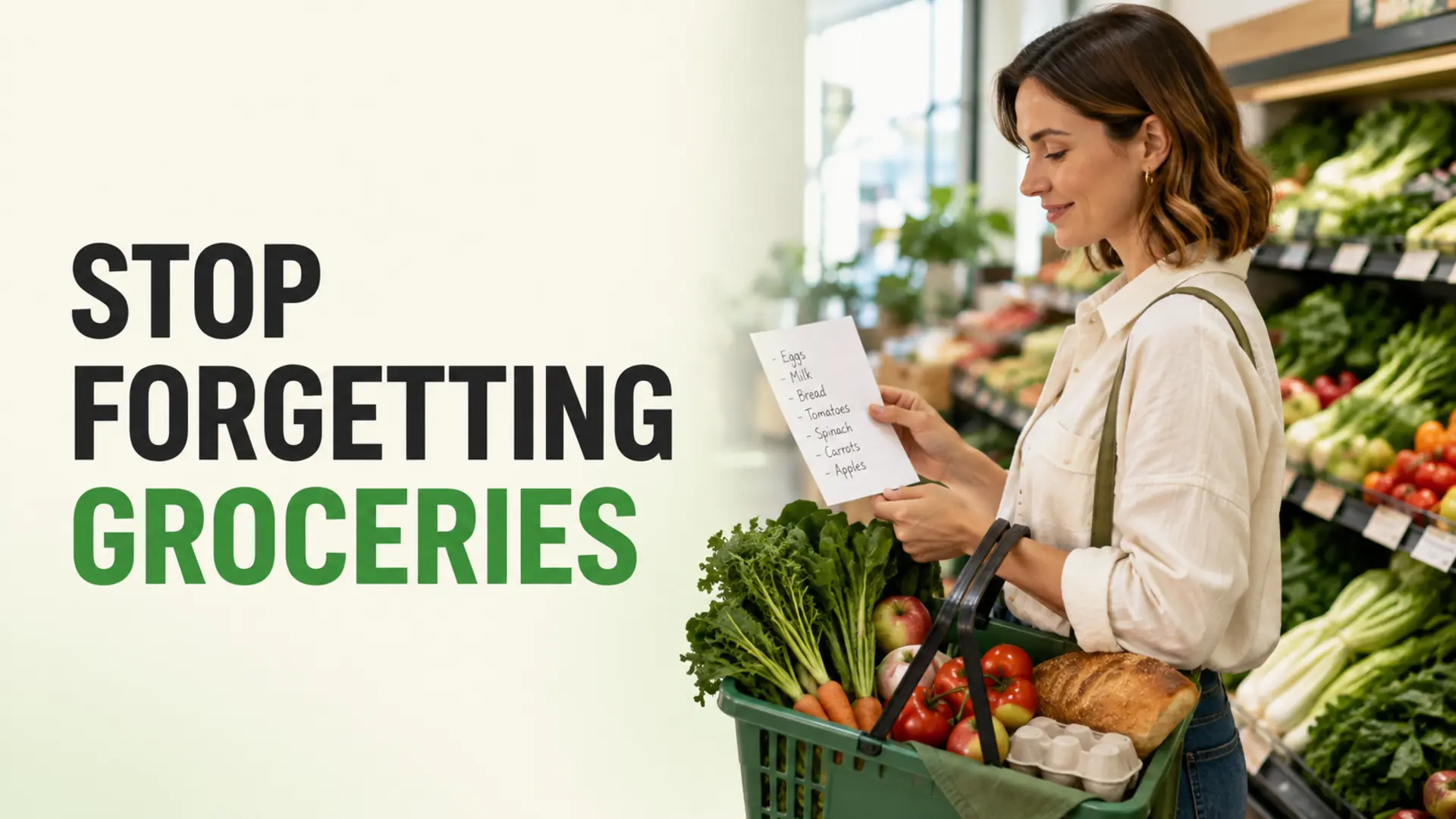
Forgetting one key ingredient can derail dinner, but the solution is usually a better routine—not a better memory. To stop forgetting groceries, capture items when you notice them, build your list from actual meals, organize it for the store, and complete one final check before paying.
The seven practical habits below work with paper or digital lists. Choose the tools that fit your household and your usual stores rather than relying on features you may not need.
Why grocery items get forgotten
Most missed items fall through a gap between noticing and recording. You see that the milk is low, assume you will remember later, then start a list from memory just before leaving. Other items disappear because a recipe was never checked, two household members kept separate notes, or the list was hard to scan in the store.
A dependable system closes those gaps. It gives every needed item one place to land and creates simple checkpoints before you leave home, before you leave an aisle, and before checkout.
7 ways to stop forgetting groceries
1. Record an item as soon as you notice it
Do not wait until “later” to add an empty or nearly empty staple. Put it on the list when you use the last portion or notice the supply is too low for the week ahead. A paper pad on the refrigerator, a shared note, or a grocery-list app can all work.
Make the capture point easy to reach. If opening a complicated system takes too long, people will postpone the task. One household list is more reliable than notes scattered across messages, scraps of paper, and different apps.
2. Build the list from your meal plan
Start with the meals you realistically expect to make. Open each recipe or meal outline and check every ingredient, including small but essential items such as oil, garlic, spices, garnishes, and sandwich fillings. Then compare the combined list with what you already have.
If planning a full week feels cumbersome, use three or four main dinners plus flexible breakfasts and lunches. Our guide to making a grocery list step by step provides a reusable structure.
3. Check the fridge, freezer, and pantry
A quick inventory prevents both omissions and duplicates. Look behind front-row items, check opened packages, and confirm whether you have enough for the planned recipe—not merely whether the ingredient exists.
- Check produce drawers for fresh ingredients and signs of spoilage.
- Review the freezer for proteins, vegetables, bread, and prepared meals.
- Scan pantry staples such as grains, canned foods, baking ingredients, and seasonings.
- Confirm household essentials that are bought at the grocery store.
A regular monthly pantry audit can make this check faster because open packages and backups are easier to see.
4. Use one shared household list
If more than one person uses the groceries, keep one agreed-upon list. Ask everyone to add items directly instead of sending separate reminders to the shopper. Before leaving, confirm whether any last-minute additions are still expected.
Shared lists are most useful when the household also agrees on a few rules: include useful details, remove or mark an item only after it goes into the cart, and avoid starting a second list. See how shared digital shopping lists reduce duplicate buying for a simple household workflow.
5. Add enough detail to recognize the item
Vague entries create uncertainty. “Yogurt” may not tell the shopper the size, flavour, dietary requirement, or intended quantity. Add only the details that matter, such as “plain yogurt, large tub” or “two cans of no-salt-added beans.”
For an unfamiliar specialty item, note its likely department or a practical substitute. Avoid making the list so detailed that it becomes difficult to scan. Brand names are useful only when the exact product matters for an allergy, preference, recipe, or budget.
6. Organize the list by store section
Group produce, bakery, pantry, refrigerated, frozen, and household items together. A section-based list reduces backtracking and makes missing entries more visible before you leave an area of the store.
Store layouts vary, so arrange categories in the order you normally walk through your regular shop. Keep raw meat, poultry, and seafood separate from ready-to-eat foods in your cart and bags, and pick up chilled and frozen items toward the end when practical.
Use our guide to organizing a shopping list by supermarket aisle to create a store-specific sequence.
7. Run a pre-checkout review
Before joining the checkout line, stop somewhere out of other shoppers’ way and review every unchecked entry. Compare the list with the cart and consider the meals you planned. This short pause often catches the ingredient that was skipped when an aisle was busy or a product was temporarily hard to find.
If an item is unavailable, decide whether to substitute it, change the meal, or leave it for another trip. Mark that decision on the list so it does not remain ambiguous.
A quick before-you-shop checklist
- Choose the meals you expect to make.
- Check each recipe or meal outline for every ingredient.
- Review the fridge, freezer, pantry, and household supplies.
- Ask other household members for additions.
- Combine duplicates and add useful quantities or notes.
- Sort the list in store order.
- Bring the list and a backup way to access it if needed.
Keep a short staples check without overbuying
A recurring staples check can help, but it should reflect your household rather than a universal list. Choose a small set of foods and supplies you use frequently—perhaps eggs, milk or a preferred alternative, onions, oats, rice, or dish soap—and review them before each trip.
Do not automatically add every staple every week. Check the amount on hand, expected use, storage space, and perishability first. Dietary needs and recommended foods differ by person and location; resources such as Canada’s Food Guide can offer one planning framework, while readers elsewhere can use their national dietary guidance.
What to do when you still forget an ingredient
No system prevents every mistake. When something is missing, check whether another ingredient can play the same role, simplify the meal, or move that recipe to another day. Keep a few flexible backup meals built from foods you routinely store, such as pasta with vegetables, eggs and toast, bean bowls, or soup with bread.
Afterward, identify where the item was lost. Was it never recorded, omitted from the recipe check, hidden in the pantry, or skipped in the store? Fixing that specific step is more useful than blaming your memory.
Conclusion
The easiest way to stop forgetting groceries is to create a reliable chain from noticing a need to placing the item in the cart. Capture items immediately, plan from real meals, check what you own, use one household list, organize it by section, and review it before checkout. With those habits in place, a forgotten ingredient becomes an occasional exception rather than the usual end to a shopping trip.