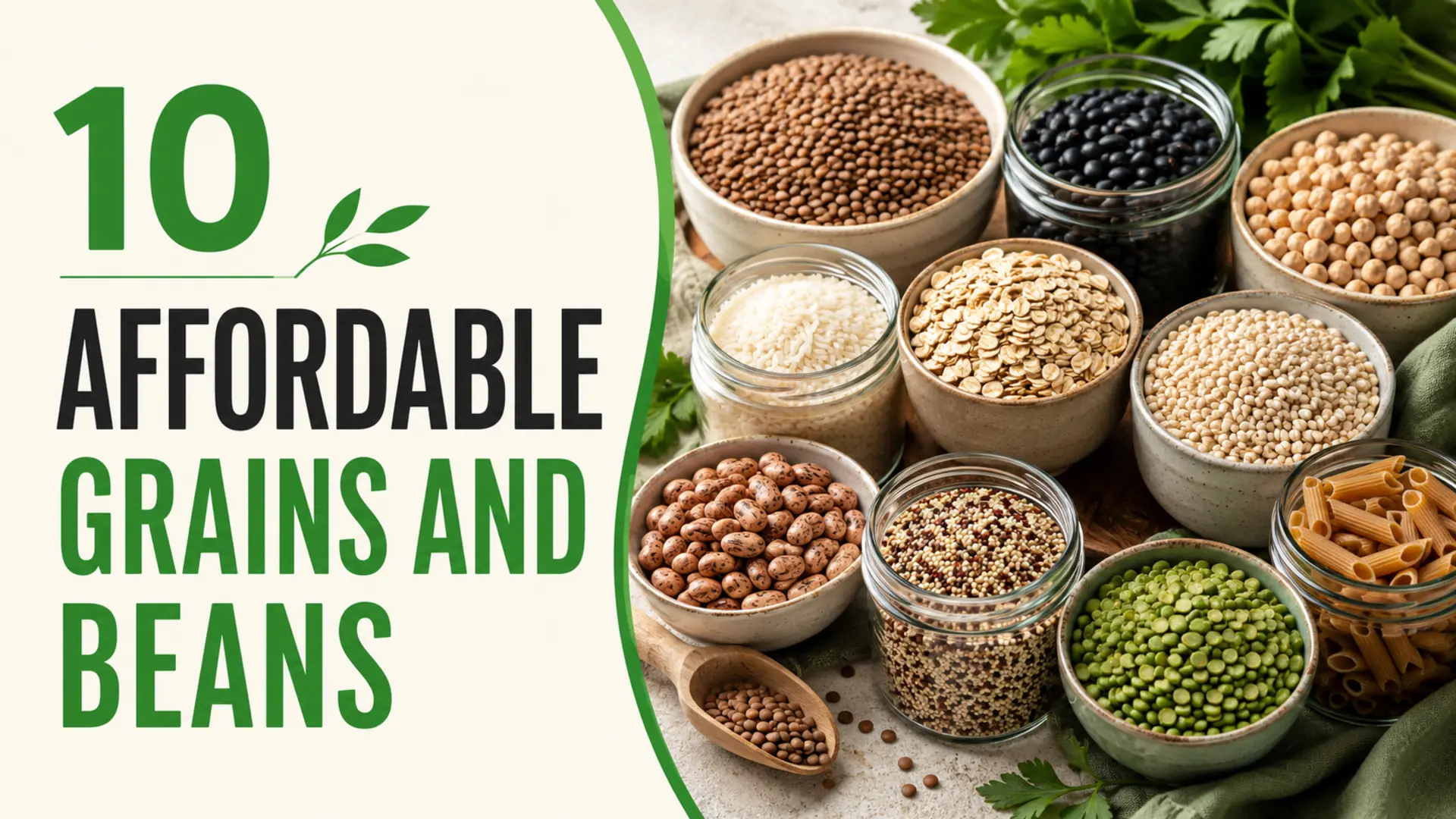
Affordable grains and beans can form a flexible pantry base, but the best choices depend on local prices, cooking equipment, storage and what your household enjoys. Compare unit prices, buy realistic quantities and select staples that can appear in several meals instead of treating any food as permanently cheap.
The ten options below are practical starting points rather than mandatory “always buy” foods. Prices, package sizes and availability differ widely. People with allergies, celiac disease, digestive conditions or medically prescribed diets should choose suitable alternatives and follow professional guidance.
How to Choose Affordable Grains and Beans
Start with the meals you already make. A low unit price does not create value if the ingredient remains unused. Compare products using the same unit of weight or volume, then consider preparation time, cooking fuel, edible yield and storage.
- Will this ingredient work in at least two familiar meals?
- Does the household prefer dry, canned or quick-cooking formats?
- Is there enough cool, dry storage space?
- Can the package be used while quality remains acceptable?
- Do allergies or dietary requirements affect the choice?
This grocery-list guide for rising prices explains how to compare unit price and usable quantity without relying on fixed market claims.
1. Brown or Green Lentils
Lentils are useful in soups, curries, tomato sauces, salads and grain bowls. Most varieties do not require soaking, but cooking time varies with type and age. Brown and green lentils generally retain more shape than red lentils, which soften readily.
Buy dry lentils when you have time and equipment to cook them. Canned or pouch versions may suit households that prioritize speed or have limited cooking facilities.
2. Black Beans
Black beans work in tacos, soups, rice dishes, salads and spreads. Compare dry and canned options after accounting for drained weight. When using canned beans, check labels for ingredients relevant to sodium, allergies or dietary preferences, and rinse when appropriate for the recipe.
3. Chickpeas
Chickpeas can become hummus, curry, soup, salad, a roasted topping or a sandwich filling. Canned chickpeas are convenient, while dry chickpeas offer control over texture and batch size. Plan how the remainder will be used before opening a large can or cooking a large batch.
4. Rice
White, brown, jasmine, basmati and other rice varieties differ in price, flavour, texture and cooking time. Choose the type that fits household meals and preparation needs rather than assuming one is universally best. Rice can support stir-fries, curries, bowls, soups and simple side dishes.
Store rice according to package instructions in a dry, pest-resistant container. “Indefinite shelf life” is not a useful blanket claim because quality and storage conditions vary.
5. Rolled Oats
Rolled oats can be used for porridge, overnight oats, baked dishes, snack mixtures and some savoury meals. Confirm certified gluten-free status when medically necessary because ordinary oats may be exposed to gluten-containing grains during production.
Large packages may have a lower unit price, but only buy the quantity you can store securely and use.
6. Barley
Pearled or hulled barley adds texture to soups, stews, pilafs and grain salads. The forms have different cooking characteristics, so follow package directions. Barley contains gluten and is not suitable for people who must follow a gluten-free diet.
7. Pinto Beans
Pinto beans are adaptable for soups, stews, tacos, bowls and mashed bean dishes. Season them according to the meal rather than treating one recipe as the only use. If dry pinto beans are unfamiliar, begin with a smaller package and record the cooked yield for future lists.
8. Quinoa
Quinoa can be useful in bowls, salads, soups and side dishes, but it may not be among the lowest-priced options in every market. Compare it with rice, millet, buckwheat or other locally available grains and pseudocereals. Rinse and cook it according to package directions.
Its inclusion here reflects versatility, not a promise that it is always a budget choice.
9. Split Peas
Green or yellow split peas soften into thick soups, dals and stews. They pair well with aromatic vegetables and a range of seasonings. Choose meat-based or meatless additions according to household preferences; split-pea soup does not require ham to be satisfying.
10. Whole-Wheat or Other Pasta
Pasta provides a fast base for beans, lentils, vegetables and sauces. Whole-wheat pasta is one option, while gluten-free, legume-based or traditional pasta may be more appropriate for some households. Compare price, cooking instructions and how well the product works in planned meals.
Dry Beans Versus Canned Beans
Dry beans often cost less per cooked amount, but the difference is not fixed. Cooking requires water, energy, time and planning. Canned beans cost more in some markets but reduce preparation and can be valuable when time, mobility or cooking equipment is limited.
- Choose dry: when unit price, batch cooking and storage work for your household.
- Choose canned: when convenience, predictable yield or no-cook preparation matters.
- Keep both: if dry beans support planned cooking and canned beans provide backup meals.
Check drained weight when comparing cans and account for the final cooked quantity when comparing dry beans. A lower price only helps when the food is prepared and eaten.
Cook Dry Beans Safely
Follow package instructions for soaking and cooking. Dried kidney beans require particular care because they contain a naturally occurring toxin that is reduced through correct preparation. Do not place soaked raw kidney beans directly into a slow cooker.
The University of Minnesota Extension’s current home cooking-safety guidance advises soaking dried beans, rinsing them and boiling them on the stovetop before slow-cooker use. Follow the complete official directions rather than relying on a shortened social-media recipe.
Store Grains and Beans for Quality
Keep unopened products according to label directions. After opening, use clean, dry, food-safe containers that protect against moisture and pantry pests. Label containers with the product and purchase or opening date, and keep newer stock behind older stock.
- Inspect packages for damage before buying.
- Store food away from heat, moisture and household chemicals.
- Do not mix new product into an old container without checking and cleaning it.
- Discard food showing pests, mould, unusual odour or package damage.
- Use the FoodKeeper storage resource for product-specific guidance.
Build Meals From the Ten Staples
- Lentil tomato sauce with pasta
- Black bean, rice and vegetable bowls
- Chickpea curry with rice
- Barley and vegetable soup
- Oats with fruit and seeds
- Pinto bean tacos or baked potatoes
- Quinoa salad with vegetables
- Split-pea soup with bread
For more plant-based components, review these vegetarian meal-prep pantry staples. Choose combinations that provide variety across the week instead of eating the same grain-and-bean pairing repeatedly.
Make a Practical Grains-and-Beans List
- Choose two beans or lentils already used in household meals.
- Choose two grains or starches that fit those meals.
- Compare unit prices and package sizes locally.
- Select dry, canned or quick-cooking formats deliberately.
- Write two meal uses beside each item.
- Buy only what fits available storage.
- Rotate older products into regular cooking.
If a smaller, more versatile pantry is the goal, adapt this minimalist core-ingredient approach.
Affordable grains and beans are most useful when they match your prices, time and eating habits. Start with a few versatile options, learn their cooked yield and expand only when they earn a regular place in your meals. That creates better value than chasing fixed price lists or filling shelves with foods no one uses.