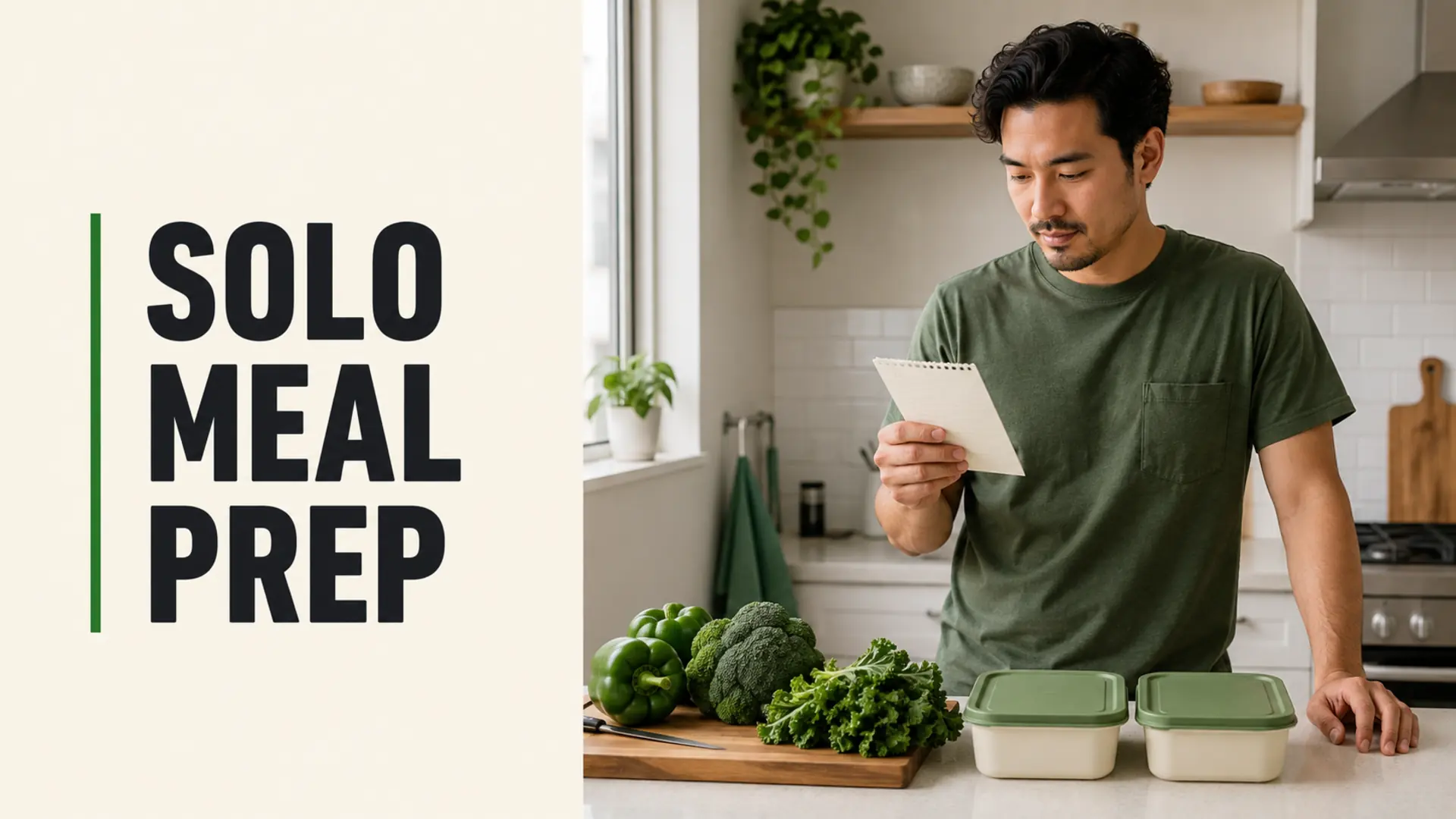
Solo meal prep works best when it is flexible rather than built around oversized batches or strict weekly rules. The goal is to buy an amount you can realistically use, prepare ingredients in more than one way, and freeze or repurpose food before quality declines. A small plan can make cooking for one easier while reducing forgotten produce and repetitive meals.
Solo meal prep starts with a realistic plan
Begin with the meals you are actually likely to eat at home. Check your calendar, note any lunches or dinners away, and plan only the remaining meals. Then inspect your refrigerator, freezer and cupboards before writing a list. A quick pantry and refrigerator audit helps you spot food that should be used first.
Choose two or three meal ideas that share some ingredients without tasting identical. For example, spinach can go into an omelette, grain bowl and pasta dish; roasted vegetables can become a side dish, wrap filling or soup addition. This overlap creates options without requiring every ingredient to serve the same recipe.
Build a short, flexible grocery list
Organize your list around what is missing rather than copying a full recipe list. A useful solo-shopping structure is:
- Produce to use early: delicate greens, berries, herbs or ripe fruit.
- Produce that keeps longer: cabbage, carrots, apples, citrus or winter squash.
- Flexible proteins: eggs, tofu, beans, lentils, fish, poultry or another option that suits your diet.
- Meal foundations: rice, oats, pasta, bread, tortillas or potatoes.
- Flavour builders: sauces, spices, citrus, aromatics and condiments you already enjoy.
- Backup foods: frozen vegetables, canned beans or a freezer meal for a disrupted plan.
Loose produce can be helpful when it lets you buy the quantity you need, but packaged or frozen options may be more practical in some stores or seasons. Compare price, usable quantity and how you intend to store the food instead of applying an absolute rule.
Scale recipes before you shop
Review a recipe’s stated yield and decide whether to make a smaller batch or intentionally create leftovers. The site’s guide to scaling meal-prep recipes can help when a recipe is written for several people.
Some recipes divide easily; others are more efficient as a full batch. Soups, curries and cooked grains often freeze well, while dressed salads and some creamy or crisp foods may not retain their original texture. When reducing a recipe, measure carefully and adjust seasoning near the end rather than assuming every ingredient scales perfectly.
Prep components instead of identical meals
A component-based approach gives one person more variety. Prepare a grain or other base, one or two vegetables, a protein and a sauce, then combine them differently during the week. The same components might become a bowl one evening, a wrap the next day and a quick skillet meal later.
You do not need to prepare everything at once. Washing sturdy produce, mixing a dressing or cooking one foundation may be enough. Leave delicate ingredients whole until closer to serving when that better protects their texture and quality.
Use produce in the right order
Make a small “use first” area in the refrigerator for ripe or opened foods. Plan delicate produce early in the week and keep longer-lasting or frozen choices for later. Move an ingredient into the next meal before it becomes an emergency.
When produce changes texture but remains safe to eat, redirect it to a suitable cooked use: ripe fruit can go into oats or smoothies, and vegetables can work in soup, sauce, frittata or stir-fry. Discard food with signs of spoilage; cooking does not make spoiled food safe.
Freeze portions with a purpose
Freezing can extend your options, but there is no need to freeze half of every batch on a fixed day. Freeze portions you are unlikely to eat soon, label them with the food and date, and use containers or freezer bags sized for one meal. Allow hot food to cool promptly in shallow containers and follow safe food-handling guidance for refrigeration, freezing, thawing and reheating.
Bread can be frozen in slices if that fits your routine. Frozen vegetables are also useful because you can remove only the amount needed, but reseal the package well to protect quality. The official FoodKeeper storage resource provides food-specific storage guidance, since safe and best-quality times vary by item and storage conditions.
Create a two-minute weekly reset
Before the next shop, check what worked. Note which portions were too large, which ingredients were left over and which meals you genuinely wanted to repeat. Move older freezer portions into the coming week’s plan and update your list from what remains.
If excess food is a recurring problem, use a broader waste-aware meal-planning approach: plan around existing ingredients, buy gradually when practical and keep one flexible meal for leftovers. The aim is steady improvement, not a perfectly empty refrigerator.
A simple solo meal prep routine
- Count the meals you expect to eat at home.
- Choose two or three adaptable meal ideas.
- Check existing food and identify what to use first.
- Scale recipes and write a focused grocery list.
- Prep a few versatile components.
- Label planned leftovers and freeze selected portions.
- Review remaining food before shopping again.
Make solo meal prep fit your life
Successful solo meal prep is less about strict rules and more about matching food to your schedule, appetite, storage space and preferences. Plan modestly, keep ingredients versatile and make decisions before food is forgotten. Over time, those small habits can create easier meals and less avoidable produce waste without forcing you to eat the same dish all week.