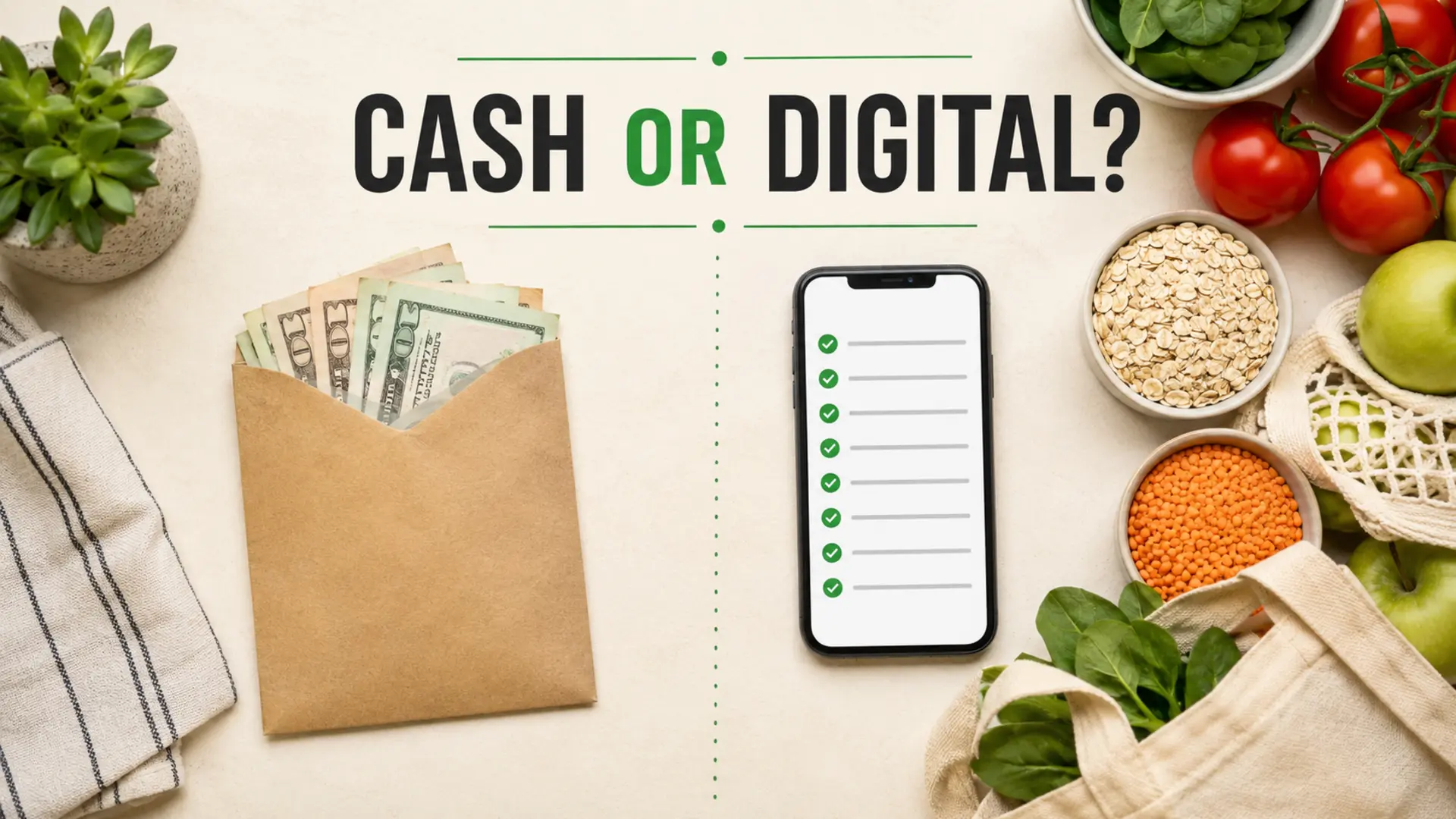
A cash envelope vs digital grocery list comparison is not really about finding one universal winner. Cash can make a spending limit feel immediate, while a digital list can make planning, coordination and price checking easier. The better method is the one that helps you decide what to buy before shopping and follow that decision at checkout.
This guide compares both approaches without assuming that every store, payment system or household works the same way. You can use either method alone or combine them into a simple grocery-budget routine.
Cash envelope vs digital grocery list: quick comparison
| Budgeting need | Cash envelope | Digital grocery list |
|---|---|---|
| Visible spending limit | Physical cash shows what remains | A written budget or running estimate can show the target |
| Household coordination | Requires manual communication | A shared list can keep shoppers aligned |
| Online shopping | May not be accepted | Works alongside online carts and pickup |
| Purchase history | Requires saved receipts or notes | Depends on the list or retailer tools used |
| Impulse control | Creates a firm physical boundary | Supports a pre-planned list and category order |
When a cash envelope can work well
A cash envelope gives your grocery budget a clear physical boundary. Before the shopping period begins, you choose an amount based on your income, household needs, local prices and pantry stock. You place that money in an envelope and use it only for groceries.
This approach can be helpful when contactless payment makes spending feel abstract or when you prefer a simple system with no setup. It may also encourage you to pause before adding unplanned extras. However, cash alone does not tell you what is already at home, which meals the groceries support or whether another household member has already bought an item.
When a digital grocery list can work well
A digital grocery list is strongest during planning. You can group items by aisle, remove pantry duplicates and share the same list with other shoppers. Start with a quick pantry audit, then add only the ingredients needed for your planned meals and essentials.
Digital tools do not automatically reduce spending. Their value depends on how you use them. A long, unreviewed list can be just as expensive as shopping without one. Before leaving home, separate necessities from optional items, estimate the likely total using current local prices and decide what you will remove if the cart exceeds your target.
Which method is likely to save more?
Neither method guarantees greater savings. A cash envelope may help most when the main problem is crossing a fixed spending limit. A digital list may help most when the main problems are forgotten items, duplicate purchases, disorganized shopping or changing household requests.
- Choose cash if you need a firm checkout boundary and your usual stores accept it.
- Choose a digital list if shared planning and item organization matter more.
- Use both if you want the planning benefits of a list with a separate spending limit.
- Use a card or digital payment when required, but keep the same predetermined budget.
Try a simple hybrid grocery-budget system
The hybrid method keeps the useful parts of both systems without depending on a specific payment type.
- Check what you have. Review the fridge, freezer and pantry before planning.
- Plan flexible meals. Choose meals that share ingredients; this waste-aware meal-planning guide can help.
- Build one organized list. Arrange it using a practical supermarket aisle order.
- Set the spending boundary. Use cash, a separate account, a written figure or another method that fits your circumstances.
- Review the cart. Compare quantities, unit prices and substitutions before checkout.
- Record what happened. Note the total and any items that went unused so the next list becomes more accurate.
A fair two-week test
If you are unsure, test each approach during comparable shopping periods. Keep household size, planned meals and essential purchases as similar as practical. Record the planned budget, checkout total, forgotten items, duplicate purchases and food left unused. The method that produces the most consistent result with the least friction is probably the better fit.
Final takeaway
In a cash envelope vs digital grocery list decision, discipline and preparation matter more than the format. Cash offers a visible limit; a digital list offers structure and coordination. Combining a realistic budget with a reviewed, pantry-aware list gives you a practical system that can adapt to local prices, payment preferences and household routines.