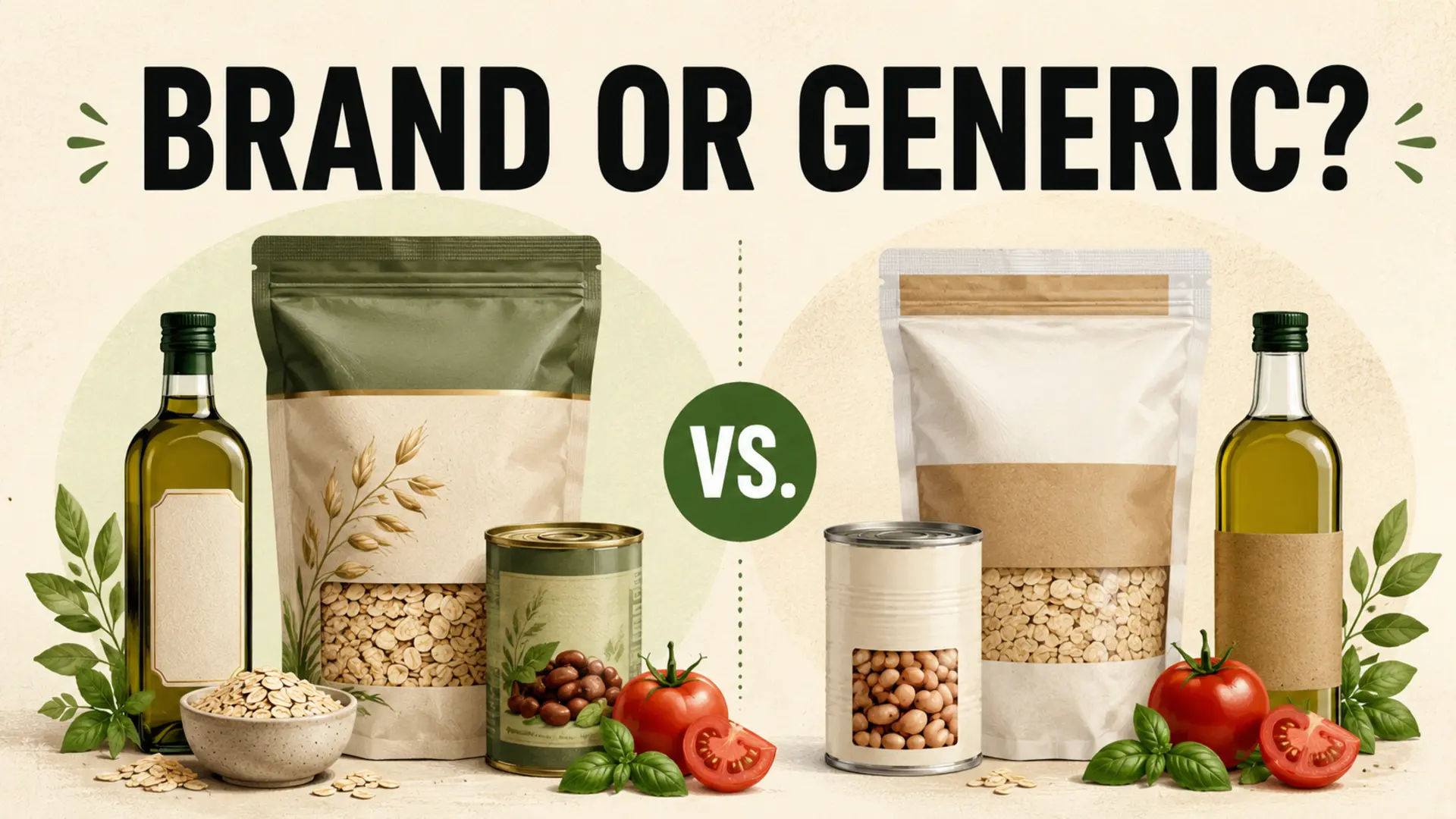
Name-brand vs. generic groceries is not a contest with one winner. The better choice depends on the ingredient list, unit price, how you will use the item, and whether your household notices a meaningful difference. A simple comparison routine can help you spend intentionally without assuming that a familiar label is always better—or that the cheapest option is always identical.
Name-brand vs. generic: start with the label
Put the packages side by side and compare the ingredient list, nutrition information, allergen statement, package size, and preparation directions. Similar-looking products may use different amounts of salt, sugar, oil, flavouring, or thickeners. If you manage an allergy or dietary restriction, check every package each time because formulations can change.
Also compare the unit price—not only the shelf price. A larger package is not automatically the better value, and a lower-priced box may contain less product. Consider how much your household will realistically use before it becomes stale or is wasted.
Good candidates for a store-brand trial
Basic products with short ingredient lists are often sensible places to test a generic or store-brand alternative. Depending on local availability, these may include:
- flour, sugar, salt, rice, oats, and other pantry staples;
- canned beans, tomatoes, and vegetables;
- frozen fruit and vegetables without added sauces;
- milk, butter, eggs, and plain yogurt;
- paper goods, food-storage supplies, and cleaning basics.
This is not an “always buy generic” list. Quality, sourcing, package size, and ingredient details still vary. Try one product at a time so you can judge it fairly instead of replacing an entire shop at once.
When paying more may be worthwhile
A name-brand or specialty product may earn its place when a particular texture, flavour, performance, sourcing standard, or dietary formulation matters to the recipe. Chocolate used in a dessert, olive oil served as a finishing ingredient, pasta where texture matters, or a trusted allergen-friendly product can be reasonable examples.
The deciding factor should be a benefit you can identify—not packaging alone. If the product is mixed into a heavily seasoned dish, a small taste difference may disappear. If it is the main ingredient, the difference may be more noticeable.
Use a simple blind taste test
For foods your household buys regularly, serve small unlabelled samples and compare flavour, texture, appearance, and how the food performs in a familiar recipe. Ask whether anyone would happily use the lower-cost option again. A blind comparison reduces the influence of package design and brand familiarity.
- Choose one frequently purchased product.
- Compare ingredients, package size, and unit price.
- Test both versions in the same way.
- Record the preferred option and why.
- Recheck occasionally when prices or formulations change.
Build a flexible grocery rule
Create three categories: buy the lower unit price, preferred brand matters, and compare each trip. This keeps shopping decisions quick while leaving room for sales, substitutions, and changing preferences. Before shopping, complete a monthly pantry audit so a bargain does not become an unnecessary duplicate.
You can combine this approach with a broader plan to cut your monthly grocery bill. For products whose sizes vary, organize your comparison around the unit price and the quantity you will use. A clear aisle-organized shopping list also makes it easier to compare alternatives without wandering back through the store.
Common mistakes to avoid
- Assuming two products are identical without reading their labels.
- Comparing package prices when package sizes differ.
- Buying a large “value” size that your household cannot finish.
- Letting a temporary discount override dietary needs or preferences.
- Staying loyal to a brand without periodically checking alternatives.
Choose based on value, not the label
The most useful name-brand vs. generic strategy is selective. Test store brands where the difference is small, keep preferred products where the benefit is real, and compare unit prices whenever sizes change. Your final list should reflect your budget, recipes, dietary needs, and household preferences—not a universal rule.