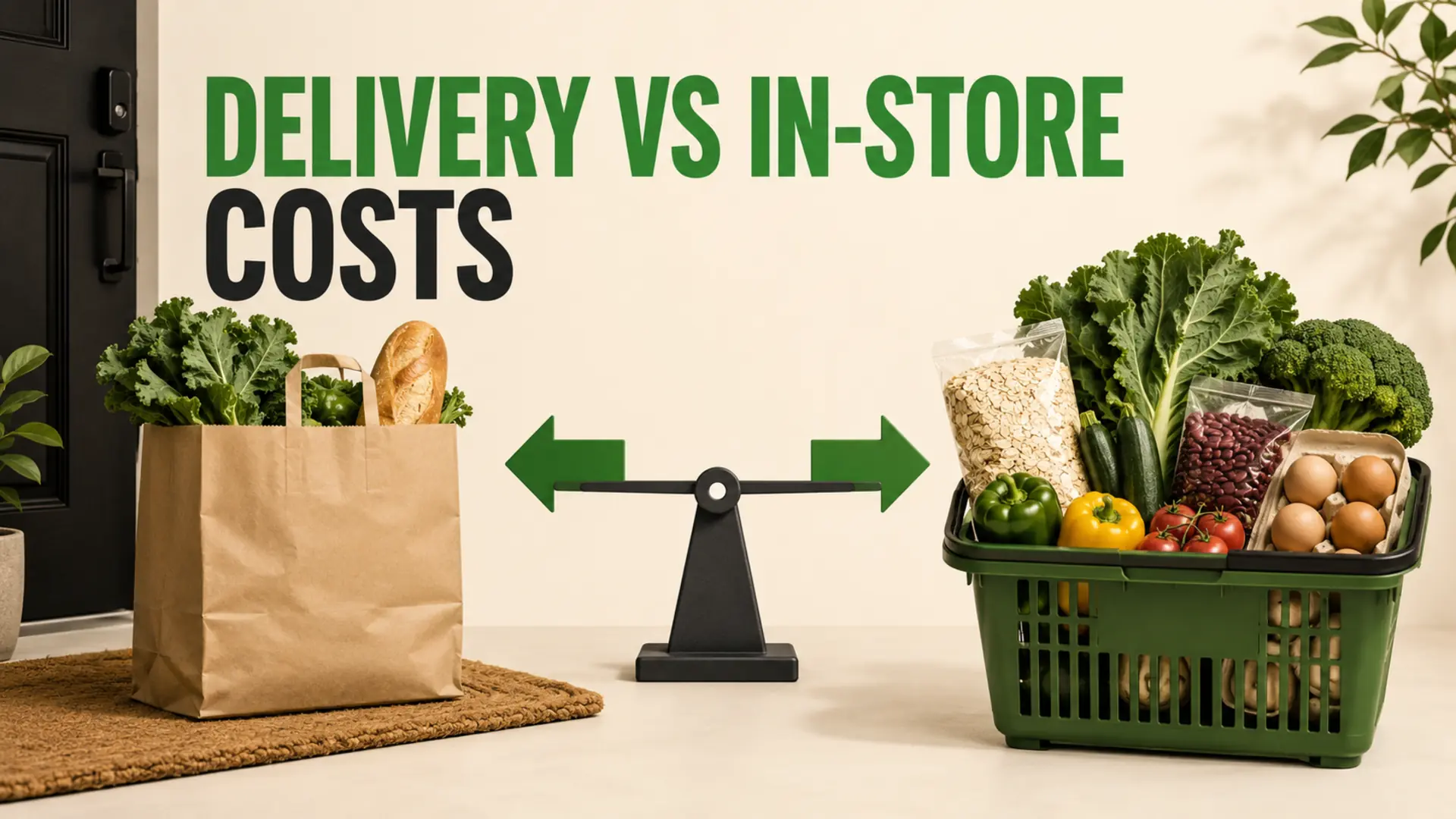
Comparing grocery delivery vs. in-store costs requires more than checking the delivery fee. Item prices, service charges, tips, memberships, promotions, substitutions, travel and your time can all change the final value. The less expensive option depends on the retailer, location, order and household.
Delivery can be valuable for people with limited mobility, caregiving duties, illness, transport barriers or demanding schedules. In-store shopping may provide more control over product selection and immediate price comparisons. A fair decision should account for both money and practical needs.
Grocery Delivery vs. In-Store Costs to Compare
| Cost factor | Delivery or pickup | In-store shopping |
|---|---|---|
| Item prices | May match the store or differ by service | Shown on shelves and at checkout |
| Service and delivery fees | May vary by order, time or membership | Usually not applicable |
| Tip | May be expected or optional depending on service and region | Usually not applicable |
| Transport | Often reduced for the shopper | Fuel, fares, parking or vehicle costs may apply |
| Time | Ordering and receiving the delivery | Travel, aisle time and checkout |
| Product control | Depends on substitutions and shopper communication | Direct choice of freshness, size and alternatives |
Check Whether Online Item Prices Match the Store
Do not assume the same retailer uses identical online and shelf prices. Compare several representative products before placing a large order. Use the same brand, size and quantity, and note whether promotional prices or loyalty discounts apply through that channel.
For packages of different sizes, use our guide to comparing grocery unit prices.
Add Every Checkout Charge
- Delivery or pickup fee.
- Service, handling or small-order charge.
- Membership cost allocated across expected orders.
- Tip, where appropriate.
- Taxes or fees applied to specific services.
- Temporary authorization holds, if disclosed by the provider.
Review the final checkout screen and current terms. A low advertised delivery charge does not necessarily represent the full order cost.
Calculate the Real Cost of Shopping In Store
In-store shopping has costs too. Consider fuel, public transport, parking, childcare where relevant, and the amount of time required. Avoid assigning an arbitrary cash value to every minute; instead, decide how the trip affects your schedule and household responsibilities.
Account for Substitutions and Out-of-Stock Items
A replacement may have a different package size, price, quality or dietary suitability. Set substitution preferences carefully, add useful notes when the service permits them, and reject replacements that do not meet your needs. Check the receipt for adjustments and refunds.
Compare Delivery, Pickup and In-Store Options
Store pickup can be a middle option, but it is not universally free and online prices may still differ. Compare the retailer’s current pickup fee, minimum order, substitution policy and collection window. Then weigh those details against delivery and a normal shopping trip.
Measure Impulse Spending Honestly
Online ordering may make it easier to see a running total, while recommendations and limited-time offers can still encourage additions. In-store displays can also influence purchases. Use a prepared list in either channel and remove items that do not support your meal plan.
See our guide to reducing grocery impulse purchases for a practical review routine.
Use a Same-Cart Comparison
- Create a representative list of items your household buys.
- Record in-store prices or a recent receipt.
- Build the same online basket without completing the purchase.
- Add all disclosed fees, membership allocation and intended tip.
- Add realistic travel costs to the in-store option.
- Note differences in package size, availability and promotions.
- Choose the option offering the best total value for that trip.
A grocery price book can make repeated comparisons easier.
When Delivery May Be Worth More
The lowest receipt total is not the only valid goal. Delivery may provide meaningful accessibility, reduce exposure during illness, simplify caregiving or make food access possible without transportation. Treat those benefits as part of the decision rather than assuming convenience has no value.
When In-Store Shopping May Work Better
Shopping in person may suit households that want direct control over produce, meat, expiry dates and substitutions. It can also make clearance sections and store-specific alternatives easier to assess. Organizing your shopping list by supermarket aisle can make the trip more efficient.
Choose Based on the Full Cost
Grocery delivery vs. in-store costs change from one order to another. Compare identical products, add every fee, include transport and consider accessibility, time and product control. The best choice is the one that fits the current trip without relying on a universal savings claim.