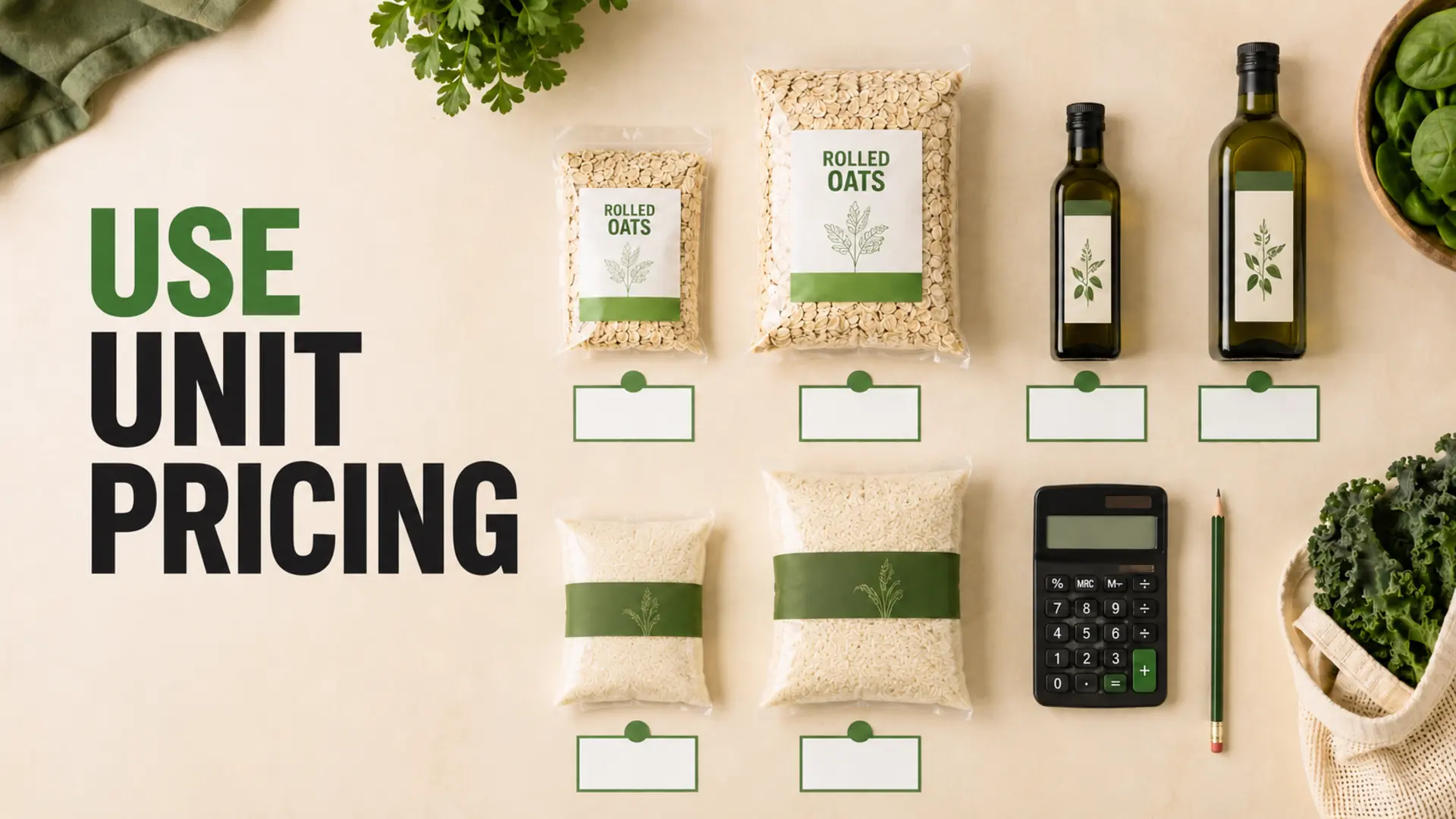
Learning how to use unit pricing helps you compare grocery products on equal terms, even when package sizes, brands and checkout prices differ. Instead of choosing the lowest sticker price, you compare the cost for one standard unit—such as 100 grams, one ounce, one litre or one item.
Unit pricing can reveal better value, but it is only one part of a sensible purchase. The larger or cheaper-per-unit option is useful only when it fits your budget, storage space and expected use.
What Unit Pricing Means
A unit price expresses a product’s cost in a consistent measurement. Depending on the item and local convention, a shelf label may show price per kilogram, 100 grams, ounce, litre, 100 millilitres, sheet or count. This makes two differently sized packages easier to compare.
Not every retailer or region displays unit prices in the same way. When the shelf label does not provide one—or uses different units—you can calculate it with a phone calculator.
How to Use Unit Pricing Step by Step
- Choose comparable products. Compare similar forms, qualities and ingredients rather than treating every version as identical.
- Find the package quantity. Look for the net weight, volume, count or usable length.
- Check the shelf label. Identify whether the displayed unit price uses grams, ounces, litres or another unit.
- Convert when necessary. Put both products into the same measurement before comparing.
- Consider likely waste. Choose the quantity you can reasonably use before quality declines.
The Basic Unit Price Formula
Use this calculation when a unit price is missing:
Unit price = package price ÷ package quantity
For example, if a hypothetical 750-gram package costs 6 currency units, divide 6 by 750 to get the price per gram. Multiply that result by 100 if you want the price per 100 grams. Do the same for the competing package using the identical unit.
For a more detailed walkthrough, see our guide to comparing price per ounce at the supermarket.
Useful Unit Pricing Measurements
- Weight: rice, pasta, oats, cheese, produce and dry goods.
- Volume: milk, oils, sauces, juice and cleaning liquids.
- Count: eggs, bags, coffee pods and individually portioned products.
- Length or area: foil, baking paper and some household products.
- Usable quantity: products where drained weight, edible portion or concentration affects the comparison.
Common Unit Pricing Mistakes
Comparing Different Units
A price per ounce cannot be compared directly with a price per 100 grams. Convert one figure or use a calculator that supports both measurement systems.
Assuming the Largest Package Is Best
A larger package can have a lower unit price, but that does not guarantee better household value. Storage limits, freshness, cash flow and how often you use the product all matter. A smaller package may cost more per unit yet waste less.
Ignoring Product Differences
Compare ingredients, concentration, quality, dietary requirements and preparation needs. A concentrated product or a version that meets a specific need may not be equivalent to the cheapest alternative.
Using Sale Signs Instead of Final Prices
Temporary promotions can change the calculation. Check the final eligible price, quantity conditions and loyalty requirements before deciding. You can combine unit comparisons with meal planning around supermarket sales.
When Unit Pricing Saves the Most Effort
Start with items you buy frequently, because repeated decisions are easier to improve. Pantry staples, household supplies and products offered in many package sizes are practical candidates. Keep a short note of your preferred size and acceptable alternatives rather than recalculating every product on every trip.
Unit pricing also helps when evaluating convenience premiums. Our guide to commonly overpriced grocery items explains when preparation, branding or packaging may be raising the cost.
Use Unit Pricing Without Buying Too Much
The best-value product is not always the one with the lowest unit price. Before choosing a larger pack, check what you already have, how quickly your household uses it and whether it can be stored safely. For broader budgeting ideas, read our practical guide to reducing your monthly grocery bill.
Make Better Comparisons on Every Shop
To use unit pricing effectively, compare equivalent products in the same measurement, then balance the result against quality, waste and convenience. Practising with a few regular purchases is enough to make this a quick, repeatable shopping habit.