Learning how to stick to your shopping list is easier when the list reflects real meals, store conditions and household needs. The goal is not rigid perfection. It is to make planned purchases the default while giving yourself a clear process for substitutions, genuine needs and tempting extras.
How to stick to your shopping list in any store
Prepare the list before entering the store, organize it in the order you expect to shop and decide how unplanned items will be handled. This works in supermarkets, warehouse stores and multi-category retailers without depending on one company’s layout or policies.
- Review your refrigerator, freezer and pantry.
- Connect each major item to a meal or household need.
- Group the list by department or aisle.
- Mark acceptable substitutes for important items.
- Set a separate limit for optional purchases.
If your current list is vague or incomplete, start with our guide to making a practical grocery list.
Define what counts as an acceptable extra
A strict “nothing else” rule can fail when you remember a real need or find that a planned item is unavailable. Create three categories instead:
- Planned: items already written on the list.
- Valid substitution: an alternative serving the same meal or purpose.
- Unplanned: an item that does not replace or complete anything on the list.
This distinction protects flexibility without turning every appealing product into an exception.
Use a route that limits unnecessary browsing
Take the most direct practical route through the departments you need. If possible, order the list before arriving so you do not repeatedly cross the store. You can still compare products within a category; the purpose is to reduce unrelated browsing, not rush past useful price information.
For a more detailed approach, see our guide to shopping grocery store layouts with a clear plan.
Choose a basket or cart that fits the trip
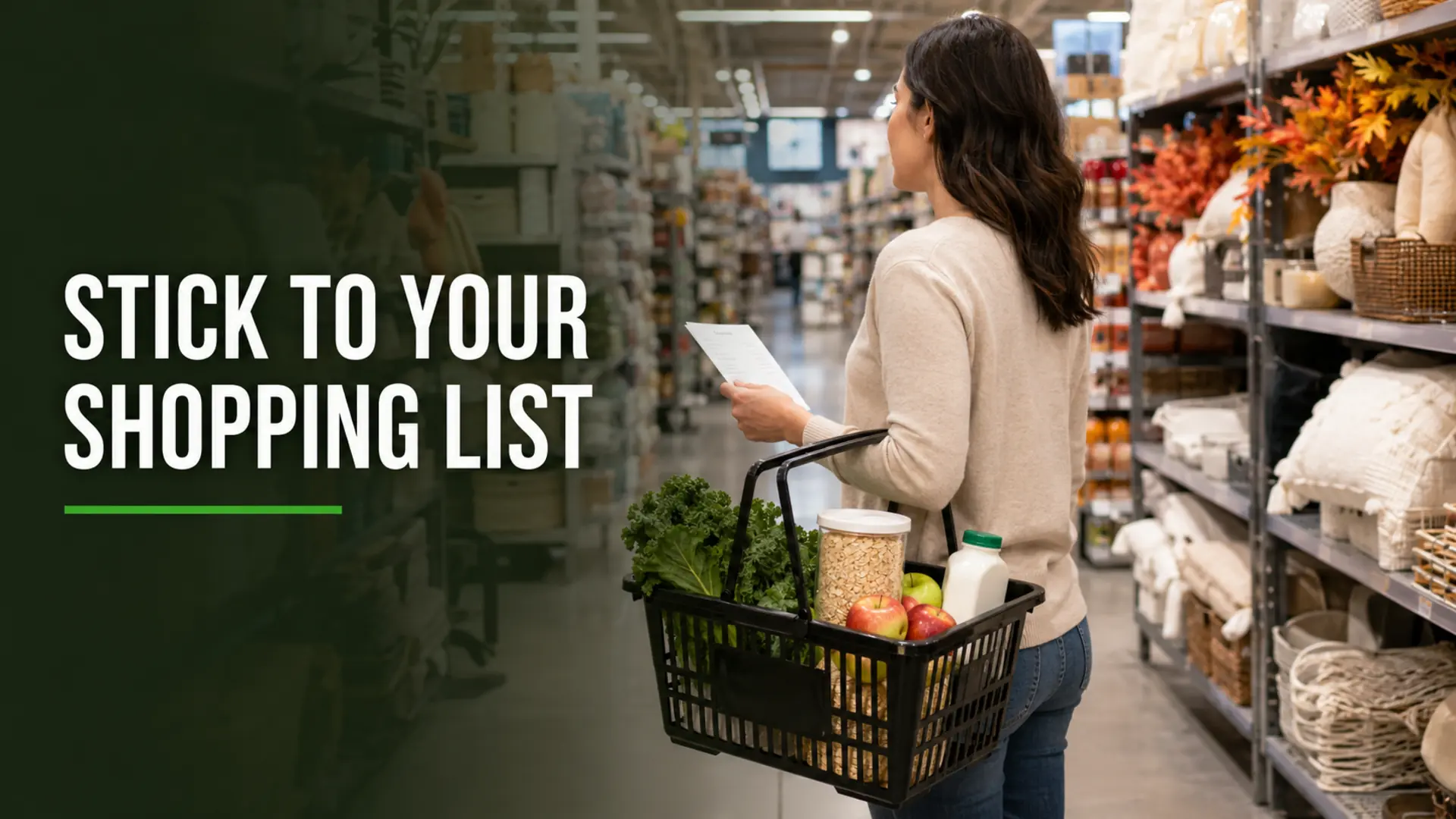
A hand basket can be convenient for a genuinely small trip, while a cart may be safer and more accessible for heavy items, children or mobility needs. Choose based on the planned load rather than treating one option as a universal behavior rule. The list and purchase process matter more than the container.
Pause before adding an unplanned item
Use a short decision check whenever something outside the list catches your attention:
- What specific need will this item meet?
- Do I already own or have food that serves the same purpose?
- Will I use it before its quality declines?
- Where will it be stored?
- Would I choose it at its regular price?
- Which planned priority changes if I buy it?
You do not need a rigid timer. The useful part is creating enough distance to make an intentional decision.
Handle promotions without abandoning the plan
A discount is valuable only when the item fits a current need, the final price is competitive and the quantity can be used. Check unit prices and promotion conditions rather than relying on bright signs or placement. Avoid buying a substitute merely because it is displayed prominently.
The workflow in our article on reducing impulse buys with an organized grocery list can help separate a genuine deal from an appealing distraction.
Consider pickup or delivery carefully
Pickup or delivery can reduce in-store exposure to unrelated products, but availability, fees, minimum orders, item prices and substitution controls vary. Compare the total cost with the shopping method you would otherwise use. Review the digital cart before checkout just as carefully as a physical cart.
Online recommendations and add-on prompts can still encourage extras, so the shopping list remains useful even when you never enter the store.
Reduce avoidable triggers before shopping
- Eat or bring an appropriate snack if hunger affects your choices.
- Avoid shopping when you are too rushed to compare products.
- Keep optional household and seasonal purchases on a separate list.
- Unsubscribe from promotional alerts that rarely match your needs.
- Bring reusable bags and payment so forgotten logistics do not disrupt the plan.
Read our practical advice for avoiding impulse buys when shopping hungry if food-related extras are the main challenge.
Review the cart before paying
Take one final pass through the cart or digital order. Confirm quantities, check that substitutions still fit the meals and identify anything that was added without a clear reason. Return unwanted products to the correct place or ask an employee for help rather than leaving them elsewhere.
Learn from the receipt
After the trip, compare the receipt with the original list. Do not treat every extra as failure. Note whether it was a forgotten necessity, a useful substitution or an impulse purchase. If the same forgotten item appears repeatedly, add it to a reusable household checklist. If the same type of impulse appears, create a specific rule for the next visit.
For general healthy-eating context, the existing Canada’s Food Guide is one national resource; readers elsewhere can use guidance from their local health authority.
Make intentional shopping repeatable
The best way to stick to your shopping list is to combine preparation with a flexible decision process. A route, substitution plan, pause rule and cart review keep the trip focused without ignoring accessibility, changing stock or legitimate household needs.