
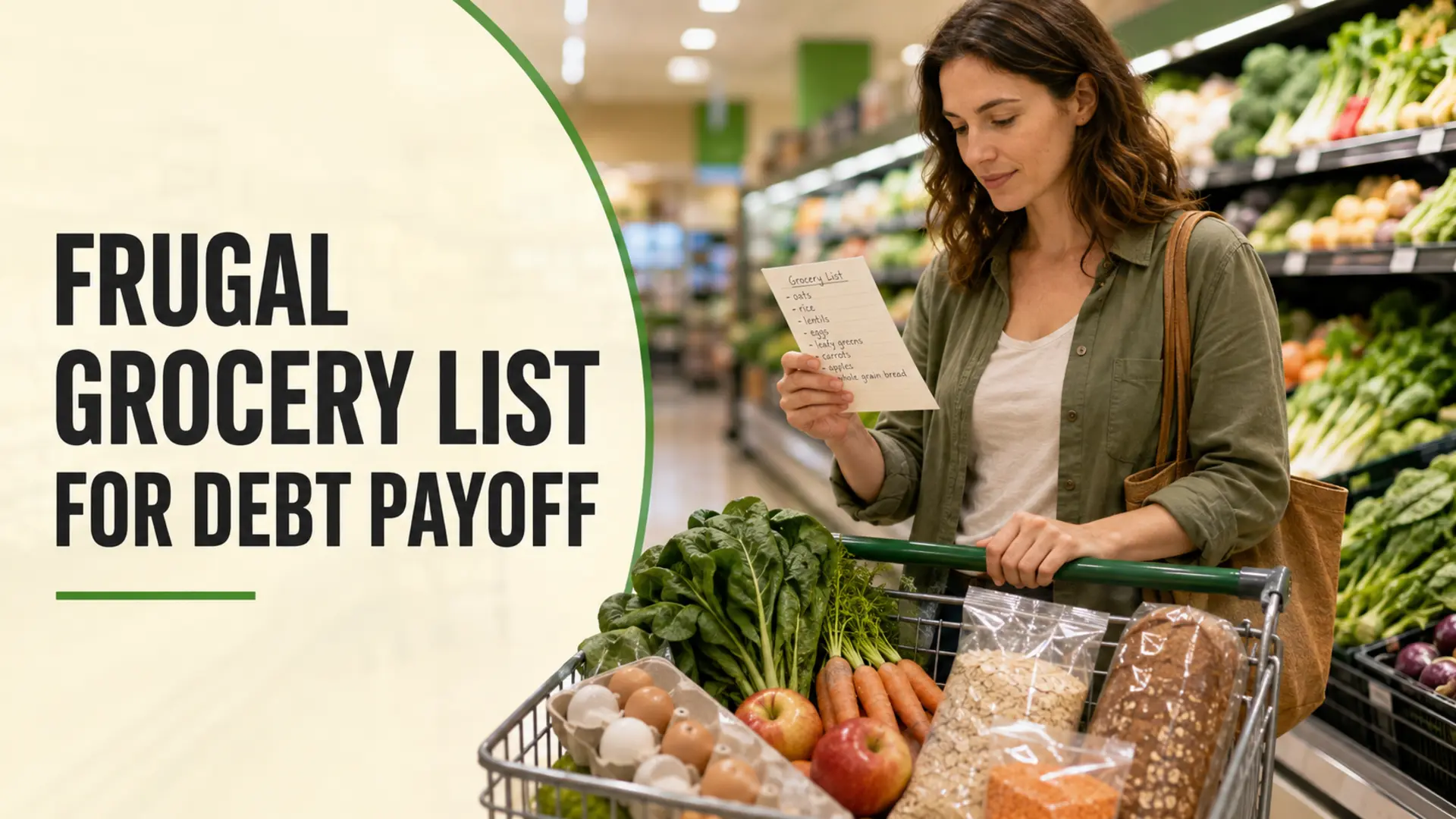
A frugal grocery list for debt payoff can create more room in your budget without relying on unrealistic prices, an all-or-nothing diet, or a promise that every household will save the same amount. The useful approach is to start with your own receipts, protect adequate nutrition, and redirect only the money you actually save toward your chosen debt plan.
Start Your Frugal Grocery List for Debt Payoff With Real Numbers
Review several recent grocery receipts or bank transactions and separate groceries from takeout, household supplies, and other purchases. Calculate a typical weekly or monthly grocery baseline. If your spending varies, use an average rather than choosing your most expensive week.
A grocery cost per person calculation can help you compare changes fairly when household size or schedules shift. The Consumer Financial Protection Bureau also provides a spending tracker, cash-flow budget and debt action plan. Readers outside the United States can use comparable tools from a local consumer-finance authority.
Choose a Reduction You Can Sustain
Do not copy a fixed grocery target from another household. Prices, dietary needs, family size, cooking facilities, time, accessibility and local food availability all matter. Choose a modest test reduction, try it for two to four weeks, and adjust if meals become inadequate or the plan creates too much work.
- Keep minimum debt payments, housing, utilities, medication and adequate food in the plan.
- Set a grocery ceiling based on your baseline and realistic local prices.
- Keep a small buffer for substitutions or an unexpectedly busy day.
- Record the actual difference rather than treating an estimate as savings.
Check What You Already Have
Before planning meals, check the refrigerator, freezer and pantry. Mark foods that should be used soon, then build meals around them. A quick pantry audit checklist helps prevent duplicate purchases and turns overlooked ingredients into part of the week’s plan.
Build the List Around Flexible Food Groups
A frugal list works better as a set of flexible categories than as one universal menu. Select options your household will eat and that fit your dietary requirements.
- Meal bases: oats, rice, pasta, potatoes, bread or other locally affordable grains and starches.
- Protein options: beans, lentils, eggs, tofu, canned fish, yogurt, poultry or other proteins that offer good value locally.
- Produce: seasonal fresh choices plus frozen or canned options with useful ingredients and minimal waste.
- Flavour builders: onions, garlic, herbs, spices, sauces or condiments you already use regularly.
- Practical extras: milk or alternatives, cooking oil, snacks, and convenience items that prevent a more expensive last-minute purchase.
For more adaptable ideas, use these budget-friendly meal staples as a starting point, then compare local unit prices and package sizes.
Plan Repeatable Meals, Not a Punishing Menu
Choose a few meal formats that share ingredients: grain bowls, soups, pasta dishes, sandwiches, stir-fries, baked trays or breakfast-for-dinner. Reusing ingredients lowers the risk of half-used packages, while changing sauces, vegetables or proteins keeps the week from feeling repetitive.
Use a Two-Level Shopping List
Separate essentials from optional items. Essentials complete the planned meals; optional items are purchased only if the total remains within your limit or a genuine substitution improves value. Include quantities or package-size ranges so a promotion does not persuade you to buy more than you can use.
Compare Value Without Chasing Every Deal
Compare unit prices when package sizes differ, but also consider edible yield, storage space and whether the food will be used. A larger package is not a saving if part of it spoils. Store brands, frozen produce and less-prepared ingredients can be useful, but compare them rather than assuming they always cost less.
Protect Against Expensive Plan Breakdowns
Leave room for reality. A simple freezer meal, canned soup, prepared ingredient or easy sandwich night may cost more than cooking everything from scratch, yet still cost less than an unplanned restaurant order. Convenience can be a budgeting tool when it matches your time, energy and abilities.
Redirect Only Verified Savings
At the end of the week or month, compare actual grocery spending with the baseline. If money is genuinely left after essential expenses and your safety buffer, apply it according to your debt plan. The CFPB debt action plan describes both smallest-balance-first and highest-interest-rate-first approaches; each has trade-offs, and neither changes the need to make required payments.
If minimum payments or essential bills are becoming unmanageable, grocery cuts alone may not solve the problem. Consider a reputable nonprofit credit counselor or an appropriate local debt-advice service before making drastic food or financial decisions.
Review the Plan Every Week
- Which meals were eaten and which ingredients remained?
- Which substitutions genuinely reduced the total?
- Did the plan provide enough food and fit the household schedule?
- How much was actually available for debt after essential expenses?
- What one change would make next week easier?
A Frugal List Should Support the Whole Journey
The best frugal grocery list for debt payoff is repeatable, adequately nourishing and grounded in your real spending. Track a baseline, shop from a flexible plan, reduce waste, and transfer only verified savings. Small, sustainable changes are more useful than a severe plan that collapses after one difficult week.
Frequently Asked Questions
How much should I cut groceries while paying off debt?
Choose a modest amount based on several normal months of food spending, household needs, and local prices. Do not use a percentage copied from another household. The reduction must still support adequate food, medical needs, accessibility, and a schedule you can sustain.
Should debt payments come before buying enough food?
No. Essential food, housing, utilities, healthcare, and safety needs should be protected. If debt payments make basics unaffordable, contact creditors or an accredited nonprofit credit counselor for options. A grocery challenge is not a substitute for qualified financial guidance.
What belongs on a frugal debt-payoff grocery list?
List foods already planned for specific meals, flexible staples, affordable proteins, produce in suitable fresh, frozen, or canned forms, and one backup meal. Include quantities and acceptable substitutes. The list should reflect what the household eats, not an idealized cheapest basket.
How can I use pantry food during a debt payoff plan?
Inventory it before shopping, schedule older suitable foods, and buy only missing meal components. Keep minimum levels for frequently used essentials instead of emptying every shelf. A pantry-first plan saves money only when meals remain practical and safe.
Should I stop buying convenience foods to pay debt faster?
Not necessarily. A convenience item that prevents takeout, reduces physical strain, or fits limited cooking time may offer good value. Track which products genuinely support home meals and remove those that add cost without solving a recurring problem.
How do I avoid burnout from an extremely frugal grocery budget?
Use repeatable meals, allow a planned favorite, keep an emergency meal available, and change the target when life becomes unusually demanding. Severe restriction often creates rebound spending. Sustainable savings are more useful than one impressive but miserable week.
Can coupons help with debt-payoff grocery shopping?
Yes, when they discount an item already needed or a suitable substitute. Compare final unit prices and avoid required quantities that exceed use. Buying an unnecessary product to earn points or redeem a coupon increases spending.
How should I track grocery savings for debt payments?
Establish a baseline from several months, then compare actual food-only spending using the same categories. Transfer only the verified difference that remains after essential needs. Do not count advertised discounts or food shifted into restaurant spending as savings.
What if food prices rise during the debt payoff journey?
Reprice the plan, substitute flexibly, reduce waste, and adjust the target. Do not force an outdated number by removing necessary food. Debt goals should accommodate real cost changes and household needs instead of treating the grocery budget as permanently fixed.
When should I seek help with debt instead of cutting groceries further?
Seek reputable help when minimum payments compete with essentials, balances keep growing, collection activity is stressful, or the plan depends on unsafe deprivation. In Canada, consult a Licensed Insolvency Trustee or accredited nonprofit counselor; elsewhere, use official consumer-protection resources.