
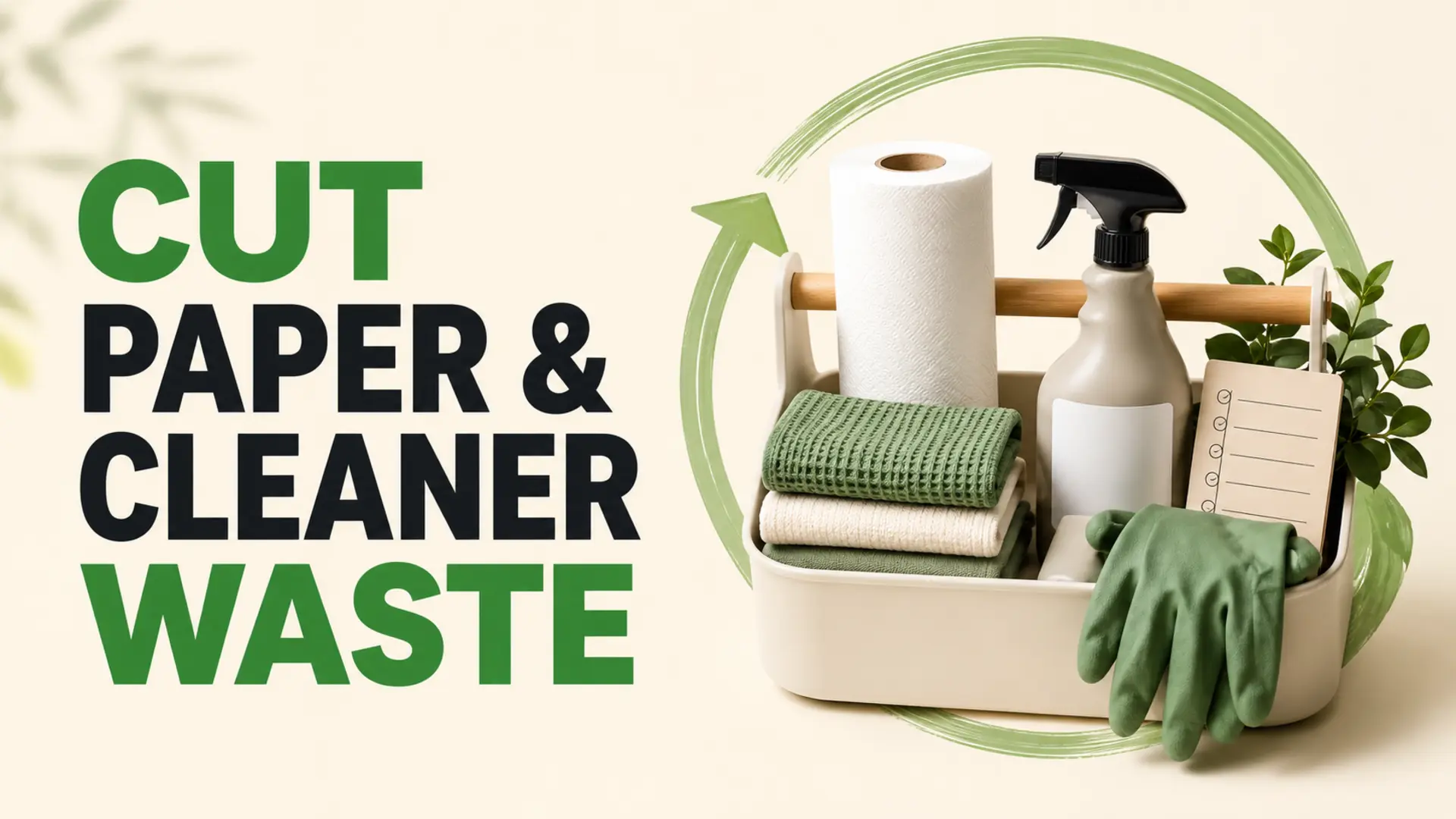
You can reduce paper towel and cleaner costs by measuring current use, replacing suitable tasks with washable cloths, consolidating overlapping products and following every product label. The amount saved varies widely, so a fixed annual promise is not credible without your receipts, prices and household routine.
The safest plan starts small. Change one low-risk habit, track purchases for several weeks and keep disposable or specialized products where hygiene, accessibility or manufacturer instructions make them appropriate.
Measure Paper Towel and Cleaner Costs First
Review recent receipts and record paper towels, napkins, wipes, sprays, detergents, floor products and refills separately. Note package size, unit price and how long each purchase lasts. This creates a real baseline and prevents an exaggerated savings target. Our guide to using unit pricing explains how to compare different package sizes.
Choose Tasks Suitable for Washable Cloths
Washable cotton cloths, dishcloths or other reusable options can handle many routine tasks such as drying clean hands, wiping ordinary spills and dusting. Keep separate cloths for different areas, especially kitchens, bathrooms and floors. Colour coding or labelled storage can reduce accidental cross-use.
Paper towels can remain useful for tasks where immediate disposal is preferable, including some contact with bodily fluids, grease or contamination. Follow local public-health advice and your household’s health needs rather than trying to eliminate every sheet.
Create a Practical Cloth-Washing Routine
A reusable system only works when cloths can be collected and cleaned reliably. Provide a ventilated place for used cloths to dry before laundry, wash them according to their material and soil level, and dry them fully. Do not leave damp cloths balled up on a counter. Consider water, energy, detergent and time when deciding how many reusable items make sense.
Consolidate Overlapping Cleaning Products
List the surfaces and tasks each product is intended to handle. You may find several sprays with overlapping purposes. When a manufacturer-approved general cleaner works for multiple compatible surfaces, using one product consistently can simplify inventory. Keep specialist products when a surface, appliance, disinfecting task or warranty requires them.
Never Mix Household Cleaning Products
Do not mix cleaners. Follow label directions, ventilation guidance and any recommended protective equipment. In particular, bleach must not be combined with ammonia, acids, vinegar or other cleaners because dangerous vapours can be released. The CDC’s current bleach safety guidance says never to mix household bleach or disinfectants with other cleaners.
Poison Control likewise advises users to follow labels, ventilate the area and never mix household cleaning products. If an exposure occurs, leave the area when appropriate and contact emergency services or your local poison centre for case-specific advice.
Avoid Unverified DIY Cleaner Recipes
A homemade mixture is not automatically safe, effective or suitable for food-contact surfaces, stone, wood, appliances, pets or people with sensitivities. Combining vinegar and baking soda mainly causes a reaction rather than producing a universal heavy-duty cleaner. Essential oils can introduce fragrance, allergy and pet-safety concerns without turning a mixture into a registered disinfectant.
If you prefer a commercial product evaluated against defined ingredient criteria, the U.S. EPA maintains a searchable list of Safer Choice-certified products. Readers elsewhere can look for equivalent programs from their environmental or health authority.
Use the Correct Amount
More product does not necessarily clean better. Read dilution and dosing instructions carefully, use the supplied measuring cap when applicable and avoid estimating concentrated refills. An overly strong mixture can waste product, damage surfaces or increase exposure. Never transfer a cleaner into a food or drink container, and retain the original label and safety information.
Compare Refills and Concentrates Carefully
Calculate the price per ready-to-use amount, not simply the package weight. Include any required bottle, dispenser or compatible system. A concentrate can offer value when measured correctly and used often, but it is not economical if the format encourages over-dosing or remains unused. Apply the same right-sizing logic used for bulk purchases without waste.
Keep Cleaning Supplies on the Shopping List
Add non-food supplies to a reusable inventory rather than purchasing from memory. Record what is open, what is in reserve and the point at which a replacement is genuinely needed. A reusable weekly shopping template can provide a dedicated household-supplies section and reduce duplicate buying.
Run a Four-Week Household Test
- Record the starting quantity of paper and cleaning supplies.
- Choose one or two tasks for washable cloths.
- Use cleaners only according to their labels.
- Track laundry needs, convenience and any hygiene concerns.
- Record replacement purchases and compare them with the baseline.
- Keep changes that work and reverse those that create risk or unreasonable effort.
Calculate Your Real Annual Difference
After the test, subtract any added cloth, laundry, storage or dispenser costs from the reduction in purchases. Multiply only a stable monthly difference, and review the estimate as prices or routines change. This produces a household-specific figure rather than repeating the article title’s unsupported $1,000 promise.
To reduce paper towel and cleaner costs safely, focus on measured use, washable alternatives for suitable jobs, fewer overlapping products and precise label compliance. Savings are valuable, but they should never depend on mixing chemicals, replacing needed disinfectants or ignoring hygiene and accessibility.
Frequently Asked Questions
Can reducing paper towels really save $1,000 a year?
It depends entirely on current usage, local prices, laundry costs, and which products can be safely replaced. Measure four weeks of purchases and calculate an annual estimate. Treat $1,000 as a claim to test, not a guaranteed household result.
Which paper-towel tasks can be replaced with washable cloths?
Drying clean hands, wiping water, dusting, and many routine surface-cleaning tasks may suit designated washable cloths. Keep separate cloths by task and follow a hygienic laundry routine. Disposable products may remain appropriate for certain contamination, illness, or accessibility situations.
When should I still use disposable paper towels?
They can be practical for cleaning bodily fluids, pet accidents, raw-meat juices, greasy chemicals, or other messes where laundering may spread contamination. Follow public-health and product guidance. Do not reuse a cloth simply to meet a savings target.
Can vinegar and baking soda replace every household cleaner?
No. DIY mixtures are not universal cleaners or registered disinfectants, and combining ingredients can reduce effectiveness or damage surfaces. Use products suitable for the task and material, follow labels, and rely on approved disinfectants when disinfection is required.
Why should bleach never be mixed with other cleaners?
Bleach can release dangerous gases when combined with acids or ammonia-containing products. Never mix cleaning chemicals unless the label explicitly directs it. Ventilate as instructed, store products safely, and contact poison control or emergency services after a concerning exposure.
Do concentrated cleaners always cost less?
Not automatically. Calculate the cost per correctly diluted usable volume and include any required dispenser. Concentrates save money only when measured accurately, stored safely, and used before quality changes. Never improvise dilution stronger than the label.
How can I reduce cleaner costs without compromising hygiene?
Inventory products, remove unnecessary duplication, use the labeled amount, and match each cleaner to a real task. Clean before disinfecting when instructions require both. Keep specialized products where health, food safety, or material care makes them necessary.
How should reusable cleaning cloths be organized?
Assign colors or labels to kitchen, bathroom, floors, and general dusting; store clean and used cloths separately; and launder according to fabric, soil, and public-health guidance. A clear system reduces cross-contamination and makes reuse convenient.
Are refill packages always the greener or cheaper choice?
Compare unit price, material accepted by local recycling, transport, and whether the refill fits an existing durable container. A refill can reduce packaging but is not helpful if it leaks, expires unused, or requires an unnecessary new dispenser.
How do I calculate annual savings from fewer paper products?
Track baseline spending for several representative weeks, then repeat after the change. Subtract replacement cloths, laundry, and any remaining disposables. Multiply the average weekly difference by 52, while noting that holidays, illness, and seasonal cleaning may change use.