
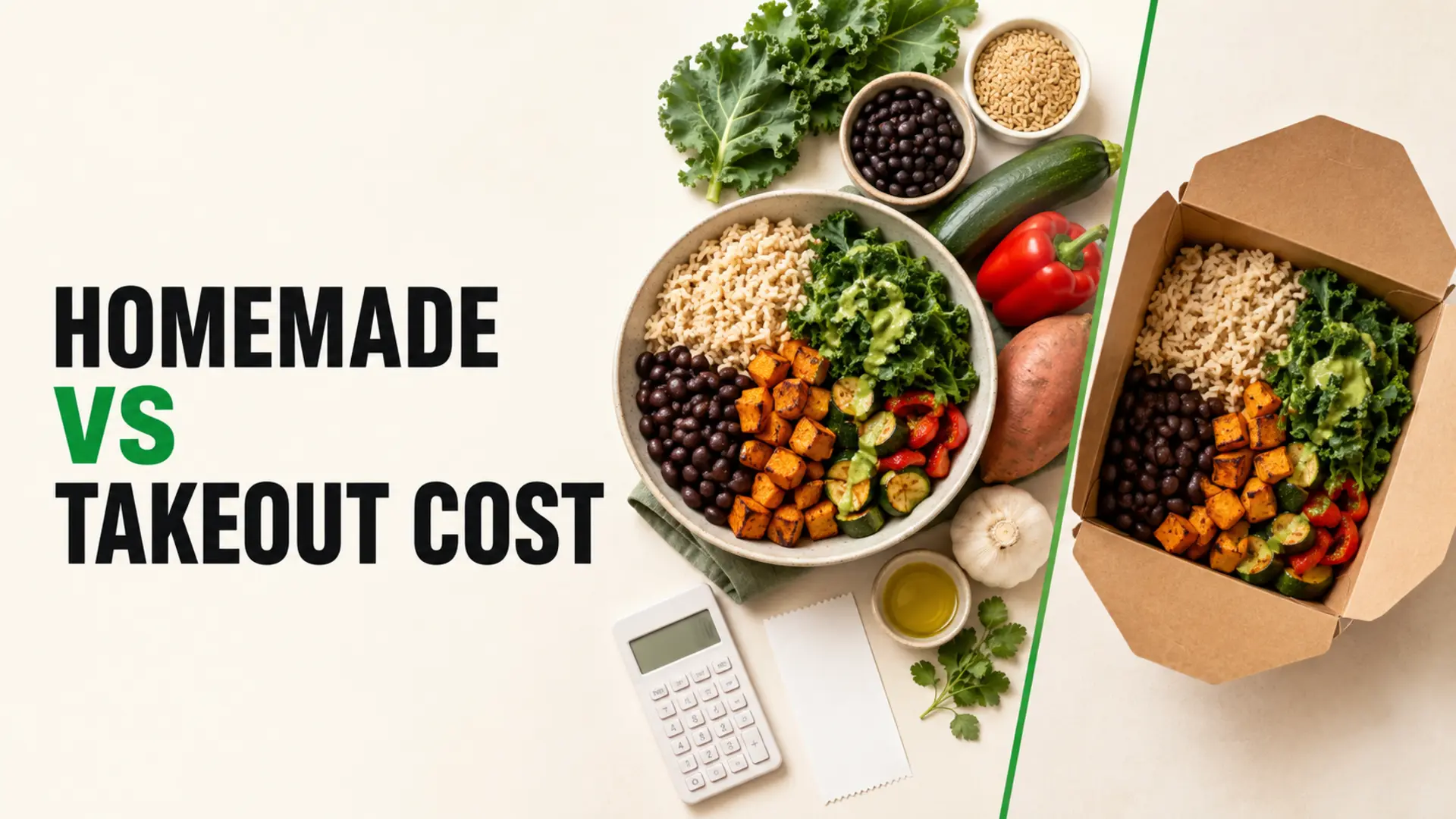
A useful homemade vs takeout cost comparison starts with the complete price of each option, not a universal restaurant markup or a grocery estimate copied from another household. Local prices, portion sizes, delivery fees, pantry supplies, food waste and the value of your time can all change the result. This guide shows how to calculate a fair cost per meal with your own numbers.
Why Homemade vs Takeout Cost Varies
Cooking at home is often less expensive per serving when ingredients are used efficiently, but it is not automatically cheaper every time. A takeout order may provide several portions, while a homemade recipe may require buying full packages of ingredients. Conversely, menu prices may exclude tax, tips, delivery charges or service fees.
Household size matters too. A family may divide a batch across several servings, while a person cooking alone may need to freeze extras to avoid waste. Dietary needs, equipment, energy prices and access to shops also affect the comparison.
Use the Same Meal and Portion
Compare equivalent meals whenever possible. A basic homemade grain bowl should not be measured against a takeout order containing premium toppings, drinks and sides unless you include those items in both versions. Decide what counts as one serving, then compare the same number of servings.
Calculate the Homemade Cost Per Serving
Use receipt prices and count only the quantity used in the recipe. If a package costs 6.00 and the meal uses one-third, assign 2.00 to the meal. Repeat for every ingredient, including smaller amounts of oil, spices, sauces and garnishes. Estimates are acceptable for tiny pantry quantities, but use the same method each time.
- Add the used portion of every ingredient.
- Include ingredients already in the pantry; they still need replacing.
- Add optional energy costs only if you can estimate them reasonably.
- Subtract nothing for leftovers unless you expect to eat or freeze them safely.
- Divide the final total by the number of portions you will actually use.
For a clearer household baseline, first calculate your real grocery cost per person.
Calculate the Complete Takeout Cost
Start with the menu subtotal, then add tax, delivery or service charges, tips, small-order fees and any required add-ons. If you collect the meal, include transport or parking only when it materially affects your decision. The article on food delivery versus in-store costs provides a broader framework for fees, substitutions, travel and time.
Divide the complete order total by the number of portions actually eaten. A large entrée that reliably becomes lunch the next day should be counted differently from a meal that leaves unusable leftovers.
Use a Simple Comparison Formula
Homemade cost per serving = total cost of ingredients used ÷ usable servings.
Takeout cost per serving = complete order cost ÷ usable servings.
Subtract the lower figure from the higher one to find the difference per serving. Multiply only by the number of meals you realistically expect to replace. Do not turn one comparison into a guaranteed annual saving.
Account for Waste and Future Meals
A homemade meal can produce better value when remaining ingredients are planned into another dish. It can cost more when specialty ingredients sit unused. Before shopping, complete a quick pantry audit and choose recipes that share produce, proteins and flavour builders.
Count leftovers only when they are cooled, stored and reheated appropriately. Label portions and freeze what will not be eaten soon. The financial value of a second serving disappears if it is discarded.
Consider Time Without Assigning a Fake Wage
Your time has value, but cooking time is not always equivalent to paid working time. Instead of applying an arbitrary hourly wage, compare how each option fits the day. Include active preparation, cleanup, waiting, collection and delivery delays. Batch cooking or a simple meal may require little active time, while a complicated recipe may not be practical on a busy evening.
Compare Convenience Options Fairly
The choice is not limited to scratch cooking or restaurant delivery. Frozen vegetables, rotisserie chicken, canned beans, prepared sauces and supermarket meal components can reduce labour while keeping costs predictable. Meal kits are another middle option; use the same complete-cost method described in this meal kit versus grocery shopping comparison.
Run a Two-Week Real-World Test
- Choose two or three meals you frequently order.
- Save the complete takeout totals, including every fee.
- Cook comparable versions and record ingredient portions used.
- Note usable leftovers, discarded food and active preparation time.
- Compare cost per serving and decide which meals are worth making.
A small sample of your actual habits is more useful than a dramatic national average. Repeat the test when prices, household size or schedules change.
When Takeout May Still Make Sense
Takeout can be reasonable during illness, travel, demanding work periods or when cooking facilities are limited. It may also offer better value for an occasional complex dish requiring many specialty ingredients. The goal is informed choice, not guilt. You can plan takeout intentionally and reduce expensive extras, frequency or delivery charges.
Make the Comparison Work for Your Household
A reliable homemade vs takeout cost breakdown uses equivalent portions, complete totals and food you will genuinely consume. Track a few real meals, include fees and waste, and choose a mix of home cooking, convenience foods and planned takeout that fits both your budget and your life.
Frequently Asked Questions
Is homemade food always cheaper than takeout?
Not always, but home cooking often costs less per serving when ingredients are reused and waste is low. Takeout may compare favorably for one person ordering a complex dish. Use equivalent meals, portions, fees, leftovers, and ingredients already owned rather than a universal rule.
How do I calculate the cost per serving of a homemade meal?
Add the amount actually used from every ingredient, plus any meaningful cooking energy or special consumable cost, then divide by portions eaten or safely stored. Do not charge the full price of a pantry item when most remains available for future meals.
What takeout costs should be included in the comparison?
Include menu prices, delivery and service fees, taxes, tips, small-order charges, transportation, and paid add-ons. Subtract only discounts you genuinely received. Divide by the portions actually eaten, including leftovers that became another meal.
Should cooking time be assigned an hourly wage?
Only if that reflects your decision. Personal time is valuable, but multiplying every cooking minute by a professional wage can distort a household comparison. Record active preparation, passive cooking, shopping, and cleanup separately, then judge whether the saved effort matters.
How should leftovers affect homemade meal cost?
Divide total cost across every portion that is safely eaten, not only the first dinner. If leftovers are discarded, include that waste in the effective cost. Label and plan the second meal so a theoretical extra serving becomes real value.
Is takeout cheaper for a single person?
It can be for an occasional specialty meal when grocery packages would leave unusable ingredients. Routine takeout usually carries fees and offers less control over portions. Compare it with small-batch cooking, frozen portions, and convenient grocery options—not only elaborate home recipes.
How can I compare a meal kit, takeout, and groceries fairly?
Use the same number of servings and similar meal type. Include all fees, supplied and unsupplied ingredients, preparation, leftovers, and waste. Also note what each option replaces; a meal kit may beat delivery while remaining more expensive than a simple grocery meal.
Does batch cooking always reduce cost per meal?
Only when the batch is eaten or frozen safely. Larger quantities can lower ingredient and energy cost per serving, but unwanted repetition and freezer waste erase savings. Test a moderate batch before doubling a recipe.
What are hidden costs of cooking at home?
Commonly overlooked costs include cooking energy, specialty ingredients, failed recipes, storage containers, spoilage, and extra store trips. Equipment should be included only when bought specifically for the meal or comparison. Most reusable kitchen tools serve many meals.
What is the best way to test homemade versus takeout cost?
Track three to five meals your household buys both ways. Save grocery receipts and takeout totals, record portions eaten, waste, active time, and satisfaction, then compare. Real household data is more useful than a headline claiming one option is always cheaper.